Mike Ray marks 60 years cutting hair in Cleveland
Mike Ray has cut hair in Cleveland for 60 years, but his chair also tracks downtown's shifts, family growth and a Delta business model built on trust.
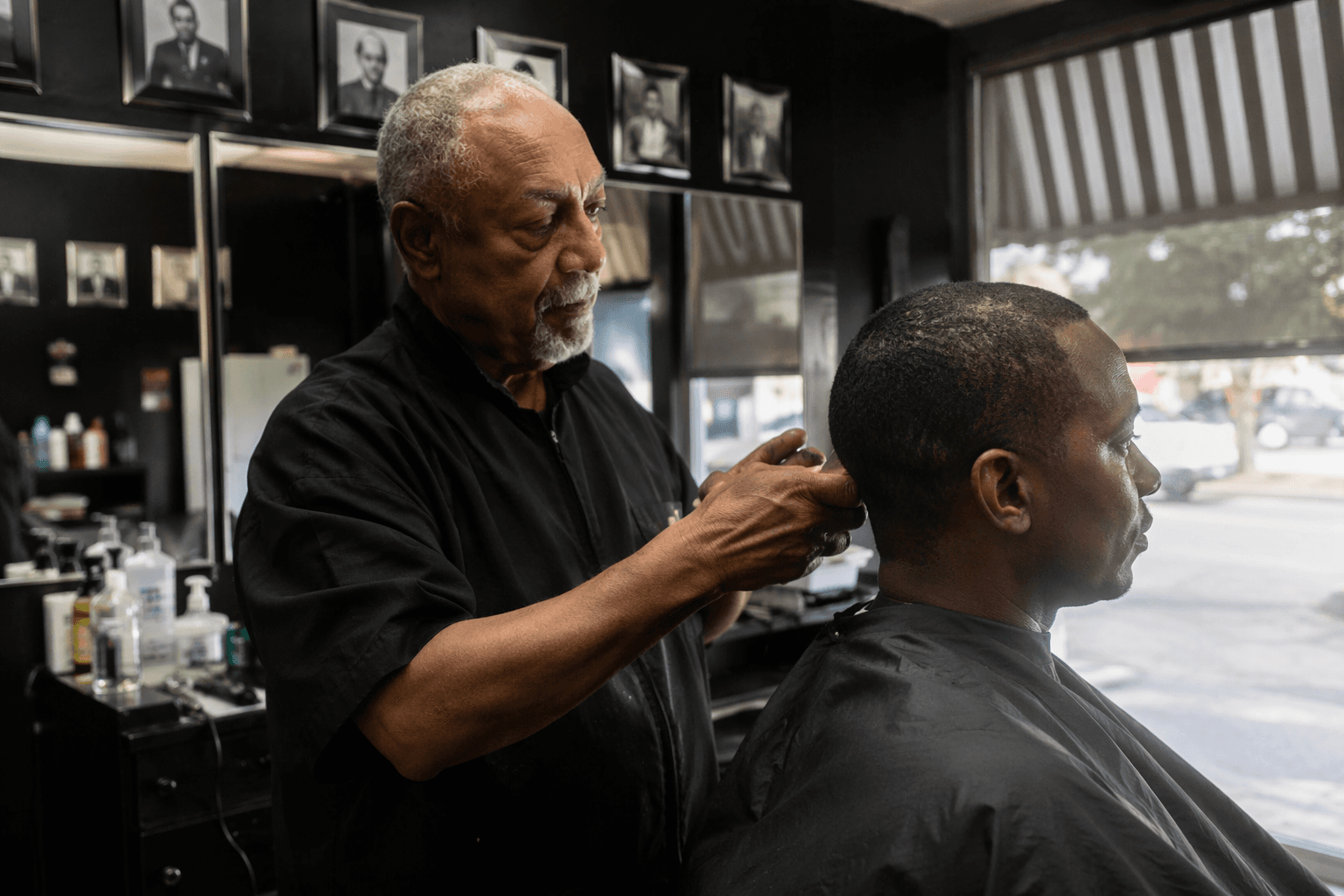
Six decades in one chair
Mike Ray’s barber chair has outlasted storefronts, fashion trends and more than one version of downtown Cleveland. For 60 years, he has kept cutting hair here, first in the heart of town and later at Western Plaza, where he has worked for more than 35 years and remains the only barber in the shop.
That longevity is the story’s sharpest statistic, but it is not the whole story. Ray’s business has survived because it stayed useful across generations, serving the same families, athletes and neighbors who kept coming back as the city around him changed.
From Merigold to Berlin and back
Ray’s roots run deep in the Delta. Born in Merigold, he grew up around baseball and deer hunting, played baseball himself and later coached city ball for 17 years. Those details matter because they help explain the steady, local instinct that shaped his career: he wanted work that would keep him tied to the community he knew.
That instinct survived a very different chapter in his life. Ray joined the United States Army in 1962 and served in Berlin during the Berlin Conflict. He guarded World War II criminals at Spandau Prison, was selected to help guard President John F. Kennedy during a visit to Berlin and was chosen for rifle marksmanship competition. He describes himself as a proud Army veteran, and after his military service ended in California, he and his wife, Jimmie Saxon Ray, headed back toward Mississippi rather than away from it.
Before barbering became his profession, Ray and his wife made the practical sacrifices that often define small-business careers. They moved to Jackson so he could attend barber school, and he drove an ambulance while studying to help make ends meet. The path was not glamorous, but it was deliberate: a stable trade, a local future and a life built around people rather than weather-dependent work.
A downtown business that moved with the town
When Ray returned to Cleveland, his first barber job was at Smitty’s Barber Shop in the old Grover’s Hotel downtown. That location placed him in the middle of a downtown economy that once concentrated daily foot traffic, repeat customers and neighborhood loyalty in just a few blocks.
He later teamed up with Ralph Smith and moved to Fifth Avenue across from Delta State, where Smitty and Mike’s Barber Shop stayed for 21 years. That move says as much about Cleveland’s changing customer base as it does about Ray’s own career. A barber shop survives where people live, work, study and stop in regularly, and being across from Delta State gave the shop a dependable stream of faces connected to the campus and the broader community.
The move to Western Plaza marked another adjustment, not a retreat. For more than 35 years, Ray has kept working there, still serving as the lone barber in the shop. The setting changed, but the model did not: walk-ins, regulars and the kind of service that depends on memory as much as scissors.
How the cut changed without losing the customer
Ray has watched the barbering trade evolve from crew cuts and shaves to modern fades, and he adapted with it. That shift is important because it shows how a Main Street service business stays relevant: the barber has to change with the customer while preserving the habits that make the business feel dependable.
In Ray’s case, the continuity is part of the product. Customers have come through for the haircut, but also for the routine, the conversation and the assurance that the same person behind the chair still knows the town and the people in it. In a place like Cleveland, where local institutions matter and word of mouth still carries weight, that kind of trust can matter as much as price.
Ray also built his life around family in the same steady way he built his business. He and Jimmie Saxon Ray married in 1960 and have now been married 66 years. They have two children, six grandchildren and eight great-grandchildren, a family tree that mirrors the generations that have passed through his barber chair.
What 60 years says about Cleveland’s economy
Ray’s career is more than a personal milestone. It is a working lesson in how a small business survives in a changing town: stay rooted, keep adapting and make yourself indispensable enough that people keep coming back. His story stretches from Merigold to Berlin to Jackson, but it keeps landing in Cleveland, where downtown addresses changed, customer habits shifted and the local economy kept evolving around the same human need for reliable service.
That is why Ray’s six decades matter beyond nostalgia. The barber shop has been a constant through downtown’s transitions, through the rise and relocation of daily commerce and through changes in style that could have made an old-school shop feel obsolete. Instead, Ray stayed, cut the next head of hair and made relevance out of consistency.
In a town like Cleveland, that is what six decades looks like: not just a long career, but a business that learned how to outlast the moment and still meet the customer at the door.
This article was produced by Prism’s automated news system from verified source data, official records, and press releases, then run through automated quality and moderation checks before publishing. The system is built and supervised by the people who set the standards it runs under. Read our full AI policy.
Know something we missed? Have a correction or additional information?
Submit a Tip