Mississippi youth court records access preserved after law expires
A temporary deal kept Mississippi's youth-court filing system online through July 15, staving off a records-access break that lawyers said could disrupt juvenile defense in Cleveland.
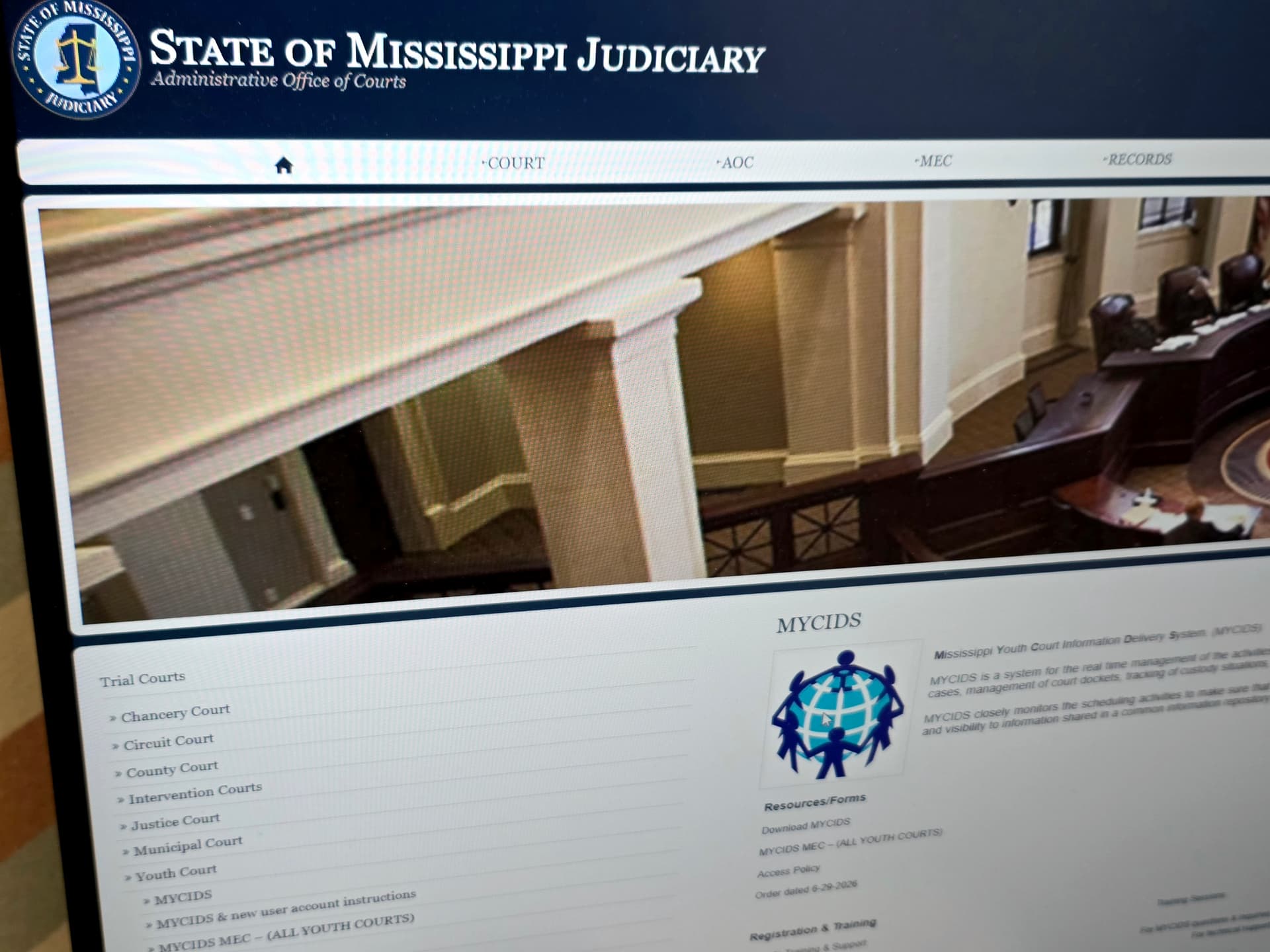
Mississippi youth-court attorneys kept access to case files after officials agreed to leave the MYCIDS system running through July 15, after the law governing youth courts expired July 1. In Cleveland, Bolivar County’s Second Judicial District handles local youth-court matters.
MYCIDS is the Mississippi Judiciary’s real-time system for youth-court work, handling intake, scheduling, docket management, custody tracking, document generation and statistical reporting. The system handles cases involving abuse and neglect, along with offenses committed by juveniles under 18; youth-court records guide notice, hearings, custody decisions and defense preparation. The Mississippi Department of Human Services’ Division of Youth Services also relies on the youth-court framework to administer probation, aftercare and institutional programs for young people adjudicated delinquent or identified as at risk of delinquency.

Days before the deadline, a coalition of law firms representing youth-court attorneys filed suit in federal court and asked for emergency relief. After hearings and weekend negotiations, both sides agreed to preserve the status quo. Civil-rights attorney Jaqueline Aranda Osorno warned that a loss of access could undermine due process and lead to wrong decisions in youth-court cases, while local counsel Graham Carner said it would make it much harder for defense lawyers to do their jobs.
Mississippi Supreme Court Justice Jennifer Branning, co-chair of a task force focused on improving court processes for children and families, urged state leaders to move quickly. Governor Tate Reeves is interested in a special session that could address the gap in the law.
The Mississippi Supreme Court posts annual reports and administrative data online going back to 1996. Senate Bill 2728, the proposed Mississippi Chancery Youth Court Act of 2026, died April 1 after advancing through the Senate but failing to become law, leaving the courts to operate under a temporary arrangement.
This article was produced by Prism’s automated news system from verified source data, official records, and press releases, then run through automated quality and moderation checks before publishing. The system is built and supervised by the people who set the standards it runs under. Read our full AI policy.
Did this article answer your question?