Mound Bayou blues marker highlights town’s deep Mississippi music legacy
Mound Bayou’s blues marker spotlights a town built on Black self-determination and a music legacy that shaped the Delta. It is a meaningful stop in a regional day-trip story.
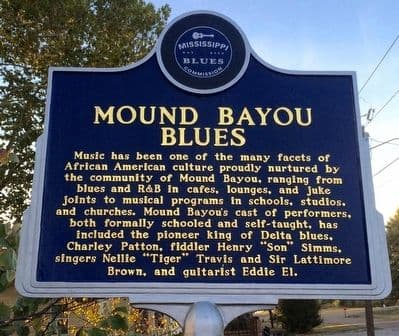
Mound Bayou’s new Mississippi Blues Trail marker does more than mark a stop on the map. It pulls one small Bolivar County town into the larger story of Mississippi music, showing how Black self-determination, local pride and creative output came together in a place that helped shape the Delta’s sound. For Cleveland County readers looking at the region as a heritage destination, the marker is a reminder that some of the most important chapters in American music history sit within reach of a day or weekend trip.
A town defined by self-determination
Mound Bayou stands apart because its history begins with purpose. Founded in 1887 by formerly enslaved people, it became one of the first successful all-Black towns in the nation. That fact is not just a point of pride; it is the foundation for understanding why the town carries cultural weight far beyond its size.
The blues marker places that history at the center of the story. Mound Bayou’s importance is not based only on who passed through or performed there, but on the community’s own ability to build institutions, identity and legacy in the aftermath of slavery. That self-made history gives the town’s music story a deeper meaning than a simple list of famous names. It shows that the Delta’s cultural power came from communities that created space for themselves and then gave the region artists, traditions and stories that lasted.
The musicians who connect Mound Bayou to the Delta
The marker ties the town to a wide range of performers, and that range tells its own story. Among the names associated with Mound Bayou are pioneering Delta blues figure Charley Patton, fiddler Henry Son Simms, singer Sir Lattimore Brown, guitarist Eddie El and Mound Bayou native Nellie Tiger Travis. Together, those names stretch across generations and styles, from early Delta blues to later blues, soul and rhythm-and-blues traditions.
That breadth matters because it shows Mound Bayou as part of a living musical geography, not a frozen museum piece. Charley Patton connects the town to the earliest and most influential era of Delta blues. Henry Son Simms, Sir Lattimore Brown, Eddie El and Nellie Tiger Travis show how the town’s legacy did not stop with one style or one era. The result is a musical lineage that reflects how Mississippi culture evolved over time while staying rooted in local place.
Why a blues marker matters beyond the roadside
A blues marker may look modest, but its cultural work is larger than its size. It signals that Mound Bayou belongs on the map of American music history, and that signal has practical value for tourism, education and civic identity. For visitors, it offers a clear starting point for understanding the town’s place in the Delta story. For schools and local educators, it creates an accessible entry into lessons about Black history, regional music and the communities that shaped national culture.
It also changes how the town is seen. When a marker recognizes a place like Mound Bayou, it says the town is not a footnote to larger Delta history. It is part of the core narrative. That matters in a state where so much of the music story is tied to place, memory and movement across the Delta landscape. The marker helps make that connection visible.
What it adds to the broader Mississippi Delta music corridor
For Cleveland County readers, Mound Bayou fits into a broader travel pattern that makes sense for people interested in heritage and music history. The Mississippi Blues Trail connects sites across the Delta, and Mound Bayou adds another stop that deepens the region’s story. It strengthens the idea that the Delta is not just a backdrop for blues mythology. It is a network of towns whose histories helped create the music itself.
That broader context is important because Mound Bayou offers something distinct within the corridor. Some places are remembered for performance rooms, recording sessions or famous passages through town. Mound Bayou stands out because its Black self-governance history shaped the setting in which its musical legacy emerged. That combination of civic history and artistic influence gives the town a character that visitors can appreciate whether they are tracing blues roots for the first time or returning to the Delta with deeper curiosity.
A legacy worth carrying forward
Mound Bayou’s marker reinforces a simple but powerful truth: small Delta communities shaped national culture in major ways. The town’s legacy is an inheritance, but it is also an asset, one that strengthens county pride, supports heritage travel and gives future generations a concrete place to learn what self-determination looks like when it takes root in a community. In a region where history is often measured in sound as much as in stone, Mound Bayou earns its place with both.
For anyone following the Mississippi music trail, the marker is not just an invitation to remember. It is a reminder that the Delta’s most enduring stories still live in the towns that built them.
This article was produced by Prism’s automated news system from verified source data, official records, and press releases, then run through automated quality and moderation checks before publishing. The system is built and supervised by the people who set the standards it runs under. Read our full AI policy.
Know something we missed? Have a correction or additional information?
Submit a Tip