Collin County Cities Share Competing Growth Strategies at Annual North Collin Conference
McKinney, Celina, Anna and Prosper outlined clashing growth plans Thursday as Collin County added nearly 18,000 housing units in a single year, fifth most in the nation.
Economic development leaders from McKinney, Celina, Anna and Prosper laid out competing visions for managing explosive residential growth at the fifth annual North Collin County Neighborhood Conference, held Thursday in McKinney, as new data shows the county added nearly 18,000 housing units between 2023 and 2024, the fifth-highest total of any county in the United States.
The conference brought into relief a county straining under its own success. With more than 1.1 million residents and a growth rate exceeding 36% since 2010, Collin County has expanded well beyond its older suburban anchors in Frisco, Allen, McKinney and Plano. The pressure is now reshaping smaller cities to the north.
Growth in the region has followed a concentric pattern, moving outward as available land and affordable prices disappear closer to the core. "Development is concentric in nature, so you see rings happening," said Ted Wilson, principal of Dallas-based Residential Strategies. "As there's less and less available housing ... that kind of puts a lot of pressure on potential residents to look at those areas that are suburbs of suburbs."
Wilson pointed to Princeton, Celina and Anna as the current frontier. All three ranked on a recent list of the fastest-growing communities in the region, with Celina at the top. "These are the places where growth can occur," Wilson said. The draw is partly financial: Princeton and nearby areas attract buyers who work in Plano and Frisco but need to stay under $400,000. The median home price in the Princeton ISD-Farmerville area sits at just over $344,000.
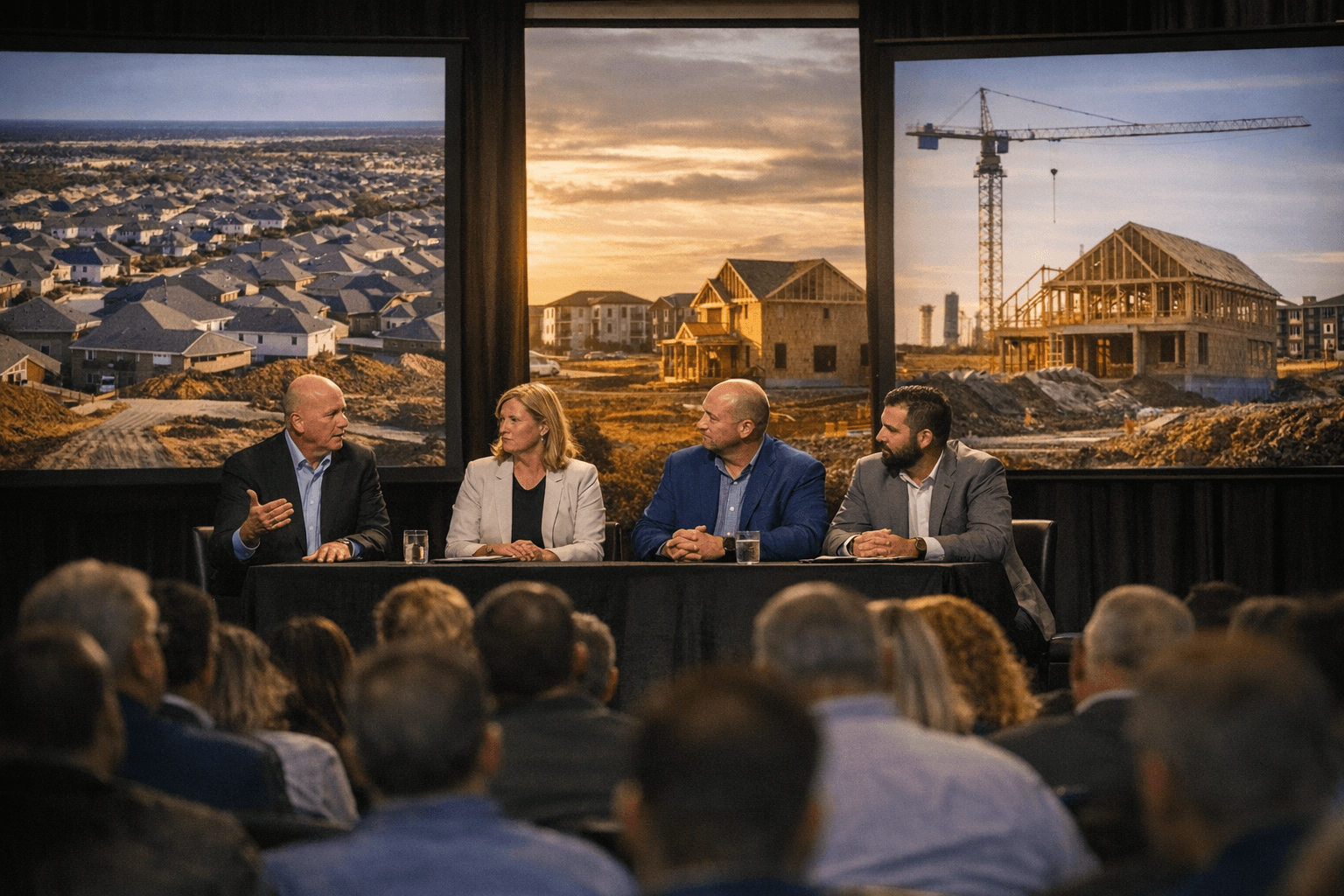
That growth surge has not come without friction. Wilson described at least one municipality that enacted a moratorium after being overwhelmed by development requests. "I think they had so much growth that they were kind of overwhelmed by that," he said. "We still see a lot of growth outside the city but in the Princeton ISD area." Homebuilders have not waited for policy to catch up. Developers who own land have opted out of the extraterritorial jurisdiction and formed special-purpose districts to fund key infrastructure for residential projects, Wilson said, a financing mechanism that allows construction to proceed independent of city oversight.
Collin County's building surge is part of a broader North Texas construction boom. Denton and Tarrant counties each added more than 13,000 units over the same period, while Dallas County added more than 9,700. Residential Strategies projects that Collin and neighboring Kaufman County will remain among the most active submarkets for newly built homes in the region.
The county's growth profile extends beyond housing. Collin County is home to more than 25 Fortune 1000 companies, carries a homeownership rate above 70%, and has a median age of approximately 37.3 years, reflecting the family-oriented demographics that have defined the county's expansion since the late 1990s. How the cities at the leading edge of that expansion, particularly Celina, Anna and Prosper, choose to manage the next wave of development will determine whether the pattern holds or fractures under its own momentum.
This article was produced by Prism’s automated news system from verified source data, official records, and press releases, then run through automated quality and moderation checks before publishing. The system is built and supervised by the people who set the standards it runs under. Read our full AI policy.
Did this article answer your question?