Collin County leads Texas in primary care, psychologists and physician assistants
Collin County tops Texas in primary care, psychologists and physician assistants, yet 1,297,179 residents and 11.0% uninsured under 65 keep access tight.

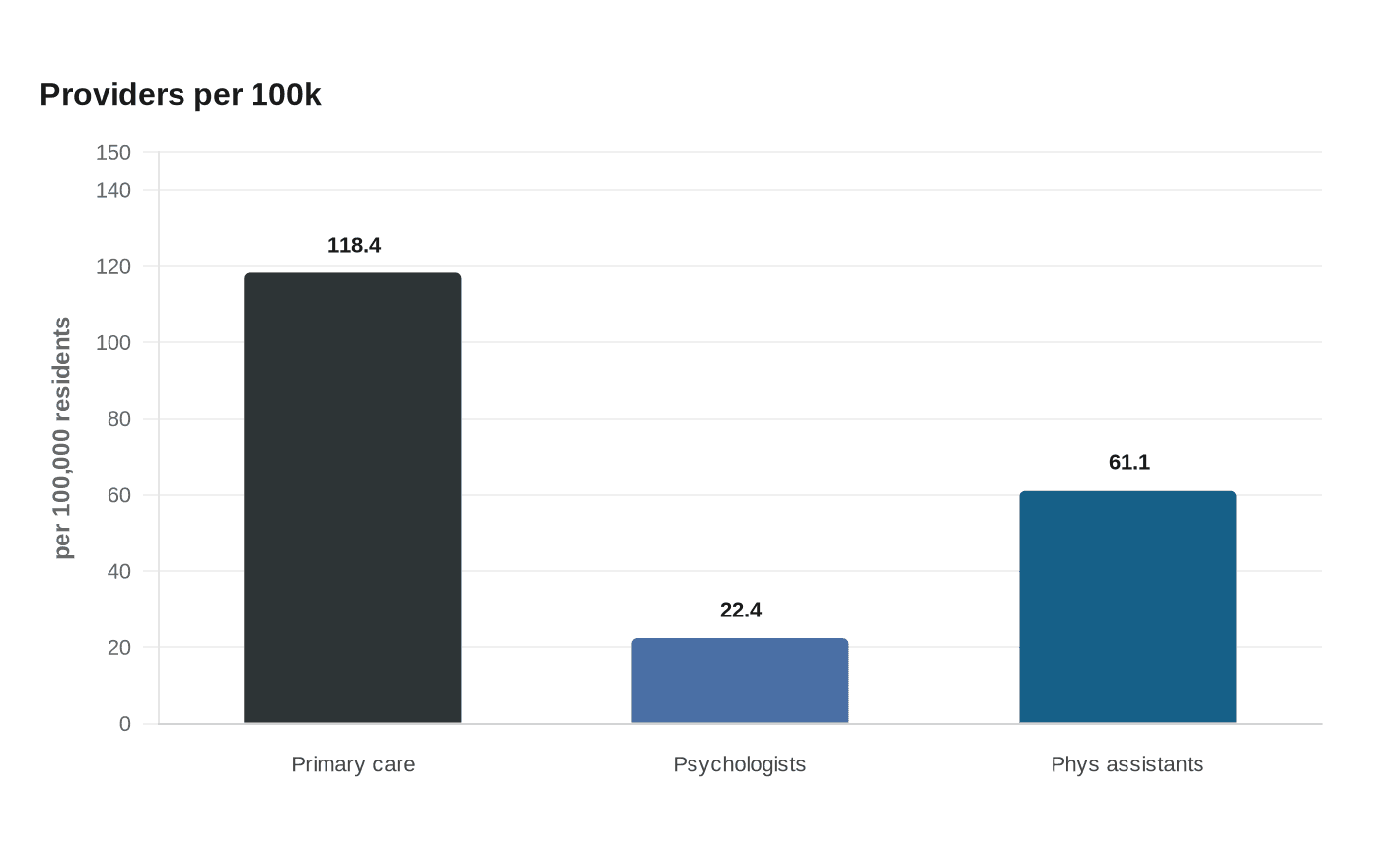
Collin County may sit at the top of Texas for per-capita primary care physicians, psychologists and physician assistants, but the headline only tells part of the story for families trying to book care before the school year ramps up. The county counted 1,420 primary care physicians, 269 psychologists and 733 physician assistants, numbers that work out to 118.4 primary care doctors, 22.4 psychologists and 61.1 physician assistants per 100,000 residents.
Those provider totals matter because demand keeps climbing. The U.S. Census Bureau estimated Collin County’s population at 1,297,179 on July 1, 2025, up 21.7% from the April 1, 2020 census base. Even in a county with a strong health-care workforce, 11.0% of residents under 65 were uninsured, a reminder that staffing strength does not automatically translate into easy access for every family or every insurance card.

The pressure is visible across North Texas. The North Central Texas Council of Governments said Collin County added almost 76,000 residents in 2025, part of a regional surge that keeps clinic schedules, hospital beds and behavioral health offices under strain. County Health Rankings said more than 122 million people nationwide lived in a Mental Health Professional Shortage Area as of December 2024, which gives extra weight to Collin County’s high per-capita psychologist ranking without erasing the wider shortage.
The county’s medical economy is expanding alongside its population. Texas Health Resources announced a new hospital and medical campus in north McKinney on Feb. 24, 2026, with opening targeted for 2028, and said it already serves Collin County through Texas Health Presbyterian Hospital Allen, Texas Health Presbyterian Hospital Plano and Texas Health Hospital Frisco. Baylor Scott & White Health is also planning a 340,000-square-foot, 84-bed hospital in Frisco, signaling more bricks-and-mortar capacity in a corridor where growth has outpaced nearly everything else.
The broader Dallas-Fort Worth workforce shows how layered the system has become, with average annual wages of $60,050 for paramedics, $41,770 for emergency medical technicians, $100,820 for registered nurses and $110,570 for physical therapists, alongside specialists such as obstetricians and gynecologists, psychiatrists and general internal medicine physicians. For Collin County parents, students and adults trying to find a regular doctor or mental health appointment, the ranking is encouraging, but the real test is whether this expanding workforce can keep pace with a county that keeps adding people faster than most Texas communities.
This article was produced by Prism’s automated news system from verified source data, official records, and press releases, then run through automated quality and moderation checks before publishing. The system is built and supervised by the people who set the standards it runs under. Read our full AI policy.
Did this article answer your question?