Collin County MLK Parade Draws Community to Plano’s Douglass Neighborhood
The Collin County NAACP held its Martin Luther King Jr. Parade on Jan. 4, 2026, staging in Plano’s historic Douglass Community and marching a roughly 1.2-mile route through the neighborhood. The event culminated in a post-parade “Call to Action” focused on civic engagement and advocacy, bringing local organizations, businesses and residents together and creating a visible push for community participation ahead of the election season.
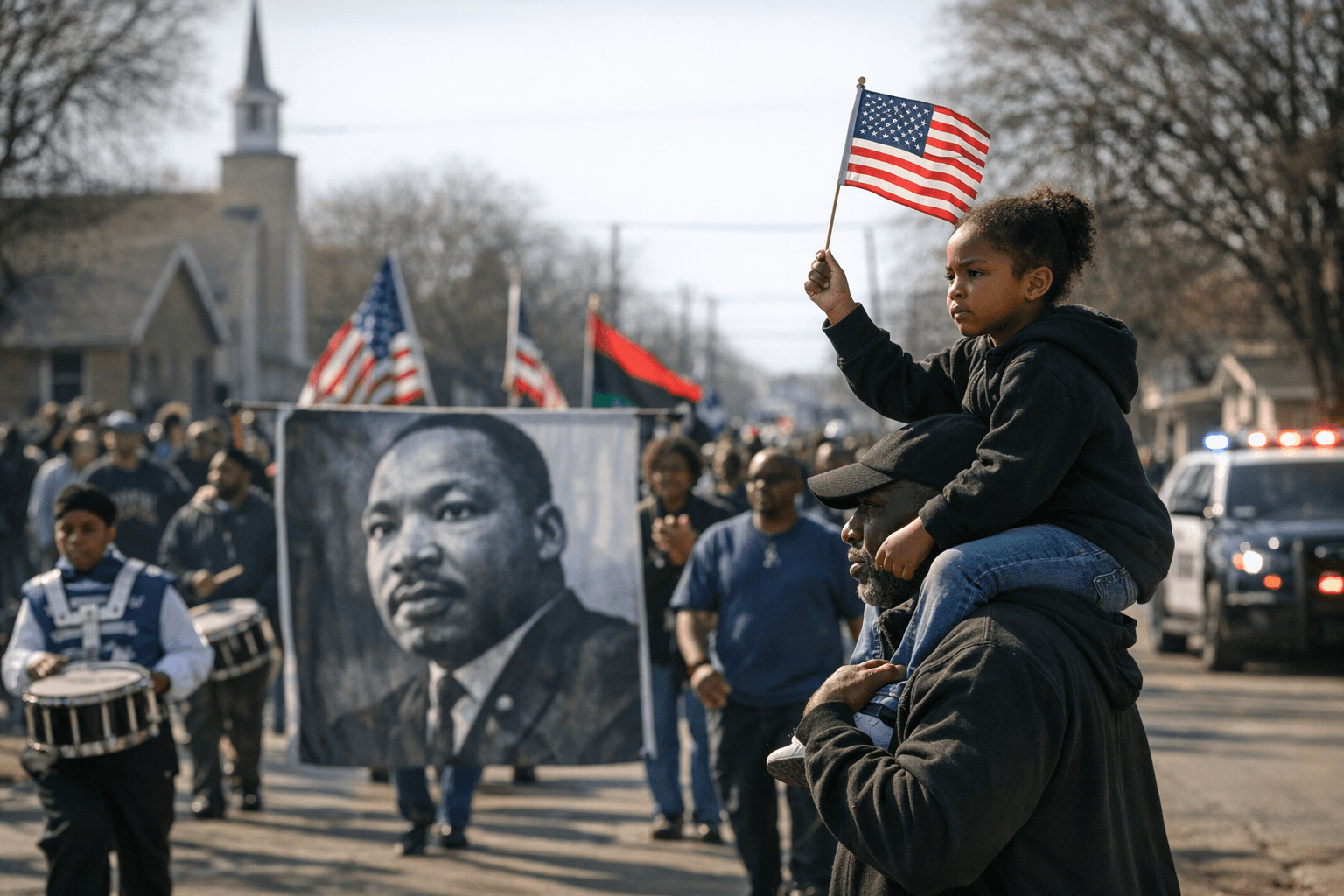
The Collin County branch of the NAACP staged its 2026 Martin Luther King Jr. Parade in Plano’s Douglass Community on Jan. 4, 2026, with staging near the Douglass Community wall on 13th Street and Avenue I. Organizers began set-up as early as 8:30 a.m., required all floats and participants to be in place by 9:15 a.m., and marched at 10:00 a.m. along an approximately 1.2-mile route. The parade theme, “One Dream. One Mission. One Community,” framed a morning of civic visibility and local partnership.
Local civic organizations, businesses and community groups made up the participant roster, and the Collin County NAACP had accepted parade participants, sponsors and community partners in advance. Parade organizers supplied rules, route maps and entry guidelines that governed float sizes, safety requirements and a no-throw policy; those logistics helped keep the procession orderly and minimized hazards for families and spectators.
Immediately following the parade, the Collin County NAACP held a “Call to Action” focused on civic engagement and advocacy. That gathering aimed to translate the symbolic commemoration of Dr. King’s legacy into concrete community participation, from voter registration and public comment to local advocacy initiatives. For Collin County residents, the timing and focus carry practical significance: heightened civic outreach in January can affect engagement in the coming municipal and county cycles, and sustained organizing may shift how local governments and businesses respond to community priorities.
The parade also had short-term economic effects on the Douglass neighborhood and nearby commercial corridors. Concentrated foot traffic and spectators offered local retailers and restaurants a boost in daytime sales, while vendors and community booths gained visibility. Temporary street closures and staging on 13th Street and Avenue I created brief traffic detours that residents and commuters experienced during set-up and the procession itself.
Beyond the single-day impacts, the event reinforced long-term trends in Collin County around community mobilization and nonprofit-led civic programming. By centering advocacy immediately after the parade, the Collin County NAACP connected cultural commemoration with policy engagement, a model that can increase turnout for local initiatives and influence service delivery priorities. For residents interested in participating in future events, organizers had publicized logistics and entry guidelines through their parade pages prior to the event.
This article was produced by Prism’s automated news system from verified source data, official records, and press releases, then run through automated quality and moderation checks before publishing. The system is built and supervised by the people who set the standards it runs under. Read our full AI policy.
Did this article answer your question?