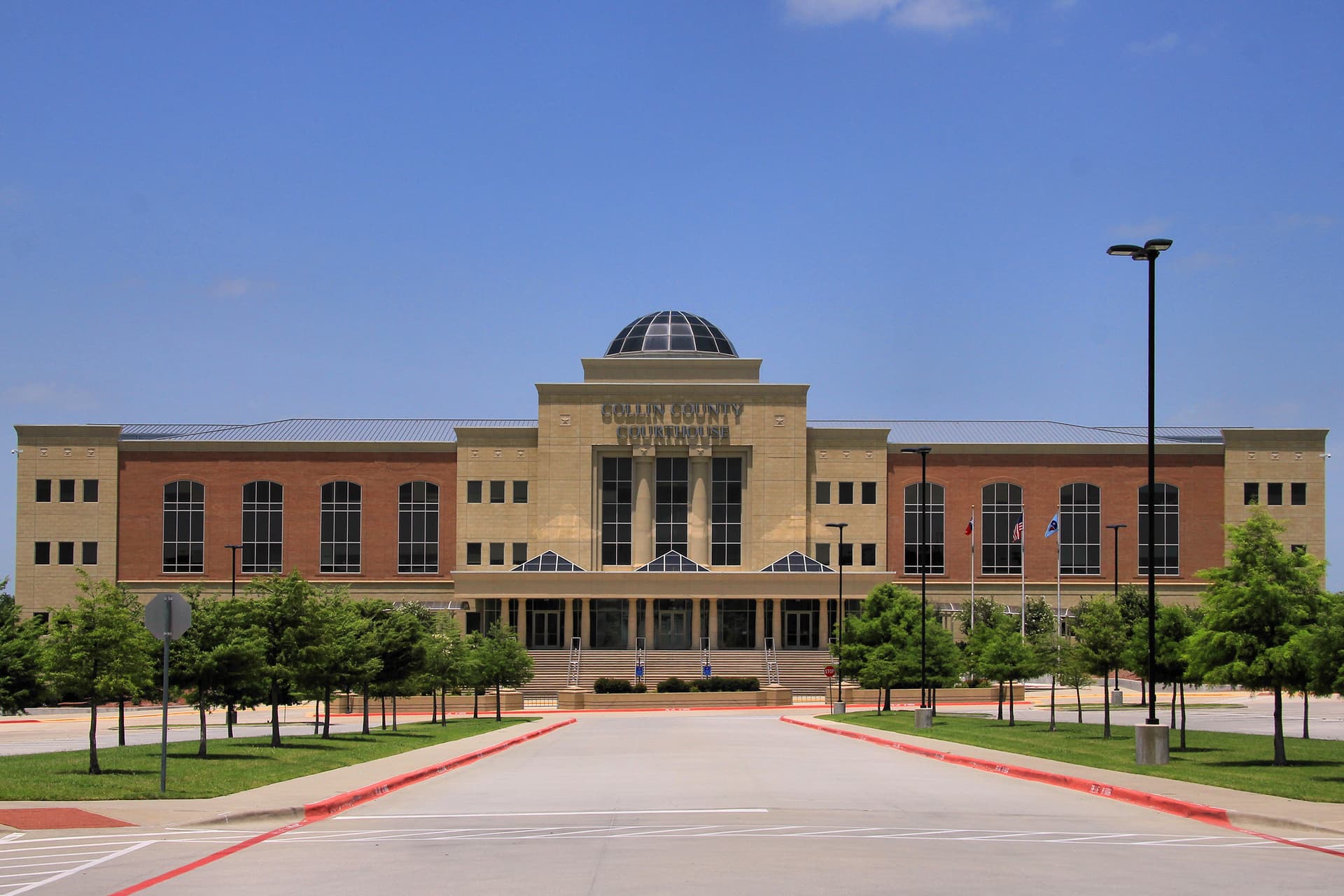
Collin County Tax Office Payment Delays Draw Scrutiny Over Staffing, Practices
Commissioner Duncan Webb confronted Tax Assessor-Collector Scott Grigg over payment processing delays tied to significant staffing shortfalls in Collin County's tax office.

A routine consent agenda item at the Collin County Commissioners Court turned contentious on April 2 when Precinct 4 Commissioner Duncan Webb pulled it from the queue to challenge how Tax Assessor-Collector Scott Grigg's office handles incoming tax payments.
What began as a procedural question widened into a pointed public examination of whether Grigg's operations align with the financial controls established by County Auditor Robert Cone and approved by the commissioners court. The exchange was unscripted and fully public, the kind of confrontation that rarely surfaces when governments manage their agenda smoothly.
Webb's challenge was direct. He said the court must ensure that "an elected county official is not defying a commissioners court-approved policy governing how the auditor operates his office." The statement reframed what might have seemed like an internal administrative matter as a question of whether an elected official was operating outside court-sanctioned rules.
Grigg offered an operational explanation: significant personnel shortages have left his office without adequate staff to open mailed checks, log receipts and make timely bank deposits. Those gaps, he argued, account for the processing delays that prompted Webb's scrutiny in the first place.
The staffing problem has concrete consequences for taxpayers. When mailed payments sit unprocessed, the gap between a taxpayer's postmark and the county's recorded receipt grows, creating conditions where residents who paid on time could face questions about their account status. For residents who rely on mailed checks rather than online portals, that uncertainty is not abstract.
County Auditor Cone's office sits at the center of the dispute. His procedures, codified through policies the commissioners court has approved, govern how public funds are received, recorded and deposited. When the tax assessor-collector's office operates outside those procedures, even for understandable reasons, it creates audit exposure and breaks the chain of accountability that protects public money from error or worse.
No formal action came from the April 2 meeting, but Webb's decision to pull the item from the consent agenda ensured the matter is now part of the public record. Commissioners indicated they expected follow-up discussions, with potential adjustments to staffing levels, processing workflows or the underlying policies themselves.
For anyone currently paying Collin County property taxes by mail, the safest step is to keep documentation of when payments were sent and to confirm with Grigg's office that a payment has been received and recorded.
The structural tension Webb put on the record runs deeper than any single agenda item. Grigg is an elected official accountable to voters, not an appointed department head removable by the court. That distinction means any durable resolution will require either a negotiated agreement on procedures or a reckoning that plays out at the ballot box, while in the meantime the tax office's staffing problem remains unresolved.
This article was produced by Prism’s automated news system from verified source data, official records, and press releases, then run through automated quality and moderation checks before publishing. The system is built and supervised by the people who set the standards it runs under. Read our full AI policy.
Did this article answer your question?