Emerald Ash Borer Threatens Collin County Urban Trees, Costs Loom
The emerald ash borer, a wood-boring beetle that has spread through North Texas for roughly eight years, has been detected in Collin County as part of an infestation now found in more than 30 Texas counties. The pest kills ash trees by feeding beneath the bark, posing ecological, aesthetic and financial burdens for local governments and homeowners who face costly treatments or removals.
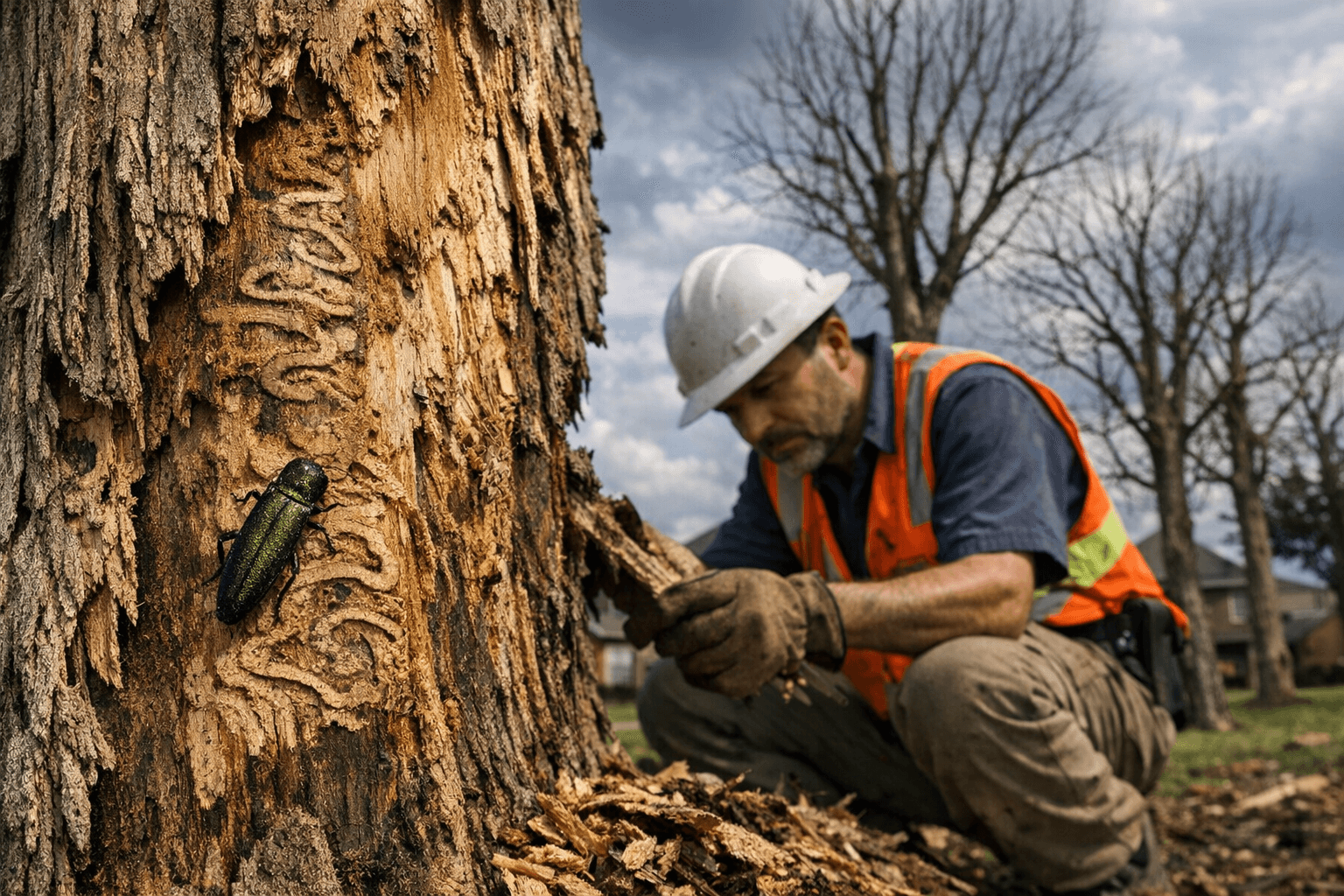
Collin County officials and municipal park departments are confronting an expanding emerald ash borer infestation that has moved through North Texas for about eight years and now includes more than 30 Texas counties. The invasive beetle, native to Asia, attacks ash species when adult beetles lay eggs in bark and larvae chew galleries under the bark that disrupt nutrient and water flow, eventually killing the tree.
Visible signs can appear long before a tree dies and include dead branches at the top of the canopy, epicormic sprouts along trunks and limbs, S-shaped larval galleries under the bark, D-shaped exit holes in the bark surface and concentrated woodpecker damage where birds feed on larvae. Local park officials have been increasing tree inventories to identify ash stands and tag trees that receive treatment, while planning targeted removals to reduce nearby reservoirs for infestation.
The costs of responding are substantial and present difficult tradeoffs for cities and residents. The Texas A&M Forest Service estimates that ash species make up about 5.8 percent of Texas’ urban forest. That share translates into millions of trees at risk statewide and removal costs that could reach into the billions over time. Individual protective treatments use systemic insecticides such as emamectin benzoate and generally run roughly $200 to $400 per tree, with each treatment protecting a tree for approximately two to three years. Mass treatment programs are financially burdensome for municipal budgets, and treatments can affect non-target insects, complicating ecological tradeoffs.
When infestations are advanced, selective removals are sometimes the most realistic option. Removal is also costly and requires planning for safe disposal. Recommended best practices for handling infested wood are to burn, bury or chip it where it stands rather than transport it, reducing the risk of spreading beetles to new areas.
For Collin County communities, the arrival of the emerald ash borer underscores both short-term operational decisions and longer-term urban forestry planning. Municipalities will have to balance treatment and removal strategies, budget impacts, and ecological concerns such as insect biodiversity and canopy loss. Residents should monitor ash trees on private property for the listed symptoms and follow local guidance on disposal and treatment options as cities and county agencies continue inventories and targeted response efforts.
This article was produced by Prism’s automated news system from verified source data, official records, and press releases, then run through automated quality and moderation checks before publishing. The system is built and supervised by the people who set the standards it runs under. Read our full AI policy.
Did this article answer your question?