Frisco Advances City Owned Animal Facility, Public Private Partnership Plan
Frisco City Council advanced a plan December 17 to develop a city owned animal facility under a public private partnership, with the Frisco Community Development Corp. funding roughly 12.8 million dollars and a private operator proposed to lease and run the site. The decision matters because it reshapes local animal services delivery, shifts capital costs off the city general fund, and raises questions about long term capacity and county coordination for Collin County residents.
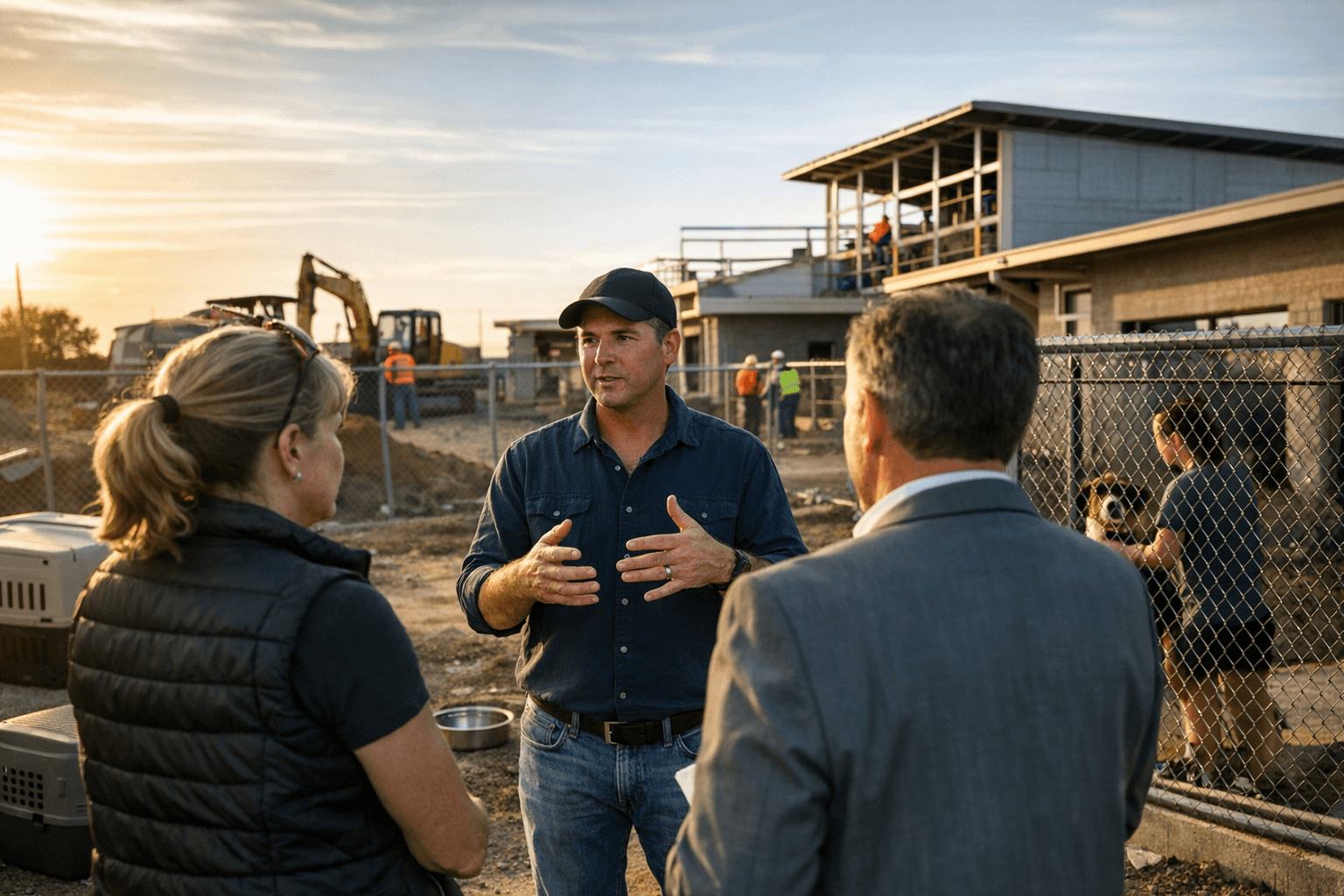
Frisco moved forward December 17 on a proposal to build a city owned animal facility that would be funded initially by the Frisco Community Development Corp. for approximately 12.8 million dollars and operated by a private partner under a long term lease. The proposed operator is Nicole Kohanski, founder of Wiggle Butt Academy, who would run the facility offering both public facing services and private services. Public facing services would include short term holding, reunification, adoptions, veterinary services and spay and neuter events. Private services would include training, boarding and grooming.
City leaders framed the model as a way to expand local services while limiting direct taxpayer support for capital costs. The facility is designed as a holding and service oriented site rather than a full service municipal shelter. Animals would be held for a short term period and if not reclaimed or adopted they would be transferred to the Collin County Animal Shelter for longer term sheltering and placement. Proponents argue the arrangement reduces city fiscal exposure while increasing access to local animal care and community programs.
Key next steps include council consideration of the operator agreement in January, design and bidding scheduled through 2026, and potential construction in 2027 to 2028. Those timelines mean residents and stakeholders will have multiple points for review and input before the facility opens. Important details remain to be finalized, including specific lease terms, performance metrics, oversight and reporting requirements, and formal transfer protocols with Collin County for animals needing longer stays.
The plan raises institutional and policy questions for Collin County residents. Relying on a short term city facility plus transfers to the county shelter affects regional capacity and resource sharing. Accountability measures will determine whether the partnership delivers promised public services without creating gaps in shelter availability. Advocates have expressed concern that the city owned site will not fully replace county shelter capacity, creating a potential strain on county operations if demand spikes.
For residents, the proposed facility could mean more local options for reunification and basic veterinary events, as well as private services for pet owners. It also means close scrutiny of contract language and public oversight will be necessary to ensure taxpayer funded development delivers measurable public benefits and does not shift unacknowledged costs onto county systems. The council vote on the operator agreement in January will be the next pivotal moment for policy details and community input.
This article was produced by Prism’s automated news system from verified source data, official records, and press releases, then run through automated quality and moderation checks before publishing. The system is built and supervised by the people who set the standards it runs under. Read our full AI policy.
Did this article answer your question?