Frisco ISD approves second straight balanced budget amid enrollment decline
Frisco ISD kept its budget balanced by leaning harder on fees, staffing review and Access Frisco as enrollment slid from its 2023 peak.

The cost of going to school in Frisco is shifting in small but visible ways: bus seats for some families will run $70 to $90 a month, turf and gym rentals will cost $25 more per hour, and Chromebook fees are coming. Those changes helped Frisco ISD approve a second straight balanced budget, a $751.9 million plan for 2026-27 that keeps spending and revenue equal as enrollment continues to fall.
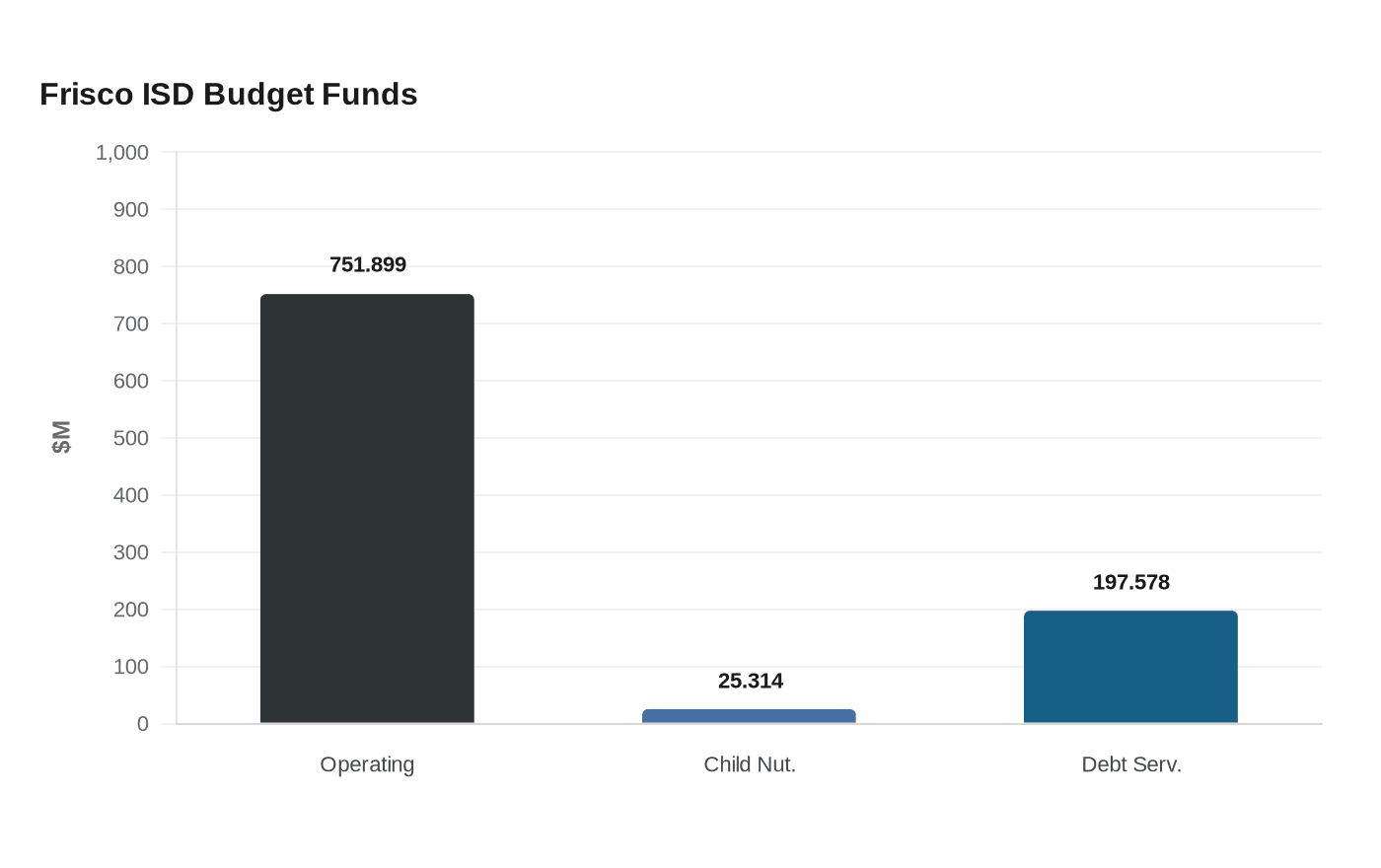
Trustees adopted the budget at a June 15 special meeting at the Frisco ISD Administration Building, 5515 Ohio Drive in Frisco. The plan sets operating revenue and spending at $751.899 million and also includes a $25,314,000 child nutrition fund and a $197,578,100 debt service fund. It follows a year in which the district said it had its first balanced budget in three years and finished with a $9 million surplus.

The balance did not come easily. Frisco ISD had been projecting a $28.6 million deficit for 2026-27 before revisions and cost reductions narrowed the gap. Chief Finance and Strategy Officer Kimberly Smith said enrollment in 2025-26 declined more than expected and further decline is expected in 2026-27, cutting into revenue that had been about $771.7 million this year but is projected to fall to about $752 million next year.
District leaders have linked the slowdown to declining birth rates, limited neighborhood regeneration and competition from charter, private, virtual and homeschool options. Frisco ISD enrollment peaked at 67,612 students in March 2023, and the district has been trying to adapt ever since through what officials call a sustainability plan. That approach has included reviewing open central-office positions, standardizing class loads, constantly reworking department budgets and identifying new revenue streams before making cuts.
One of the biggest offsets has been Access Frisco, which enrolled 870 students and generated about $8.4 million in revenue. The district also approved a compensation plan that gives all staff 2% raises, with central-office raises capped at $2,000, after trustees had been weighing a $11.23 million pay package in May.
For families, the financial strategy is not abstract. It will shape transportation access, technology costs, pre-K options and the price of using district facilities. For Frisco ISD, the second straight balanced budget shows stability on paper, but it also shows how much of that stability now depends on tighter spending, more user fees and a broader search for revenue as the district adjusts to a smaller student base.
This article was produced by Prism’s automated news system from verified source data, official records, and press releases, then run through automated quality and moderation checks before publishing. The system is built and supervised by the people who set the standards it runs under. Read our full AI policy.
Did this article answer your question?