Frisco voters weigh mayoral race, city council and school board contests
About 20 voters showed up in the first hour at Frisco Fire Station No. 8 as the city opened its first open mayor race in nine years.
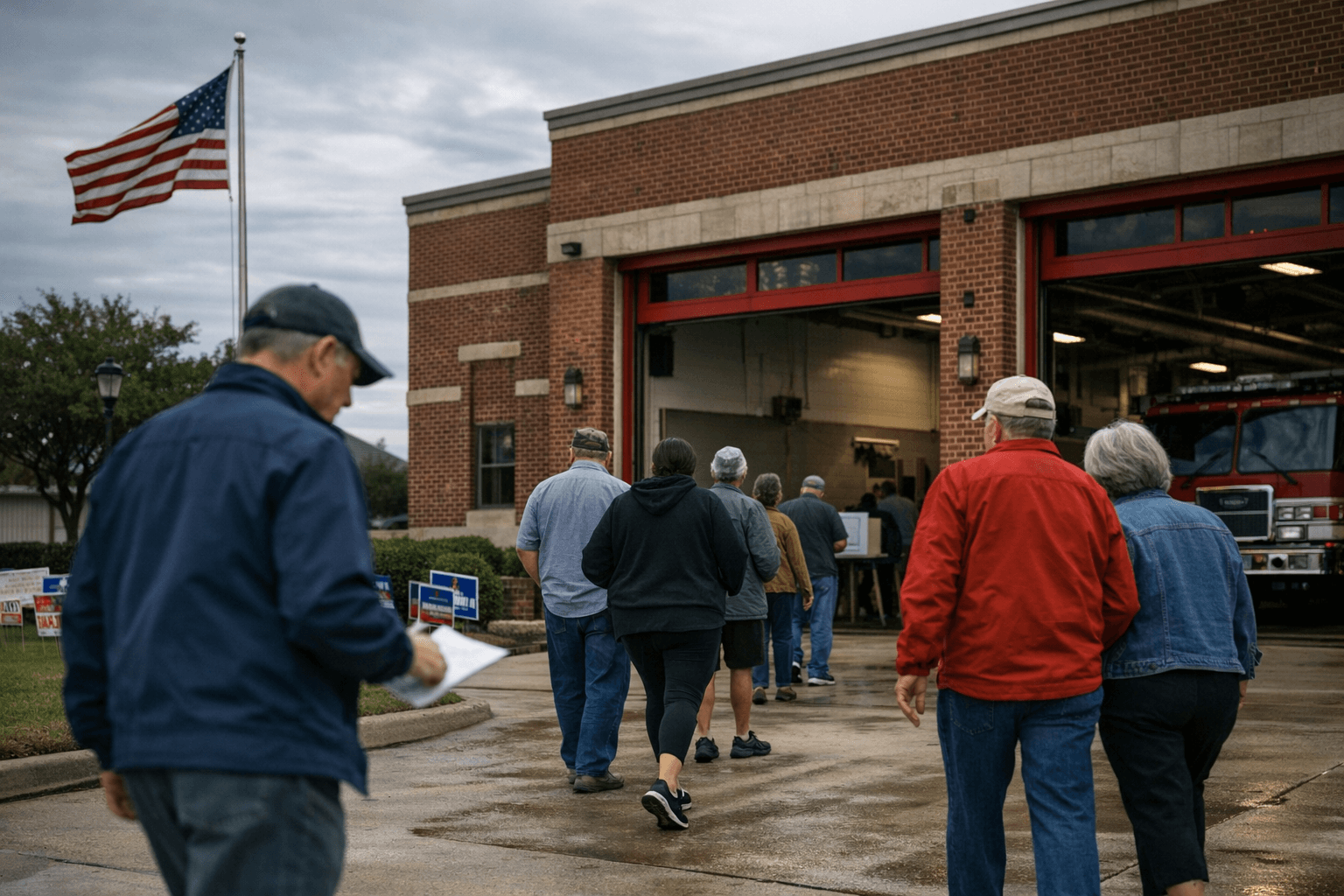
Frisco voters began casting ballots in a city where the race for mayor is open for the first time in nine years, and the tone at the polls was as much about restraint as it was about turnout. At Frisco Fire Station No. 8 off Rolater Road, campaign volunteers, candidates and early voters mixed quietly as the city opened voting for a May 2 election that could reshape how the fast-growing suburb talks about growth, schools and public trust.
An election clerk said about 20 voters came through in the first hour that morning, a modest start for a contest that volunteers believe could draw stronger participation because the mayor’s seat is on the line. Residents at the polling place said they wanted neighbors to keep city politics local, and to judge candidates on policy rather than national party labels. The message was aimed at a campaign season already defined by sharper arguments over race, identity and civic civility.
The ballot is broad for a city election. Frisco voters will choose a mayor and decide City Council Places 5 and 6, with the mayor and six council members elected at large. The city sits in both Collin and Denton counties, so election administration is split between the two county election offices. In ballot order, the mayoral candidates are John Keating, Shona Sowell, Rod Vilhauer and Mark Hill. Place 5 features Sreekanth Reddy, Vijay Karthik and Laura Rummel. Place 6 includes Brittany Colberg, Sai Krishnarajanagar, Matt Chalmers and Jerry Spencer.
School board contests are running alongside the city races. Frisco Independent School District says its seven trustees are elected at large to staggered three-year terms, and early voting for Places 4 and 5 began April 20. That overlap mattered at the polls, where volunteers for mayoral candidates and Frisco ISD hopefuls worked side by side to push turnout in a city where school capacity, traffic and growth remain central political issues.
The stakes are heightened by Frisco’s size and pace. City demographics put the population estimate at 247,452 across 69.1 square miles, making the outcome relevant far beyond City Hall. Frisco’s election history also shows turnout can swing sharply, from 3.96% in the March 26, 2022 Place 5 runoff to 16.51% in the May 6, 2023 general election.
The open mayoral race adds extra weight because Jeff Cheney, first elected in May 2017 and reelected in November 2023, is leaving the seat after nine years of incumbency. The campaign has already been shaped by tensions over Frisco’s changing demographics, including public conflict over comments about the city’s Indian and Muslim communities. As voters head deeper into early voting, the question is not only who will win, but whether Frisco can keep its civic debate civil while choosing the next leaders of one of North Texas’ fastest-growing cities.
This article was produced by Prism’s automated news system from verified source data, official records, and press releases, then run through automated quality and moderation checks before publishing. The system is built and supervised by the people who set the standards it runs under. Read our full AI policy.
Did this article answer your question?