McKinney Authorizes $150,000 Study for 300-Acre Sports and Recreation Complex
McKinney approved $150K to study a 300-acre sports complex that could host regional tournaments, but who pays and where it's built won't be settled until after the study wraps.
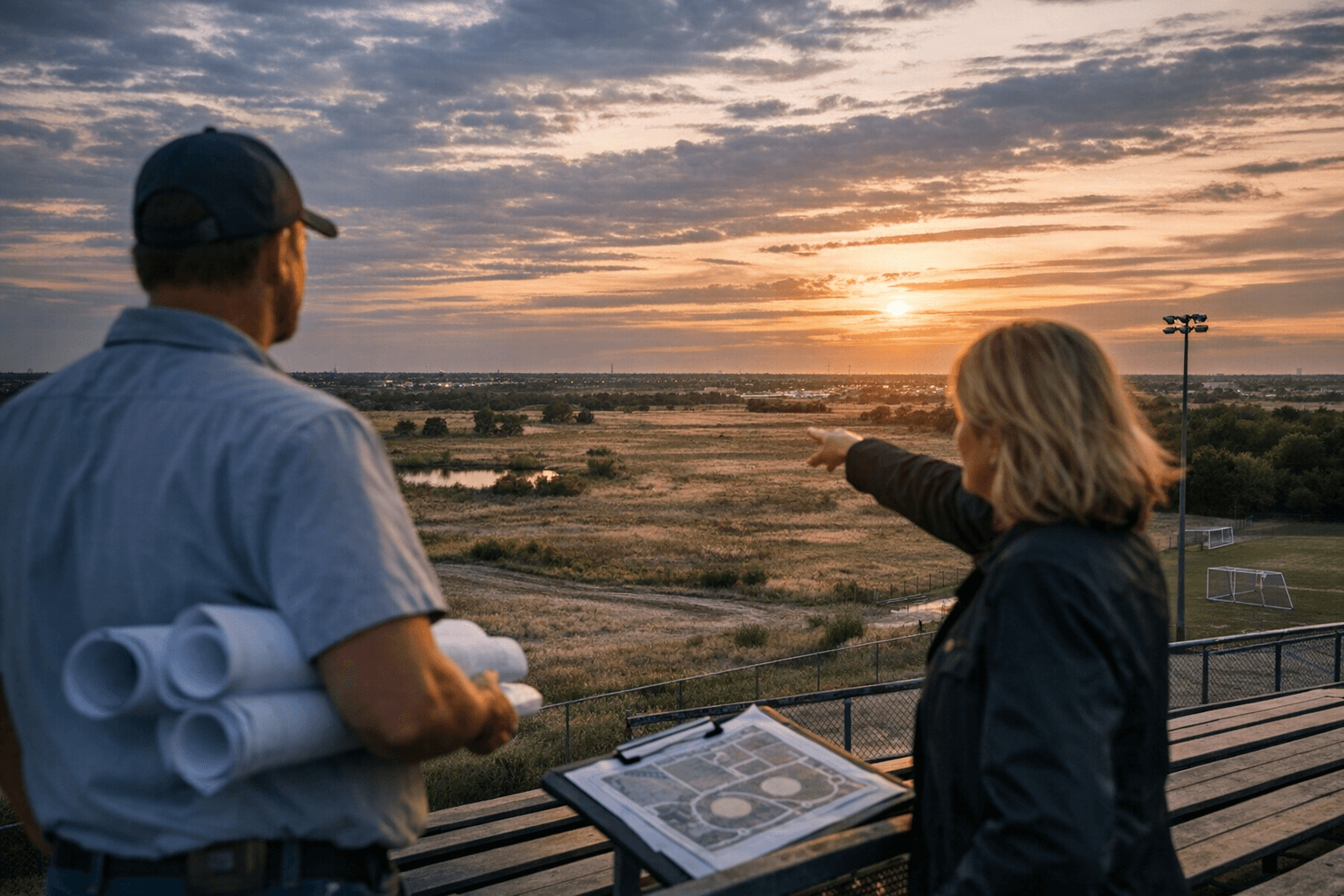
Before McKinney writes a single construction contract for what could become one of North Texas's largest public recreation campuses, the city wants $150,000 worth of answers.
The McKinney City Council voted April 7 to authorize staff to enter exclusive negotiations with Parkhill, Smith & Cooper for a feasibility study tied to a proposed 300-acre recreation and sports-entertainment complex. The $150,000 authorization funds market demand analysis, community needs assessments, programming scenarios, anticipated capital costs, operations modeling and potential funding mechanisms.
The word "exclusive" matters. While Parkhill and city staff work through the study, which runs alongside an already-underway master-site planning engagement, those contract terms are negotiated outside public competitive bidding. Residents will see the results; the negotiation itself stays behind closed doors.
What the complex could actually include remains a wide-open question. City documents identify multi-use sports fields, aquatic facilities, indoor recreation spaces, trails and event infrastructure as possibilities. The sharpest argument for moving forward is economic: a facility at that scale could host regional youth-sports tournaments, a market Collin County cities are actively competing for because tournaments fill hotel rooms and generate sales-tax revenue.
Funding is where the picture gets murkier. City staff floated public-private partnerships, bonds, grants and donations as potential financing mechanisms, but none of those scenarios has been tested yet. That testing is exactly what Parkhill would be hired to do. Several council members pressed for clarity on long-term operating costs and cautioned that the feasibility authorization does not commit the city to building anything.
Specific sites have not been disclosed publicly, which means noise levels, traffic patterns and land-value effects on surrounding neighborhoods remain unknown until later in the planning process.
If the feasibility results support moving forward, a subsequent phase would involve detailed design, refined cost estimates and a vote-ready funding proposal. That is when McKinney residents would get the clearest accounting of what they are being asked to finance, and their most direct opportunity to shape the outcome.
This article was produced by Prism’s automated news system from verified source data, official records, and press releases, then run through automated quality and moderation checks before publishing. The system is built and supervised by the people who set the standards it runs under. Read our full AI policy.
Did this article answer your question?