McKinney clarifies e-bike, scooter and moped riding rules
McKinney’s warning is simple: not every small ride is a bike. Teens, parents and commuters who mix up e-bikes, scooters, dirt bikes and mopeds could end up with citations.

McKinney is drawing a hard line around the small vehicles that now crowd neighborhood streets and sidewalks: some are legal on public roads, some are limited to slower streets, and some belong only on private property. The city’s message matters because a rider who assumes every compact electric device is treated the same way can cross from a quick trip to a citation in seconds.
Why McKinney is clarifying the rules
The local guidance is meant to cut through one of the biggest points of confusion in micromobility: whether a device is an e-bike, a scooter, a moped or a motorbike under Texas law. McKinney has already used category-specific rules in other areas, including golf carts, which the city says may operate only in strict conformance with state law and local ordinance. That makes the new clarification part of a broader enforcement pattern, not a one-off warning.
For families, the practical stakes are obvious. A teen who rides a device thought to be a harmless scooter may actually be operating something the city treats as a motorized mini bike or dirt bike, while a parent may not realize a moped triggers driver’s license, insurance and registration rules. In McKinney, the consequence is not just confusion at the curb, but the possibility of tickets if the wrong device ends up on the wrong street.
E-bikes: legal, but only if the device fits the class
Texas law separates electric bicycles into three classes. Class 1 and Class 2 e-bikes are limited to a top assisted speed of 20 mph or less, while Class 3 e-bikes assist only when the rider is pedaling and can reach more than 20 mph but less than 28 mph. State law also says a person may not operate a Class 3 electric bicycle unless the rider is at least 15 years old.
That classification matters because an e-bike is not just any device with pedals and a battery. If it fits Texas’ electric bicycle definition, it is treated differently from a scooter or moped, and that distinction determines where it can go and what rules apply. The city’s warning suggests residents should not assume a small electric ride can move freely on public streets simply because it looks like a bicycle.
Scooters: speed limits and local limits
Texas law gives motor-assisted scooters a narrower lane than many riders expect. State statute says a motor-assisted scooter may be operated only on a street or highway with a posted speed limit of 35 mph or less, and the law also allows use on bike paths or sidewalks unless a local rule says otherwise. Texas law separately defines the scooter category and expressly excludes pocket bikes and minimotorbikes from it.
That is where McKinney’s clarification becomes important. The city says some scooters are street-legal, while others are limited to private property, and riders who take certain scooters onto public streets could face citations under city ordinances and Texas state law. For a parent or teen, the safest assumption is not “it has two wheels, so it must be fine,” but “what exactly is this device under the law?”
Dirt bikes and motorized mini bikes: private property only
McKinney’s warning is especially sharp on dirt bikes and motorized mini bikes. The city says they may only be ridden on private property with the property owner’s consent, which means public streets are not the place for a quick run around the block. The local ordinance also presumes a parent permitted the use unless shown otherwise, a detail that puts families directly in the frame when younger riders are involved.
That is the clearest example of why classification matters. A rider who sees a compact motorized bike and assumes it belongs in the same lane as a bicycle or e-bike can be wrong on the street and wrong on the law. In practical terms, that can mean a stop by police, a citation, and a ride home that ends with more than just a warning from a parent.
Mopeds: license, insurance and road limits
Mopeds come with the most traditional set of vehicle rules. McKinney says riders need a valid driver’s license, the vehicle must be registered and insured, and mopeds are only allowed on roads posted at 45 mph or below. Texas insurance guidance says mopeds still require the same liability insurance as motorcycles, and TxDMV says registering a vehicle requires proof of current liability insurance at a county tax office or approved substation.
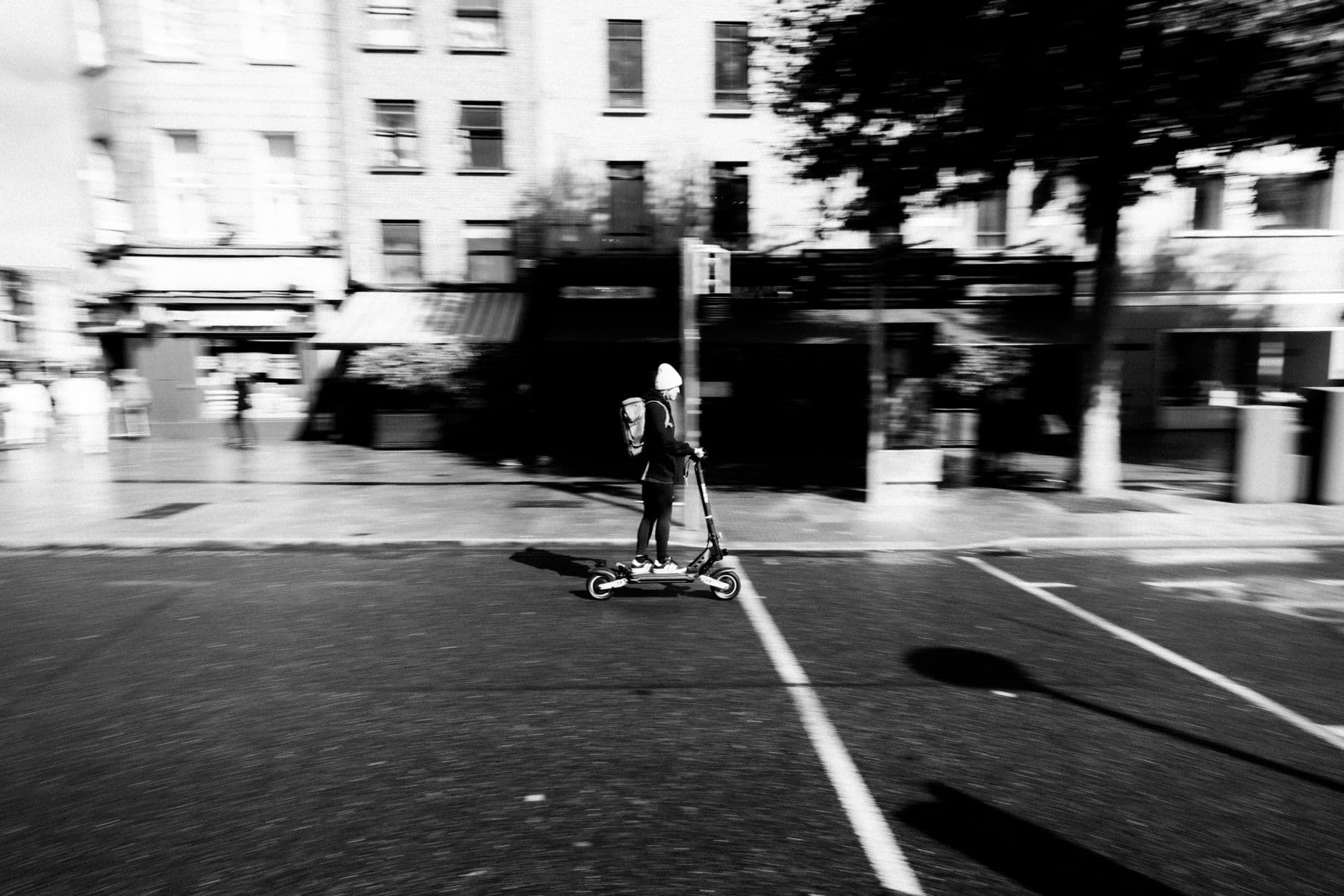
That combination creates a bright line for residents who think a moped is just a slower, simpler scooter. It is not. Once a vehicle is classified as a moped, the rider is in motor-vehicle territory, which means driver qualification, insurance and registration are not optional extras.
What enforcement can look like in McKinney
The city’s warning makes clear that the legal risk is not theoretical. Riders who use electric bikes, scooters or motorized mini bikes on public streets where they do not belong could face citations under city ordinances and Texas state law, and the problem is likely to be enforced by local police as part of normal traffic and code enforcement. McKinney already points residents to category-specific operating rules in other vehicle types, including golf carts, so the approach here fits the city’s established playbook.
That is why the issue has become a neighborhood matter, not just a traffic-law footnote. Texas A&M Transportation Institute research for TxDOT has examined e-bike-involved crashes using state data from 2016 through 2025, underscoring that these questions are tied to real safety outcomes, not just paperwork and labels. In a city where these devices are more visible every year, clear rules can prevent tickets, reduce disputes and keep riders out of danger before police have to step in.
Where McKinney’s next explanations are likely to come from
If residents want to hear more, the city already has a regular forum. McKinney City Council generally meets on the first and third Tuesday of each month, with work sessions beginning at 3 p.m. and regular sessions at 6 p.m. That gives police, staff and residents a standing place to raise questions if the city decides it needs to sharpen the guidance further.
For now, the rule of thumb is straightforward: know the category before you ride. In McKinney, that means checking whether the device is an e-bike, a scooter, a dirt bike, a mini bike or a moped, because the legal road map changes fast once a vehicle crosses into a different class.
This article was produced by Prism’s automated news system from verified source data, official records, and press releases, then run through automated quality and moderation checks before publishing. The system is built and supervised by the people who set the standards it runs under. Read our full AI policy.
Did this article answer your question?