McKinney updates aviation code as airport nears passenger service
McKinney tightened its aviation code to match TSA and FAA rules as passenger service nears, a sign the airport is moving from general aviation toward commercial flights.
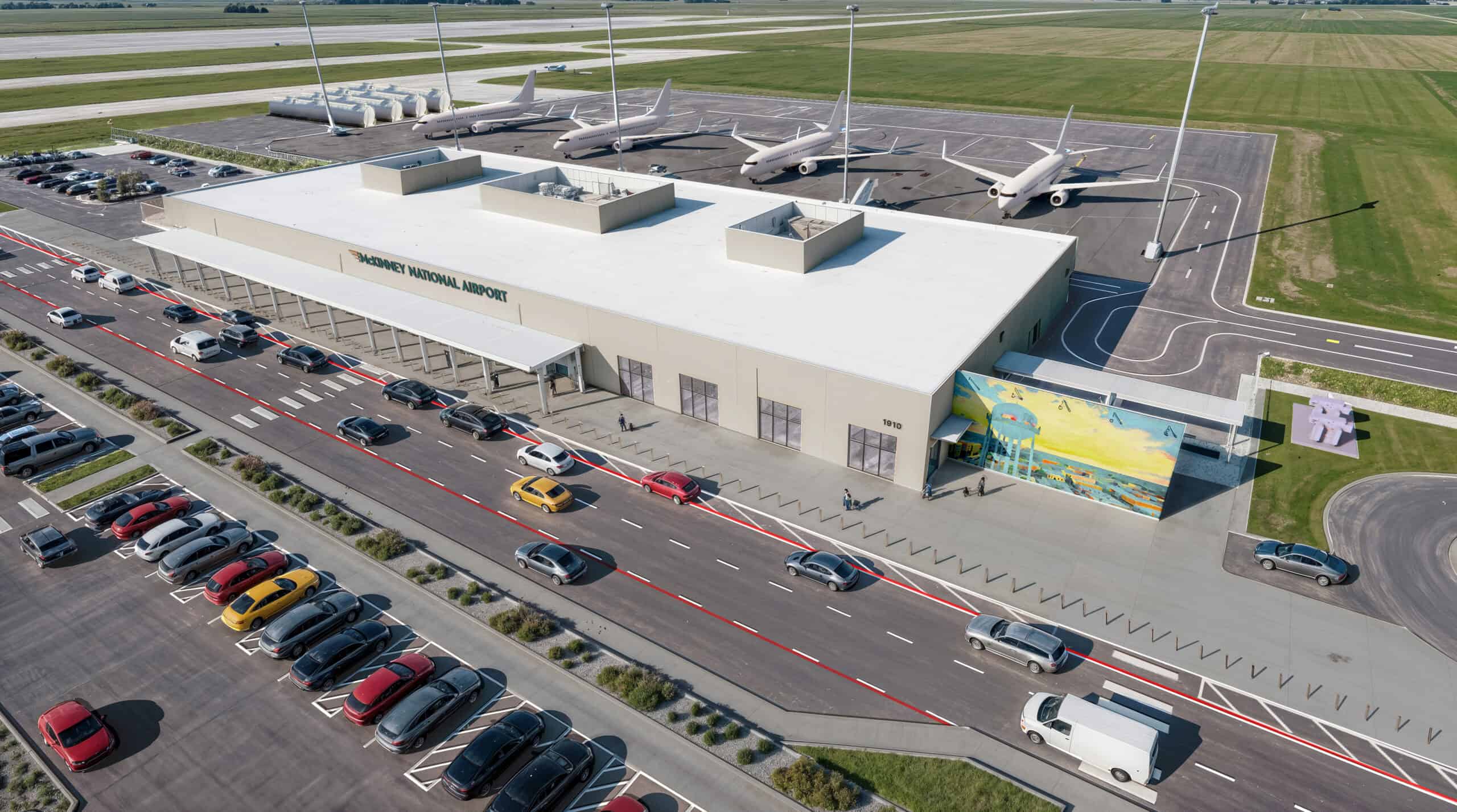
McKinney City Council approved a major rewrite of the city’s aviation code as McKinney National Airport moves closer to passenger service, a change meant to bring local rules in line with Transportation Security Administration and Federal Aviation Administration standards. The update sharpens security, access-control and operational requirements at TKI, where the city is building the legal and physical framework for commercial flights later this year.
In practical terms, the new code is the kind of behind-the-scenes work that determines who can enter secured areas, how vehicles and airport personnel move around the site, and how the city documents compliance once regular airline passengers start arriving. That matters because McKinney is no longer planning for the airport as a simple general aviation field. It is preparing for a more regulated transportation hub, with rules that have to hold up under federal scrutiny as well as local use.

The transition is significant in a city where the airport’s first flight came in 1979 and where McKinney National Airport still serves the Dallas-Fort Worth area as a general aviation airport. The city says airport revenue from fuel sales, hangar and office rents, ground leases and other aeronautical services fully funds airport operations. City materials also note that the FAA recommends updating airport master plans every 7 to 10 years and requires an FAA-approved Airport Layout Plan before development can begin, which helps explain why the code revision is landing now.
The passenger buildout is already far along. McKinney says construction of the passenger terminal, commercial aircraft apron, parking areas and other support facilities is on schedule for late 2026, with the terminal expected in November 2026. The airport is extending Runway 18/36 by 500 feet at the north end, and the threshold for Runway 18 was relocated 1,040 feet south during the project. The city received a $14.8 million Texas Department of Transportation grant for eastside airfield work in November 2025, after TxDOT issued a Finding of No Significant Impact and Record of Decision on April 21, 2025.

McKinney also locked in its first airline partner on Dec. 17, 2025, when Avelo Airlines signed a five-year Airline Use and Lease Agreement with an optional five-year extension. The deal covers runway and taxiway use, aircraft parking and maintenance areas, and terminal space, and Avelo said it expects to create well over 100 jobs in the region when service begins.

The city has been staffing and socializing the change as well. Teresa Lyons was promoted to Airport Maintenance and Operations Manager on March 30, 2026, after earlier roles as Airport Operations Analyst and Airport Operations Supervisor. McKinney said Lyons has helped create the programs, policies and manuals needed for FAA and TSA certification, and Lyons said the team is working to “rewrite aviation history” in North Texas. With annual economic activity estimated at nearly $300 million, the code overhaul is one more sign that McKinney is turning a long-planned airport expansion into an operating reality.
This article was produced by Prism’s automated news system from verified source data, official records, and press releases, then run through automated quality and moderation checks before publishing. The system is built and supervised by the people who set the standards it runs under. Read our full AI policy.
Did this article answer your question?