Medical City Frisco launches first ECPR program for cardiac arrest patients
A Frisco ambulance can now alert a Plano ECMO team while a cardiac-arrest patient is still en route, cutting precious minutes from care. Only adults 18 to 75 who meet strict criteria qualify.
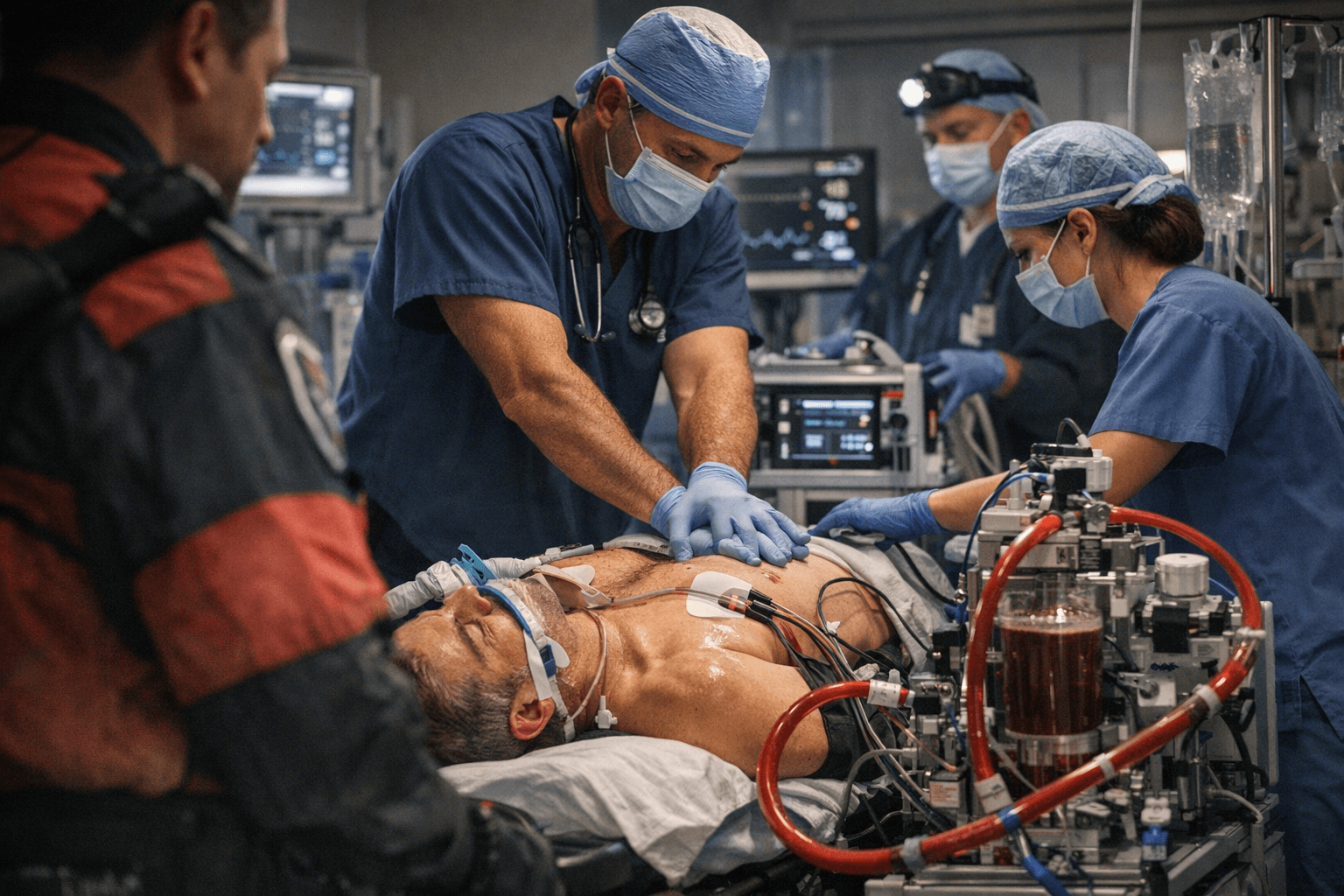
When a heart stops in Frisco, the new question is no longer just how fast paramedics can get a patient to the hospital. It is whether a specialized team can be waiting with a much more aggressive rescue plan before the ambulance even reaches the bay.
Medical City Frisco has become the first hospital in the city to offer extracorporeal cardiopulmonary resuscitation, or ECPR, through a mobile program built with Medical City Plano. In plain English, ECPR is CPR with a machine-assisted backup. Medical City says the program uses ECMO, or extracorporeal membrane oxygenation, to temporarily take over the work of the heart and lungs when standard CPR is not enough to restart the heart.
The timing is the point. Beginning in April, paramedics in the field can activate ECPR teams at both hospitals while transporting an eligible cardiac arrest patient. That gives physicians, nurses and perfusion staff time to prepare before arrival, reducing the gap between rescue and treatment when every minute can shape survival. Medical City says the program is the only mobile ECPR system in North Texas and the only intra-system program in the country.
Not every patient will qualify. Medical City says ECPR is intended for adults ages 18 to 75 who meet specific clinical criteria, which means it is a highly specialized option for a narrow group of cardiac arrest cases rather than a routine response for every emergency call. For Frisco and Plano families, the practical change is that some patients may now be routed into a more advanced care pathway instead of a standard transport alone.
The new service builds on Medical City Plano’s ECMO program, which has treated patients since 2019 and now serves more than 100 people each year. The Plano hospital earned ELSO Platinum Level Center of Excellence status in July 2025, and it had already partnered with Plano Fire-Rescue in December 2022 to train and deploy ECMO measures before hospital arrival. That history helped make the Frisco-to-Plano connection possible.
Ken Stevens, Medical City Frisco’s CEO, said the investment reflects the hospital’s commitment to system-wide excellence and innovation. Dr. Patrick Liu and Dr. Andrews Fredericks also described the program as a major advance in cardiac arrest care, with Fredericks saying ECMO can significantly improve the chance of survival. He said the therapy could become standard within the next decade.
For Collin County, the significance is immediate. Medical City Frisco opened in April 2016 and now operates as a 98-bed acute-care hospital, but the real story is what happens when a worst-day emergency comes in the middle of a normal day. In a cardiac arrest, a machine, a coordinated transport plan and a hospital team already in motion can be the difference between too late and a fighting chance.
This article was produced by Prism’s automated news system from verified source data, official records, and press releases, then run through automated quality and moderation checks before publishing. The system is built and supervised by the people who set the standards it runs under. Read our full AI policy.
Did this article answer your question?