North Texas Youth Mental Health Conference Draws 1,500 Students, Educators
One in 8 Texas teens contemplated suicide last year. Last week, 1,500 students gathered in Arlington to learn how to help each other.
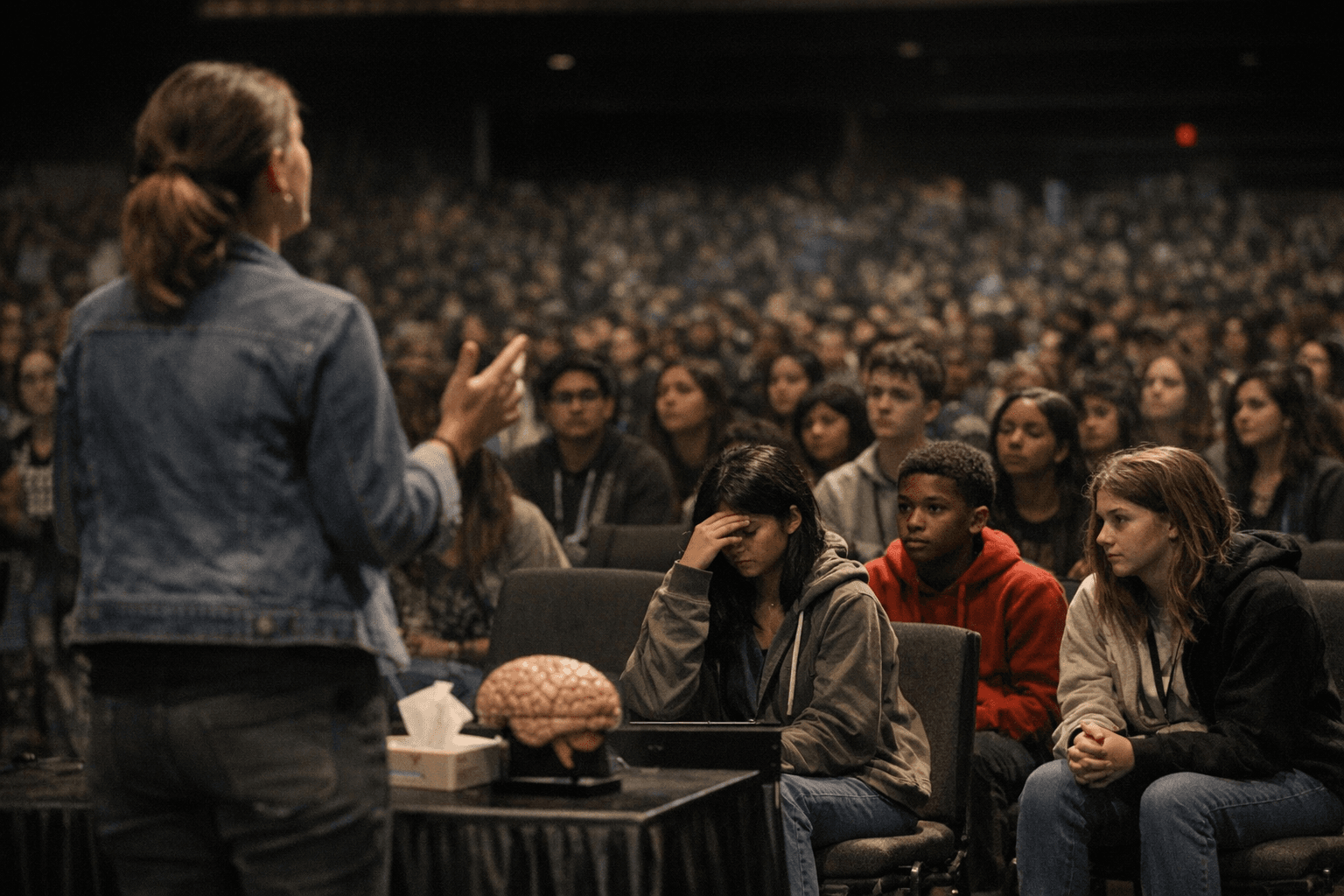
Stigma around mental health is complex and shows up in many ways," mental health advocate Emma Benoit told hundreds of North Texas teenagers gathered at the Dr. Marcelo Cavazos Center for Visual and Performing Arts in Arlington. "That belief can keep people from asking for help."
Benoit's keynote opened the 4th annual Texas-Sized Peer-to-Peer Youth Mental Health Conference on April 1, where more than 1,500 students, educators and volunteers spent two days learning to recognize a peer in crisis and act before it gets worse. The conference, themed "Let Hope Rise," drew participants from 22 school districts, charter and private schools, and more than 55 middle and high schools across North Texas. High schoolers and middle schoolers attended on separate days, allowing organizers to build age-tailored curricula for each group.
Three suicide-prevention nonprofits co-produced the event: the Grace Loncar Foundation, the Grant Halliburton Foundation and The Jordan Elizabeth Harris Foundation. Programming was built around skills students could bring back to campus immediately: recognizing early warning signs of a mental health crisis, starting a check-in conversation with someone who seems to be struggling, and connecting that person to a trusted adult rather than trying to provide counsel themselves. Students also moved through peer-led breakout sessions and leadership panels on building supportive school climates.
The urgency behind that curriculum has a number attached to it. Matt Vereecke, CEO of The Jordan Elizabeth Harris Foundation, cited the state's most recent Youth Risk Behavior Survey finding that 1 in 8 Texas teens contemplated suicide in the past year. "Students selected to be members of Hope Squads are essential to reversing these troubling numbers," Vereecke said.
The Hope Squad model, central to the conference curriculum, trains students who have been nominated by their own classmates as trustworthy peers. Members are not expected to serve as counselors. They learn to spot warning signs and make referrals to adults who can offer clinical support, keeping responsibility at the appropriate level while shortening the gap between a struggling student and professional help.
Kevin Hall, president of Grant Halliburton Foundation, said the student turnout across both days reinforced the case for peer-led prevention work. "The energy and engagement from students throughout the conference was incredible. You can see the impact when young people feel empowered to support one another."
For Collin County school districts, which are among the fastest-growing in Texas while facing a documented shortage of licensed counselors, the model offers a practical way to expand mental health capacity on campuses without waiting for additional professional hires. Several local districts sent delegations and are expected to evaluate how to embed conference lessons into campus programs ahead of the 2026-27 school year.
Collin County students and families seeking support can reach Grant Halliburton Foundation's Here For Texas Mental Health Navigation Line at 972-525-8181, available Monday through Friday from 9:30 a.m. to 5:30 p.m. Anyone in immediate crisis can call or text 988 to reach the Suicide and Crisis Lifeline at any hour. Additional programming and school partnership information is available through the Jordan Elizabeth Harris Foundation and the Grace Loncar Foundation.
This article was produced by Prism’s automated news system from verified source data, official records, and press releases, then run through automated quality and moderation checks before publishing. The system is built and supervised by the people who set the standards it runs under. Read our full AI policy.
Did this article answer your question?