Plano approves Perot monuments for Legacy Pedestrian Bridge north walls
Residents learn Plano approved funding and plans for two H. Ross Perot monuments at the Legacy Pedestrian Bridge, with completion targeted for late spring 2026.
1. City council approval and decision
Plano City Council voted to approve the monument project and the associated funding, formalizing the city's commitment to place two obelisk-style honors to H. Ross Perot on the north walls of the Legacy Pedestrian Bridge. This vote moves the project from proposal to execution, signaling municipal backing for commemorating a local business figure whose companies shaped the city’s economy. For residents, council approval means public resources and permitting are aligned so the work can proceed without further legislative delays.
2. Awarded contract and budget specifics
The city awarded a contract worth about $580,000 to Concord Commercial Services to design and install the monuments, a figure that covers materials, site work, and contractor fees as scoped by the city. That award sets expectations for the project’s financial footprint in Plano’s capital or public art budget, and anchors the timeline and deliverables to a named vendor. Neighbors will see how a mid-six-figure public investment translates into a permanent streetscape feature along a high-profile pedestrian corridor.
3. Monument placement on the Legacy Pedestrian Bridge
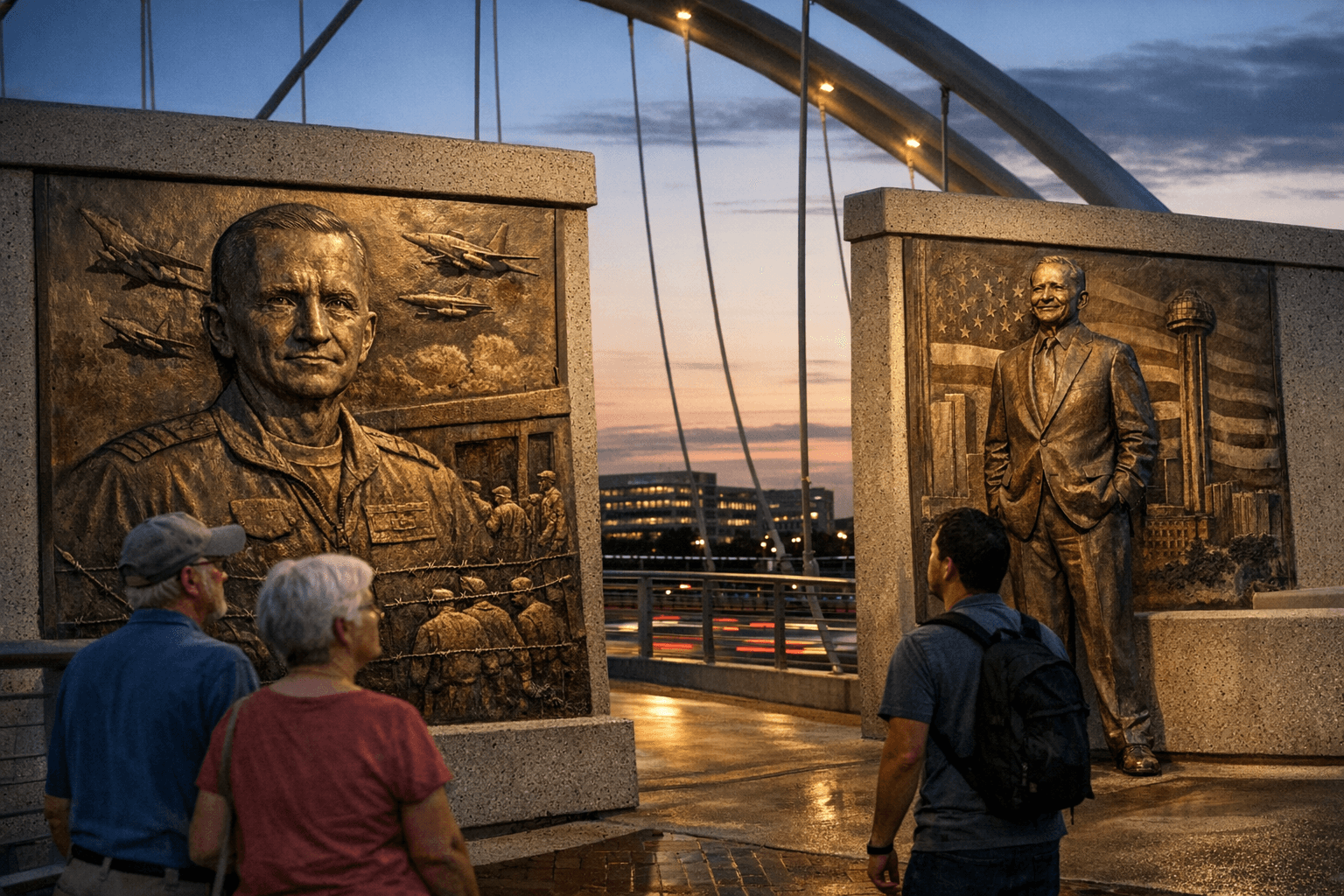
Both obelisk-style monuments will be installed on the north walls of the Legacy Pedestrian Bridge, which spans the Dallas North Tollway and provides a visible backdrop for the sculptures. Positioning the pieces on the bridge’s north-facing walls maximizes visibility for pedestrian traffic and motorists on the DNT, weaving the memorial into everyday commutes and downtown approaches. The location underscores the intent to make the recognition both commemorative and integrated into the urban fabric.
4. Design elements: obelisk form and bronze eagles
The monuments will take an obelisk-style form, a classical shape chosen for its verticality and civic resonance, and each will feature a bronze eagle sculpture as a focal point. The eagle motif carries symbolic weight, often associated with leadership and aspiration, which aligns with the civic framing of Perot’s role in local business development. For design-minded locals, the pairing of obelisk and bronze eagle creates a formal, enduring aesthetic rather than a temporary marker.
5. Perot family donation of the eagle sculptures
The Perot family is donating the bronze eagle sculptures that will be mounted on the obelisks, a private contribution that reduces the city’s material cost while ensuring family stewardship over the artistic element. That donation reflects how public memorials often combine municipal funding with private philanthropy to reach a shared goal. For many residents, the family gift may be a point of reassurance that the sculptures reflect the family’s intent for how Perot is remembered.
6. Plaques and interpretive messaging
Each monument will include plaques that provide context about H. Ross Perot’s contributions, giving passersby a concise account of why the city chose commemoration at this site. Those plaques will shape the public narrative by highlighting Perot’s role in local economic growth rather than presenting a broad biography, so copy and placement matter for how history is read from the sidewalk or overpass. Thoughtful wording and durable materials will be key to ensuring the plaques serve both educational and civic functions for years to come.
7. Reason for recognition: Perot’s business legacy in Plano
City officials described the installation as a permanent recognition of Perot’s role in shaping Plano’s business growth, specifically noting his founding of Electronic Data Systems and Perot Systems. Those companies helped define Plano’s profile as a headquarters and technology hub, and the monuments are intended to anchor that economic memory in physical form. For current and future residents, the installation offers a concrete link between local economic development and the personalities who influenced it.
8. Project timeline and completion target
The city and contractor have slated the project for completion in late spring 2026, giving the work a clear milestone that residents and commuters can watch for as construction progresses. That target allows for fabrication, site preparation, installation, and any required inspections before the pieces are unveiled to the public. If schedules hold, expect visible activity on the north side of the bridge in the months leading up to that completion window.
9. Local impact on pedestrians, drivers, and civic identity
The monuments will alter the experience of both those walking the bridge and the motorists passing beneath on the DNT; they add an element of place-making to an otherwise utilitarian corridor. For pedestrians, plaques and bronze work create a small outdoor learning moment; for drivers, the silhouettes will register as a civic landmark on routine routes. More broadly, the memorials contribute to Plano’s civic identity by signaling which local stories the city chooses to make permanent in public space.
10. Practical considerations for residents and community voice
As a practical takeaway, residents should expect intermittent construction activity near the Legacy Pedestrian Bridge and keep an eye on city notices about any short-term impacts to walkway access or nearby streets. Use this moment to reflect on how public art and memorials shape neighborhood character and to weigh in on future projects by attending council meetings or commenting during public art reviews. Planning and participation help ensure that permanent installations reflect shared values and enhance daily life for the Plano community.
This article was produced by Prism’s automated news system from verified source data, official records, and press releases, then run through automated quality and moderation checks before publishing. The system is built and supervised by the people who set the standards it runs under. Read our full AI policy.
Did this article answer your question?