CRDAMC surgeons train Copperas Cove EMS in chest trauma care
Army surgeons drilled Copperas Cove EMS on a lifesaving chest procedure that can buy a crash or shooting victim the minutes needed to survive.
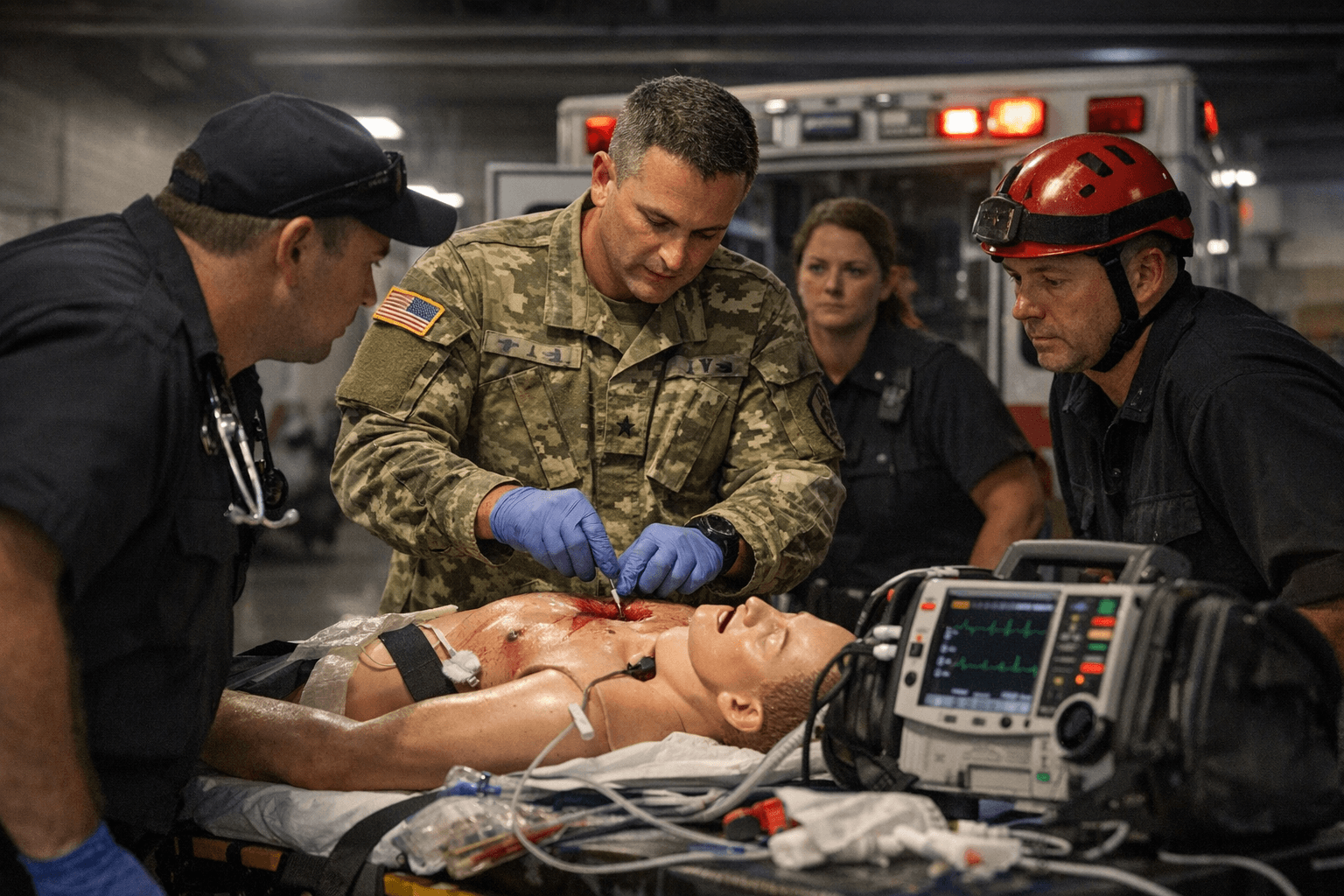
When a chest injury traps air or blood around a lung, the first few minutes can decide whether a patient lives long enough to reach the hospital. That is why Lt. Col. Chonna Kendrick and Maj. Kevin McGovern recently led hands-on thoracostomy training for Copperas Cove EMS, giving local first responders a skill meant for severe trauma after a major crash, shooting or other penetrating chest injury.
Thoracostomy is an advanced procedure used to relieve dangerous pressure in the chest. In plain English, it can open the way for trapped air or blood to escape so a lung can expand and the heart can keep working. For crews that cover Copperas Cove and the surrounding county roads, that matters because the wrong kind of chest wound can turn fatal fast without immediate action.
The Copperas Cove Fire Department, which provides both fire and EMS service for the city and nearly 90 square miles of southern Coryell County, averages about 350 emergency responses each month. That call volume means its crews regularly run into the kinds of medical emergencies where trauma skills, speed and coordination can matter as much as speed to the scene. The city’s close ties to Fort Cavazos and to Carl R. Darnall Army Medical Center help make that response network stronger.
CRDAMC serves roughly 100,000 TRICARE Prime beneficiaries and operates nearly 100 buildings totaling 3,577,593 square feet at Fort Cavazos, the Army’s largest installation. The medical center provides primary, specialty, emergency and inpatient care, and it also runs graduate medical education and allied health training programs. Its emergency medicine residency program began in 1980 and first received ACGME accreditation in 1982, giving the hospital a long academic role in trauma and emergency care.
That military training footprint reaches into the community, too. Copperas Cove Medical Home, a CRDAMC clinic in the city, is temporarily closed because of a fire safety hazard, with patient care moved to Russell Collier Health Clinic. Even with that disruption, the broader military-civilian care network remains tightly linked, and the thoracostomy training shows how that partnership can extend beyond clinic walls and into the first minutes after a life-threatening injury.
Kendrick and McGovern’s instruction was part of that readiness effort, connecting Army trauma expertise with the people most likely to reach a severely injured patient first in Copperas Cove and southern Coryell County.
This article was produced by Prism’s automated news system from verified source data, official records, and press releases, then run through automated quality and moderation checks before publishing. The system is built and supervised by the people who set the standards it runs under. Read our full AI policy.
Did this article answer your question?