Leon Junction's rail past shaped rural Coryell County life
Leon Junction survived because a railroad finally arrived, then thinned when rail service, shipping, and school access moved elsewhere. Its history still explains how rural Coryell County communities rose, peaked, and faded.
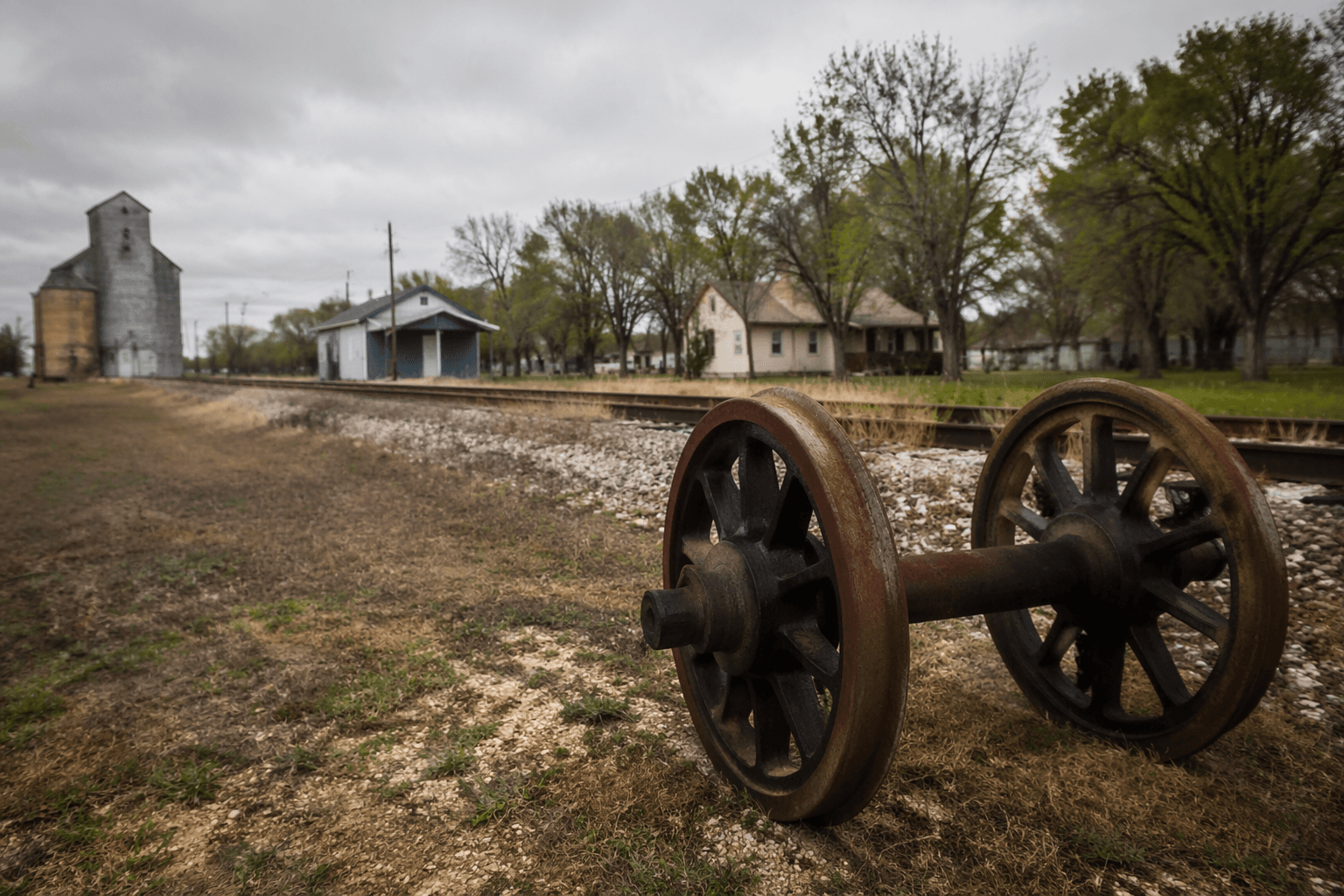
Leon Junction sits on the Leon River and Farm Road 931 about ten miles southeast of Gatesville, but its deeper map is drawn by rail lines, school access, and the way farm products once moved out of Coryell County. The place began with a railroad that was proposed but never built, then found life when a different line did arrive in 1882. That pattern, arrival followed by retreat, is the key to understanding why the community mattered then and why it still matters now.
A community named for a river and a railroad that never came
Leon Junction took shape in the early 1880s and got its name from two things: the Leon River and a proposed Lampasas railroad that was never built. The Texas and St. Louis Railway completed the Waco-to-Gatesville line in 1882, and that gave the settlement actual rail service instead of only a plan on paper. A post office opened the next year, in 1883, with Jackson Thomason as postmaster, a sign that the community had enough activity to need a formal mailing point.
By the mid-1890s, Leon Junction had three general stores and about 50 residents. That may sound small now, but in a rural county where rail access determined what could be sold, shipped, and stocked, those stores were part of a functioning local economy. Cotton was the principal shipment of area farmers, which ties the town directly to the county’s agricultural rhythm and to the railroad that carried that cotton to broader markets.
Rail access made Gatesville the county’s shipping center
Leon Junction cannot be understood apart from Gatesville. Residents there gave $30,000 and land to the Texas and St. Louis Railway so the Waco-to-Gatesville section could be built, and that investment opened Coryell County to outside markets. It also made Gatesville the county’s major shipping and supply center, which changed where people bought goods, where farmers sent crops, and which roads and depots mattered most.
That broader rail network shaped Leon Junction’s early life even though the community itself never grew into a town on Gatesville’s scale. The line tied farm production, freight movement, and daily commerce into one system. When that system worked, a settlement with only a few dozen residents could still feel busy because it sat on a route that connected farms, stores, and county trade.
Coryell County’s geography reinforced that importance. The county covers 1,031 square miles in central Texas, and the Leon River drains the northern and eastern parts of it. In a county that large, transportation corridors mattered because distance was not abstract. Rail lines and later road access determined which places stayed connected and which ones slipped to the margins.
School service helped define whether a rural community could hold on
The community’s school history shows another layer of rural survival. In 1904, the New Olive School served Leon Junction and the surrounding area with two teachers and 75 students. That is a large student count relative to the settlement’s size and shows that the school reached beyond the immediate footprint of the community itself.
That matters because school access often decides whether families stay close to a place or move toward a larger center. Leon Junction’s earlier school service was local and rural, while modern district coverage places the community within the Gatesville Independent School District. That shift tells a familiar Central Texas story: a small rural school that once anchored scattered households eventually gives way to a broader district arrangement tied to a larger town.
For families tracing the area’s history, that change helps explain why some names remain on the landscape even after the institutions that sustained them have gone. The school was not just a building. It was part of the infrastructure that let a place function as a community rather than a dot on a map.
The decline came when the railroad stopped carrying the community
Leon Junction reached a reported population of 100 in 1914, then fell to 25 by the 1930s. The decline was gradual, but the railroad’s later retreat made it decisive. In 1972, the St. Louis Southwestern Railway of Texas abandoned the track between Lime City and Gatesville, ending rail service for Leon Junction. The last train left Gatesville on Nov. 14, 1972, after the Interstate Commerce Commission approved abandonment of the 19-mile Lime City-to-Gatesville branch line.
Local opposition was real. Reports from the time said the Gatesville Chamber of Commerce vigorously opposed the abandonment, which makes clear how much the line still mattered to the county even after automobiles and highways had taken over most freight and passenger movement. Once that branch line disappeared, Leon Junction lost not only rail service but also the economic logic that had supported a busier settlement.
By the 1980s, only the post office and one business marked Leon Junction on county highway maps. That detail is stark because it captures the difference between a place that still exists and a place that still functions as a center. Leon Junction remained on the map, but its daily role had shrunk to a fraction of what rail-era traffic had once made possible.
Why Leon Junction still matters in Coryell County now
Leon Junction is useful history because it explains modern rural questions in concrete terms. Transportation access still decides where people work, shop, and get to school, and the old pattern is easy to see here: when the rail line came, the settlement grew; when the rail line disappeared, the community thinned. That same logic still shapes how far families drive for services, how many local stops survive along a road like FM 931, and why some Coryell County communities endure while others fade into names on old maps.
It also gives family historians and road-trippers a better way to read the county. A tiny place near the Leon River might look incidental, but Leon Junction once sat inside a freight system that moved cotton, supported stores, and tied rural households to Gatesville and Waco. The present-day remnant is not a failure so much as evidence of how infrastructure decides scale.
That is why Leon Junction remains a meaningful marker in Coryell County. It shows how a railroad that almost was, a railroad that finally arrived, a school that served a wider rural district, and a rail line that later disappeared can shape the life of a community long after the busiest years are gone.
This article was produced by Prism’s automated news system from verified source data, official records, and press releases, then run through automated quality and moderation checks before publishing. The system is built and supervised by the people who set the standards it runs under. Read our full AI policy.
Did this article answer your question?