Mother Neff State Park volunteer honored for nearly 1,000 hours of work
Liz Rohrer spent nearly 1,000 hours tending Mother Neff’s native garden, earning a statewide volunteer award for work that shapes the park’s visitor experience.
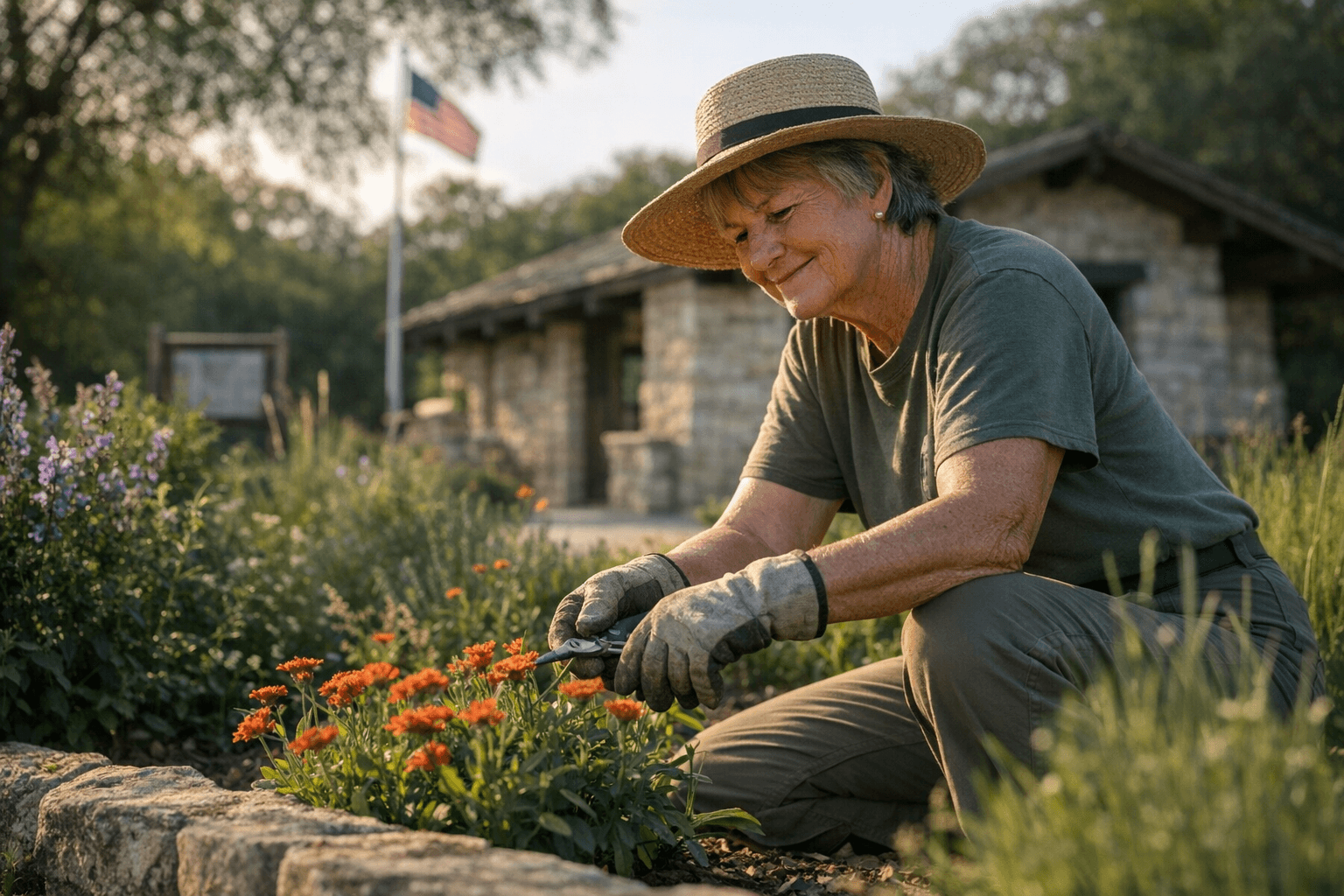
Mother Neff State Park’s native garden now has a statewide spotlight, and the recognition went to the volunteer who has kept it growing week after week. Liz Rohrer received an Outstanding Volunteer Award at the Texans for State Parks Annual Conference and Awards Program after volunteering weekly since February 2021 and logging nearly 1,000 hours at the park.
Her work has centered on the native garden near the visitor center, where the plants do more than add color to the grounds. The garden supports the park’s educational mission by showing visitors how native species can be grown in smaller spaces at home, and it gives families an immediate example of what they can see elsewhere on the park’s trails and prairie areas. Rohrer has weeded and maintained the space, helped identify plants, supported events and kept the grounds looking cared for as visitation and operational demands have increased.
The award places that labor inside a statewide system of recognition. Texans for State Parks presents annual honors in four categories, including Outstanding Volunteer, across six Texas State Parks regional areas. Rohrer’s award tied her local work in Coryell County to a broader network of people who keep state parks open, welcoming and functional.
Mother Neff State Park carries a special place in Texas history as the state’s first state park. The Texas State Historical Association places it on the Leon River in eastern Coryell County, along State Highway 236, and says it was named for Isabella Eleanor Neff, mother of Gov. Pat M. Neff. Texas Time Travel says the original land donation came in 1916 and that the park became the first official state park in Texas in 1921, while Texas Parks and Wildlife says Isabella Neff donated the original six acres in 1921.
The park’s identity has long been shaped by stewardship, from Civilian Conservation Corps-built facilities to the interpretive displays, hiking, camping, picnic areas, prairie wildflowers and canyon trails that now draw visitors. Rohrer’s nearly 1,000 hours are part of that same tradition, and they show how one volunteer’s steady work can help preserve a landmark that remains central to Coryell County’s public life.
This article was produced by Prism’s automated news system from verified source data, official records, and press releases, then run through automated quality and moderation checks before publishing. The system is built and supervised by the people who set the standards it runs under. Read our full AI policy.
Did this article answer your question?