Pearl's odd naming accident shaped a Coryell County community
A post-office mistake gave Pearl its name, but churches and a repurposed school kept this northwest Coryell County community alive.
Pearl started with a clerical error, but it endured because people kept building institutions around it. About 22 miles west of Gatesville in northwest Coryell County, the community grew into a place where church life, school life, and local identity mattered as much as the name on the map.
How Wayback became Pearl
Pearl was first known as Wayback after a post office application meant to request the name Swayback, a nod to nearby Swayback Mountain. A clerical mistake changed the post office name in 1884, and the town was later renamed Pearl on March 28, 1890, after Pearl Davenport, the son of a local store operator. That odd naming accident is part of why the place still stands out in Coryell County memory.
The town’s early growth came from families who put down roots and stayed. G. Dallas Edmondson and his brothers, J. Polk and Sam, arrived in 1871, and by the mid-1890s Pearl had a general store, a corn mill, four churches, and about 150 residents. The community also had a steam-powered cotton gin, a flour mill, and a gristmill, which tells you how self-contained a small rural settlement had to be to keep people fed, supplied, and connected.
Even the telephone system reflected that do-it-yourself character. In 1908, the Price System telephones came to Pearl, but subscribers had to buy their own boxes, wire, and posts, then string and maintain their own lines. The average monthly bill was 40 cents, a reminder that service was cheap only if the community did the work itself.
Pearl’s medical life was equally personal. In the early 1900s, three doctors, Dr. H. Davenport, Dr. Taylor, and Dr. Ralph Bailey, waged a price war that reportedly pushed the cost of delivering a baby down to $2.50. Dr. B. F. King, who moved to Pearl in 1920 and died in 1947, became the last country doctor the town remembers by name.
Churches kept Pearl on the calendar
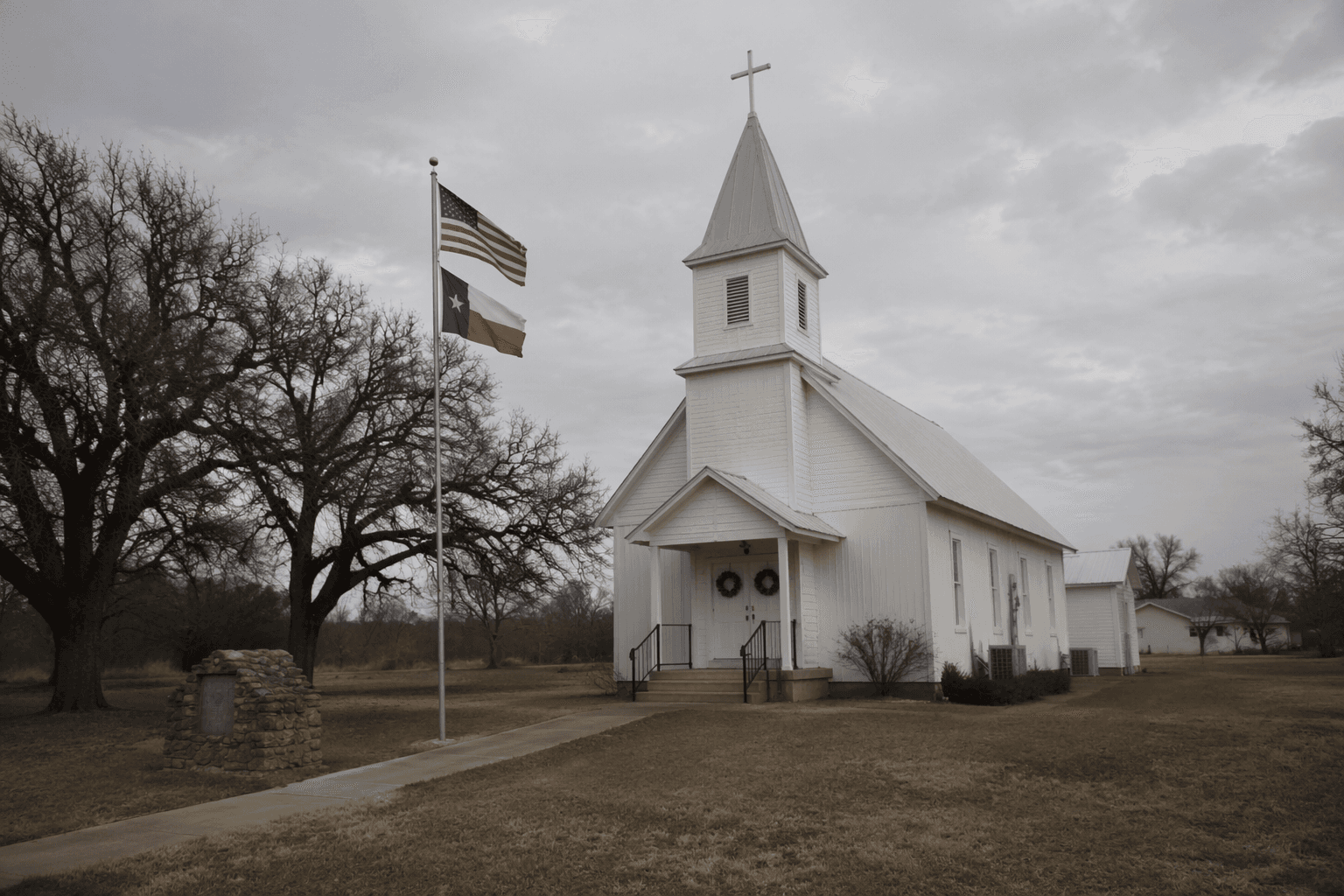
Pearl’s strongest institution was not a courthouse, a business district, or a railroad stop. It was the church network. Over time the community supported Methodist, Church of Christ, Baptist, United Baptist Church of Jesus Christ, and Nazarene congregations, and by the mid-1890s those churches had become the backbone of local social life.
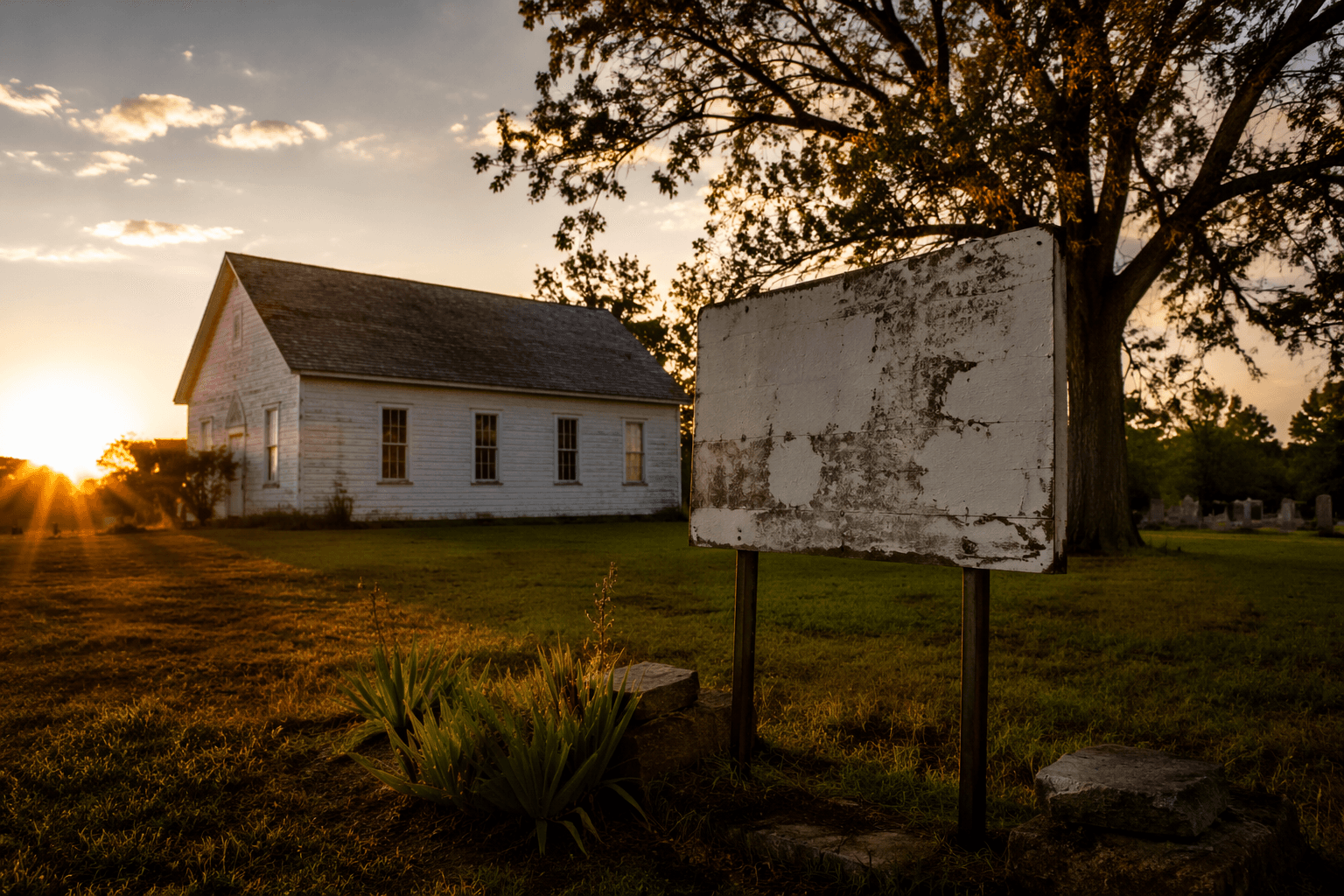
The Methodist story reaches deep into the settlement’s history. The congregation organized in the winter of 1875-76 and first met in the Hope Schoolhouse. In 1890, Charley Karnes donated three acres to the congregation, giving the church a physical base that matched its social role. The property later transferred to the Pearl Cemetery Association in 1985, which shows how church land in a small community can remain part of civic life long after a congregation changes.
The Baptist congregation began in 1884 under the guidance of Rev. E. Berry, a pioneer missionary and preacher, as the Bee House Missionary Baptist Church in the Bee House community about four miles west of Pearl. It moved to Pearl in 1889 and became Mt. Olive Missionary Baptist Church. Early worship services were held in the Masonic Lodge Hall, which also served as the community schoolhouse, and Charles T. Karnes sold three acres for the first sanctuary. That small frame building was used until 1949, and the congregation met on the fourth Sunday of each month until 1957, when it secured its first full-time pastor.
The Church of Christ followed a similar path from neighboring Bee House into Pearl itself. Worship began there around 1878, then moved to the first Pearl schoolhouse on Cowhouse Creek. The church formally organized in October 1895 and later expanded its sanctuary, another sign that in Pearl, schools and churches often shared the same physical space before they separated into distinct institutions.
For decades, church meetings were more than worship. Until the mid-1920s, ten-day revival meetings in July and August were the main social event of the year. That detail matters because it shows how Pearl’s churches filled the role of community calendar, social center, and spiritual anchor all at once.
The school became the community center
Pearl’s school history tracks the same pattern of adaptation. In May 1875, Ellen Reily deeded land for a school called Cowhouse School. By the 1890s, it was known as Sweet Home School, and the Pearl School marker describes its early life as a progression from a log cabin with split-log benches to a modern plant with a gymnasium.
The school expanded alongside the settlement. It grew from one or two teachers to three in 1907, four in 1917, and seven teachers by 1934. On July 21, 1917, voters approved a $4,000 bond to build a new Pearl School, a four-room brick building that gave the community a more durable center for learning. The first trustees were J.H. Harrison, V.C. Karnes, and Frank Roberts, names that tie the building to the families who shaped local life.
That building did not disappear when the school system changed. Pearl School consolidated with the Evant school in 1958, and the structure became the Pearl Community Center. It is still used for reunions, quilting bees, and parties, which is exactly how a rural place survives after enrollment drops and formal services move elsewhere. In Pearl, the old school did not become a relic. It became the room where people still meet.
Why Pearl still matters in Coryell County
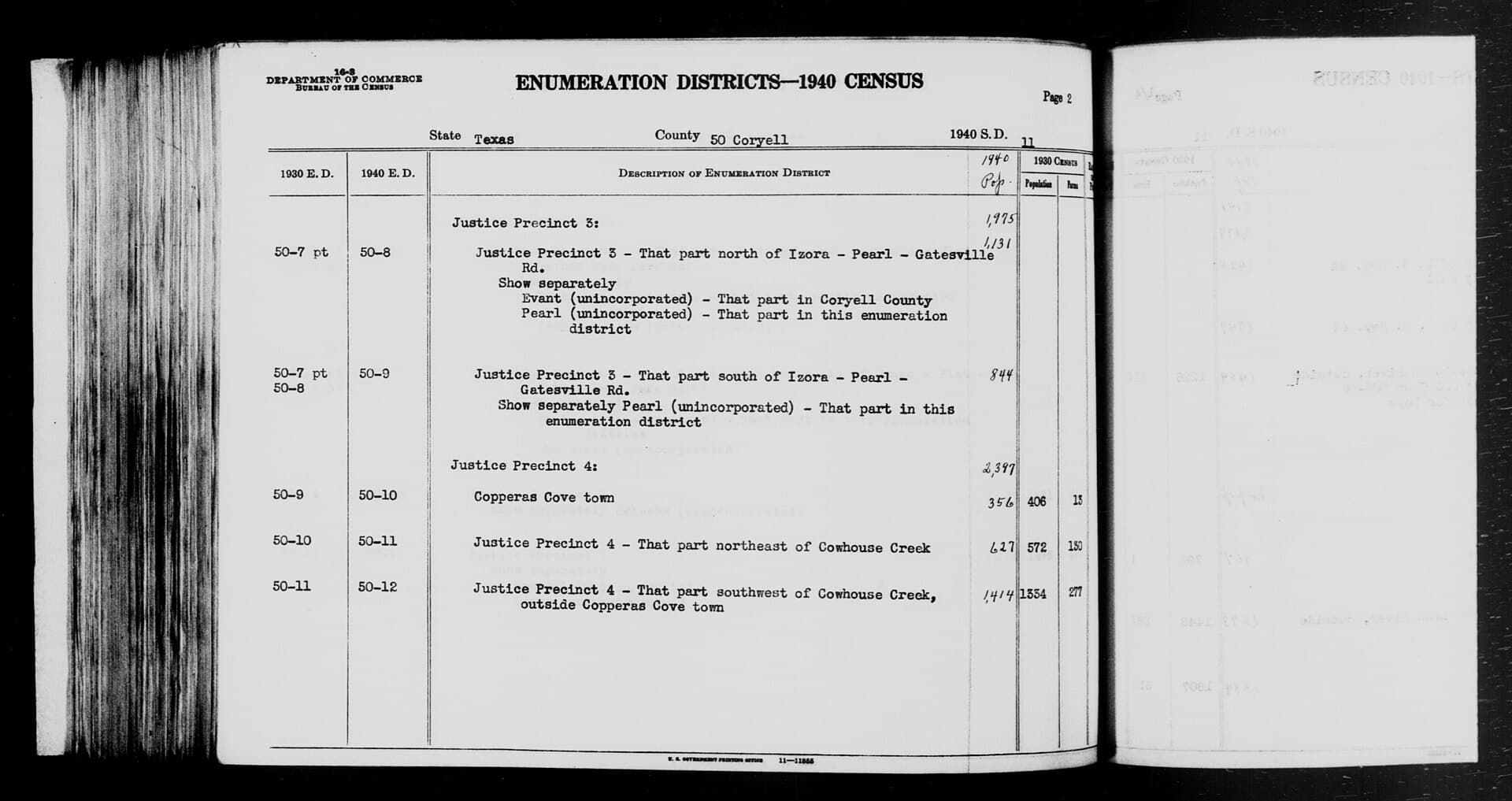
Pearl’s population numbers show a small community that never stopped adjusting. The town had 125 people in 1892, dropped to 75 from the 1920s through the 1940s, rose to 220 from 1943 until the 1970s, and then settled back to 125 from the 1970s to 2000. That pattern is familiar across rural Texas: growth comes in waves, services thin out, and the places that remain have to carry more of the civic load.
What kept Pearl from fading into a name on a map was not one institution, but the overlap of several. The churches gave the town its rituals and gathering places. The school gave it a building that could outlast consolidation. The cemetery association kept a stewardship role alive after church property changed hands. Even the telephone system and the medical competition show a community that built its own local infrastructure when outside systems were sparse.
For Coryell County readers, Pearl is a practical example of what keeps an unincorporated community alive after population loss and service decline. A town endures when people keep showing up for worship, keep using the school building after graduation stops, and keep treating old institutions as shared property instead of abandoned space. Pearl survived because it kept finding ways to make the same places useful again.
This article was produced by Prism’s automated news system from verified source data, official records, and press releases, then run through automated quality and moderation checks before publishing. The system is built and supervised by the people who set the standards it runs under. Read our full AI policy.
Did this article answer your question?