Belleplain State Forest, Cumberland County’s expanding public-lands anchor
Green Acres kept 2,320 acres in Belleplain public, preserving habitat and river access while expanding one of eastern Cumberland County’s main recreation grounds.
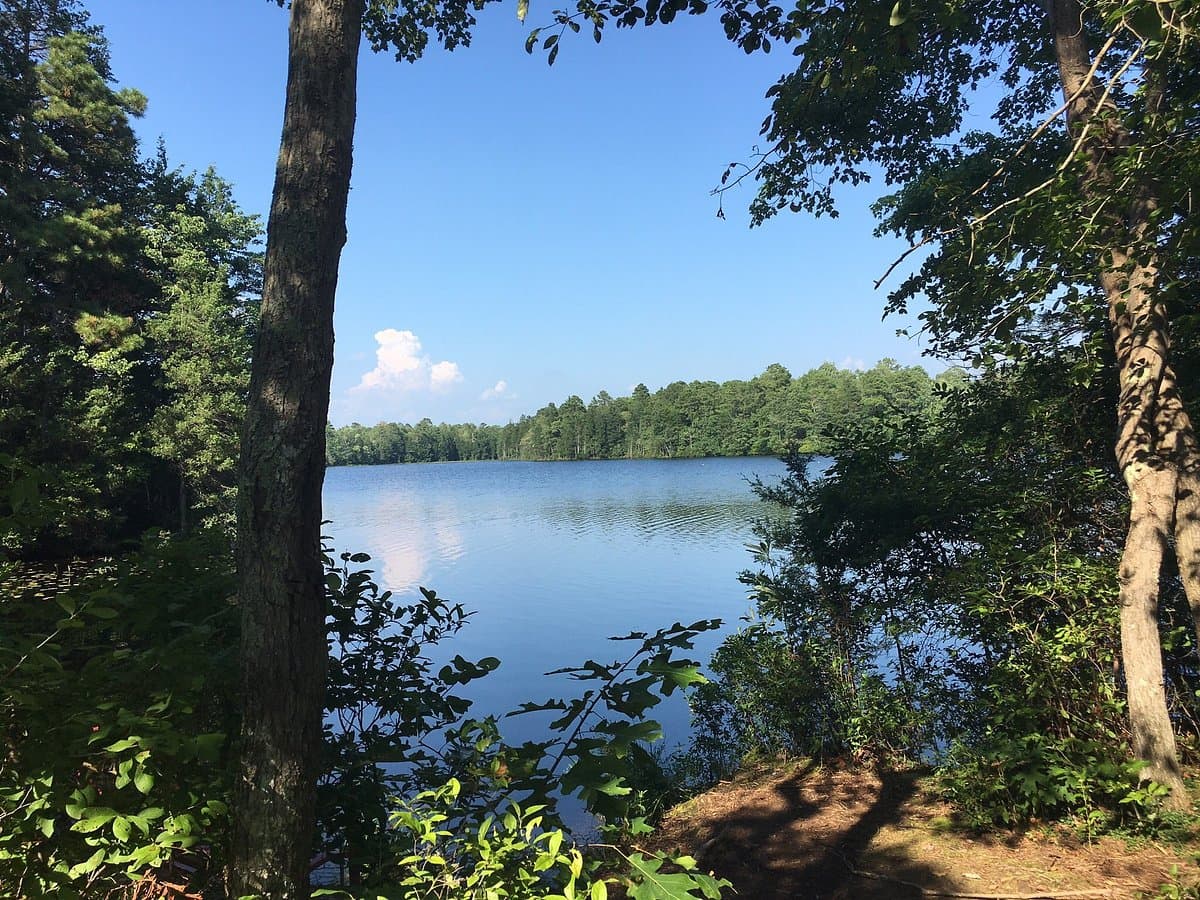
Belleplain State Forest is one of Cumberland County’s most important public lands because it was built to do several jobs at once: protect water, support wildlife, produce timber, and give people a place to get outside. The forest sits in northern Cape May County and eastern Cumberland County, where it acts as a large shared space instead of a patchwork of private lots and development pressure. Its growth tells the story of how open space in this part of New Jersey has been assembled parcel by parcel, not by accident.
A forest with a public purpose from the start
Belleplain State Forest was established in 1928 by the State of New Jersey for recreation, wildlife management, timber production, and water conservation. That original mandate still shapes the way the forest is understood today: not as preserved land that is locked away, but as working public land meant to serve both people and ecosystems. At more than 23,000 acres, Belleplain is large enough to matter countywide, and its footprint in both Cape May County and Cumberland County makes it especially important on the eastern edge of Cumberland.
The forest’s location also matters for access. A 2017 NJDEP news release places Belleplain in northern Cape May County and eastern Cumberland County, which helps explain why it draws visitors from nearby towns and from across the broader Pinelands. In a county where land use choices often mean the difference between private subdivision and public access, Belleplain stands out as a place where state ownership has kept land available for shared use.
How Green Acres expanded Belleplain
The most concrete example of that land strategy came in 2003, when six acquisitions from private landowners and a purchase from the Borough of Woodbine added 2,320 acres to Belleplain State Forest. That number is more than a bookkeeping detail. It shows how Green Acres turned scattered parcels into a larger public block, keeping land in the forest system instead of leaving it exposed to private development or fragmented uses.
Those additions were described by the state as preserving habitats for threatened and endangered species and giving people more river access. In practice, that means Green Acres did more than draw a boundary on a map. It helped secure a public landscape that could still serve ecological goals while also improving the ways residents reach water, trailheads, and other outdoor spaces. For Cumberland County, that is the real value of the Belleplain expansion: land protection translated into both conservation and usable public ground.
The Borough of Woodbine connection is especially important because it shows how local land decisions and state preservation work together. When a municipal or private parcel becomes part of Belleplain, the result is not just a larger forest, but a more coherent one. That helps the county maintain a public-land backbone on its eastern side, where development pressure can quickly break up open space if it is not actively protected.
What you can do at Belleplain
Belleplain is built for everyday use, not just preservation from afar. Official and visitor-facing listings tie the forest to Lake Nummy and to a wide set of activities, including camping, hiking, biking, fishing, picnicking, horseback riding, canoeing, kayaking, and swimming. A trail guide describes the forest as having more than forty miles of trails, which makes it one of the county’s most substantial hiking and biking destinations.
The scale of the campground has also been described in different ways. One visitor-facing source lists 169 tent and trailer campsites, while another describes the campground area as having 83 campsites. Those figures are presented differently, but both point to the same larger fact: Belleplain is a major overnight destination, not just a day-use preserve. Its appeal comes from the combination of water, woods, trails, and campsites in one place.
Lake Nummy is central to that experience. For many Cumberland County residents, Belleplain is where forest recreation and water access meet in the same public landscape. Fishing, paddling, and swimming sit alongside hiking and biking, which is part of why the forest continues to matter as a county asset rather than a niche natural area.
Why Belleplain matters for Cumberland County now
Belleplain is a useful measure of how Cumberland County protects land while still keeping it useful to the public. The 1928 mission, the 2003 Green Acres additions, and the forest’s current recreation menu all point in the same direction: the county’s open-space decisions are not abstract planning exercises, they shape where people can camp, fish, ride, paddle, and walk.
That is why the Belleplain story matters beyond nostalgia or park appreciation. The forest shows what happens when state land policy shields acres from fragmentation and folds them into a larger public system. In eastern Cumberland County, where every land-use choice can affect access, habitat, and the shape of future development, Belleplain remains one of the clearest examples of open space doing real public work.
This article was produced by Prism’s automated news system from verified source data, official records, and press releases, then run through automated quality and moderation checks before publishing. The system is built and supervised by the people who set the standards it runs under. Read our full AI policy.
Did this article answer your question?