Millville museum preserves America's First Defense Airport wartime history
If support fades, Cumberland County loses the only place where America’s First Defense Airport and 10,000 wartime service members stay visible.

Millville’s Army Air Field Museum is more than a collection of artifacts on airport property in Millville. It is the place where Cumberland County can still see how a local airfield became part of the national war effort, and what would disappear if preservation, attendance, or public backing weaken. The stakes are concrete: the museum keeps the story of 10,000 men and women who served there during World War II, along with the advanced pilot training that made the field one of South Jersey’s most important wartime sites.
Why this site matters now
The airfield’s identity began with a civic decision, not a distant military decree. Millville Airport was dedicated as “America’s First Defense Airport” on August 2, 1941 by local, state, and federal officials, placing the county directly inside the mobilization that preceded America’s full entry into World War II. That dedication matters now because it shows how public investment, local leadership, and national defense intersected on one South Jersey site.
The museum turns that history into something residents can visit, not just read about. For Cumberland County, that means the field is not simply a former military site or a stop on a regional heritage map. It is evidence of how the community was pulled into a moment when aviation, industry, and defense policy converged, and why the land still carries civic meaning beyond nostalgia.
From dedication to gunnery school
The wartime timeline at Millville moved quickly after the 1941 dedication. The Millville Airshow’s “About Us” page says military base facility construction began in less than a year, and that by January 1943 the Millville Army Air Field was operating as a gunnery school. Clio places training at the airfield in 1943 and says about 1,500 men received advanced training on the P-47 Thunderbolt by the end of the war.
VisitNJ adds the broader scale of the operation: during World War II, 10,000 men and women served at the site, and 1,500 pilots received advanced gunnery training in P-47 Thunderbolt and P-40 Warhawk fighter planes. Taken together, those details show a busy military installation, not a symbolic one. The field’s role in training and gunnery practice tied Millville to the Republic P-47 Thunderbolt, a plane that became one of the war’s defining fighter aircraft.
The local origin story is also unusually specific. Another historical summary says the airport was dedicated by the Millville Flying Club and the Millville City Commission, and that it was built for the Civil Aeronautics Administration by U.S. Army engineers, with C.T. Burket identified as the city engineer. Those names matter because they show the airfield was rooted in local institutions before it became a wartime asset.
What the museum preserves today
The museum’s educational arm, the Henry E. Wyble Historic Research Library and Education Center, says the Millville Army Air Field Museum preserves the history of the air field. That mission extends beyond display cases. The library points visitors to Millville Army Air Field historic newsletters from 1944-1945, which give direct period language and contemporaneous detail that can anchor a deeper understanding of the base.
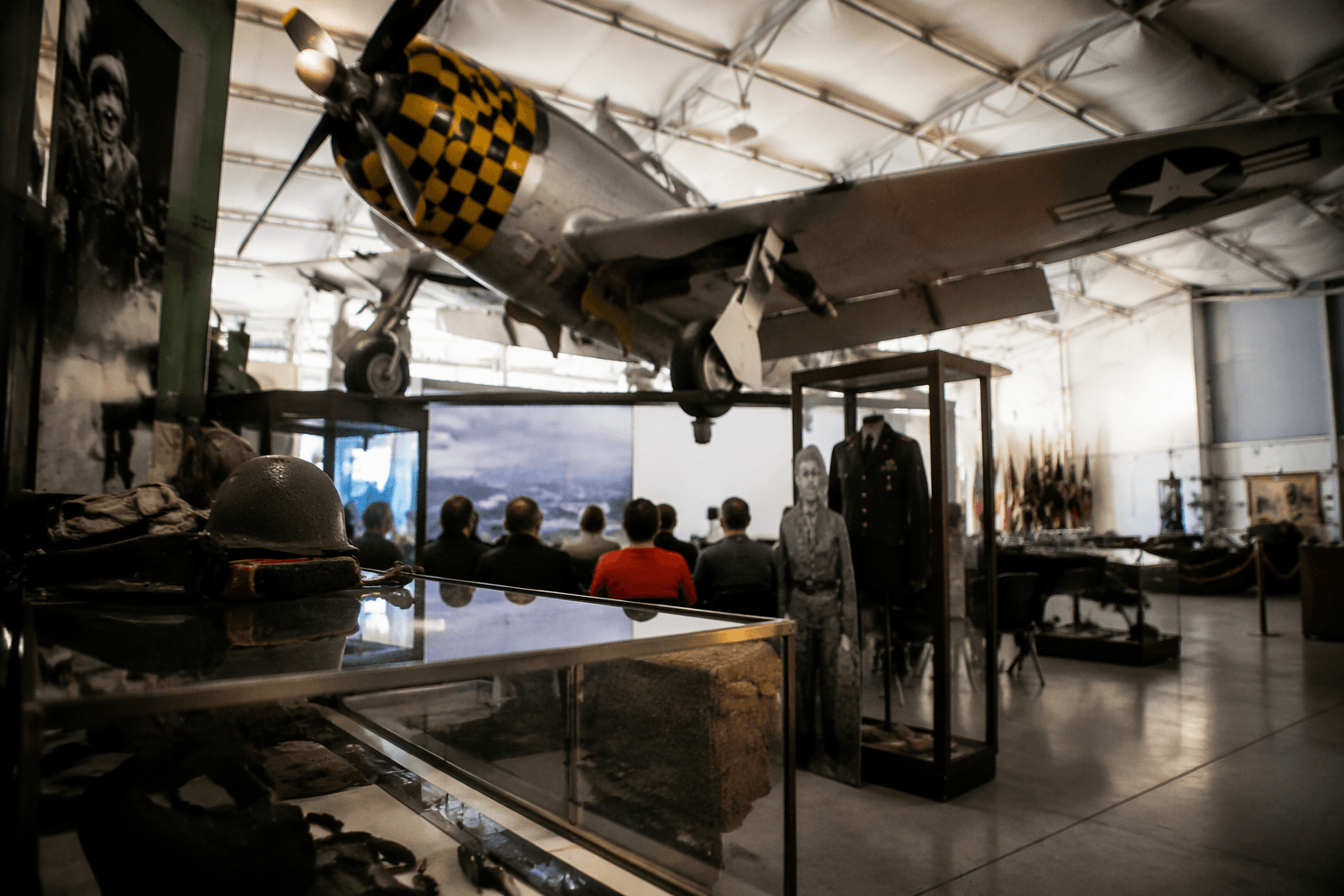
That documentary layer is important because it keeps the wartime story from becoming vague or flattened. The newsletters, along with the museum’s broader collections, help connect aircraft history to daily life on the base, the people who worked there, and the military routines that shaped the field’s operations. In a county where development and preservation often compete for attention, a place like this shows why original materials and local archives still matter.
A February 4, 2025 segment on WPVI/6abc showed the museum’s value in plain terms. The station described World War II history in South Jersey and beyond as being captured through the planes, uniforms, and other military artifacts on display. That kind of public visibility matters because it keeps the museum connected to current audiences, including families and visitors who may not know how central the airfield was to the region’s wartime role.
How to plan a visit
The museum is open to the public, and its hours make it accessible for a day trip or a short stop between other Millville destinations. Visitor information lists hours from 10:00 a.m. to 4:00 p.m., Tuesday through Sunday, with Monday visits and personal tours available by appointment. It sits on airport property in Millville, so the setting itself reinforces the link between the exhibit space and the historic runway landscape.
A practical visit is easiest when you think of the museum as part museum, part research stop. The aircraft and military artifacts give a broad overview, while the Wyble library and historic newsletters offer a path into deeper context. For residents tracing a family connection to the field, that combination can be more valuable than a single-room exhibit because it allows the wartime record to be read in place.
The broader preservation map
The museum does not stand alone in preservation terms. The New Jersey Historic Trust has a page for the Millville Army Air Field Historic District, which shows that the wider airfield landscape carries recognized historic significance. That matters because preservation of the museum, the airport grounds, and the district are linked: each piece helps explain why the field remains a defining part of Cumberland County’s identity.
That larger frame is what separates this site from a simple local attraction. It is tied to a defense-airport dedication, a wartime training mission, a documented archive, and a historic district that extends beyond one building. Preserving the Millville Army Air Field Museum keeps those pieces connected, which is exactly what gives Cumberland County’s wartime history its public value today.
This article was produced by Prism’s automated news system from verified source data, official records, and press releases, then run through automated quality and moderation checks before publishing. The system is built and supervised by the people who set the standards it runs under. Read our full AI policy.
Did this article answer your question?