Bivalve’s Bayshore Center preserves Cumberland County’s oyster schooner heritage
Bivalve’s Bayshore Center keeps Cumberland County’s oyster legacy alive through the 1928 A.J. Meerwald, where history, tourism and bay identity meet.
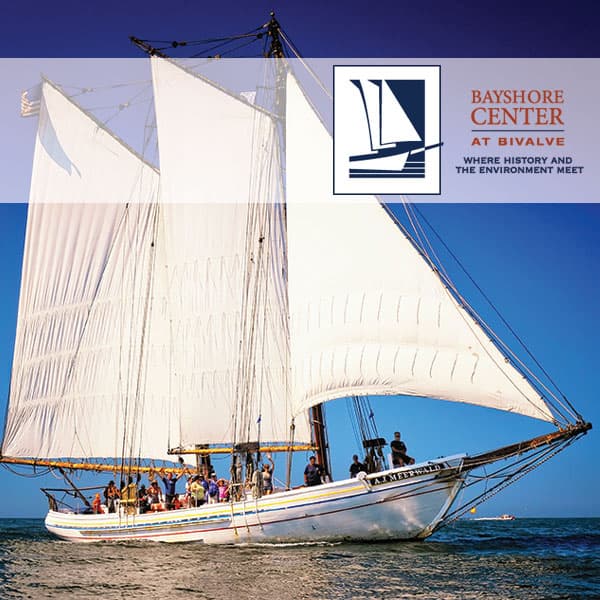
Bivalve’s Bayshore Center matters because it keeps Cumberland County’s working-waterfront story visible in a place where the oyster trade once shaped daily life. The center ties together a restored schooner, a museum, and public programming, so visitors see more than a scenic bayshore stop: they see the machinery of local memory, labor, and identity still anchored in Bivalve.
Why the Bayshore Center still matters in Cumberland County
The Bayshore Center at Bivalve was founded in 1988 to save and restore the A.J. Meerwald, a 1928 Delaware Bay oyster schooner. That origin gives the site a different weight from a standard attraction, because the center exists to preserve a working vessel tied directly to the bay economy that helped define communities across Cumberland County.
Explore Cumberland County describes the site as home to the “authentically restored 1928 oyster schooner, AJ Meerwald and the Delaware Bay Museum and Folklife Center.” That pairing is the key to understanding the landmark now: the schooner preserves maritime labor, while the museum interprets the human stories around it. The Bayshore Center also describes itself as New Jersey’s only environmental history museum, which places local oyster history inside a broader story about land, water, and the people who depended on both.
For Cumberland County residents, that makes the center more than a museum visit. It is one of the few places where Bivalve’s commercial past, the Delaware Bay’s ecology, and the county’s cultural memory still overlap in the same setting. For visitors, it explains why this stretch of the bayshore is not just shoreline, but a working landscape with a specific history.
The A.J. Meerwald is the centerpiece
The A.J. Meerwald gives the Bayshore Center its strongest physical presence. The Bayshore Center says the schooner is used as a hands-on sailing classroom throughout the Delaware Bay, and its virtual-tour page describes it as a floating classroom. At 115 feet long, the vessel is large enough to make the scale of oyster work and bay travel feel immediate, not abstract.
Tall Ships America lists the Bayshore Center at Bivalve as the ship’s homeport, which reinforces that the schooner is not simply parked as a display piece. It remains a living part of the region’s maritime identity. New Jersey designated the A.J. Meerwald as the state’s official tall ship on April 21, 1998, a formal recognition that turned a local preservation effort into something with statewide significance.
The ship’s history also shows how much effort has gone into keeping it relevant. After being acquired by the Bayshore Center in 1989, the schooner was relaunched on September 12, 1995 following restoration. A Courier Post article dated August 22, 2022 said the 94-year-old tall ship returned home after a major renovation, underscoring that preservation is not a one-time event but an ongoing commitment. In practical terms, the Meerwald gives Cumberland County a rare artifact that still teaches, sails, and carries the story of the bay.
More than maritime history, a record of local life
The Delaware Bay Museum and Folklife Center adds the second half of the story. Its presence signals that the Bayshore Center is not only about boats and oysters, but also about the customs, family histories, and work traditions that grew around the bay. That broader focus matters in a county where identity often comes from place, and place has long been shaped by water.
The center’s mission, as quoted by CapeMay.com, is to motivate people to care for “the history, the culture and the environment of New Jersey’s Bayshore region through education, preservation, and example.” That language helps explain why the Bayshore Center still holds value now. It links education to preservation, and preservation to lived experience, rather than treating history as something sealed behind glass.
This is also why the center fits Cumberland County’s larger story. The oyster schooner points to a commercial past, but the museum and mission show how that past still influences public memory and local pride. In a region where waterfront identity is part of the county’s fabric, the Bayshore Center preserves a chapter that would otherwise fade from view.
How the center connects heritage to today’s visitors
The Bayshore Center also works as a tourism destination, but in a way that is rooted in place rather than detached from it. The New Jersey Oyster Festival adds a public-facing layer that connects food culture, maritime history, and community gathering at the same site. That matters in Bivalve because oysters are not just a menu item here; they are part of the region’s historical economy and its continuing story.
The center’s strength is that it brings several audiences together without flattening any of them. Residents find a landmark tied to family memory and county identity. Visitors find a clear explanation for why Bivalve mattered as a bayshore community. Students and history-minded travelers find a 115-foot schooner that still functions as a classroom, along with a museum that interprets the people and work behind it.
For Cumberland County, that combination is rare. The Bayshore Center at Bivalve preserves a working vessel, interprets the culture around the Delaware Bay, and keeps one of the county’s most distinctive landmarks relevant to the present.
This article was produced by Prism’s automated news system from verified source data, official records, and press releases, then run through automated quality and moderation checks before publishing. The system is built and supervised by the people who set the standards it runs under. Read our full AI policy.
Did this article answer your question?