Cumberland County Public Health offers vaccines, screenings, and wellness clinics
Free STI testing, rabies shots and weekly wellness clinics make county public health a backstop for residents outside Vineland.
A countywide safety net
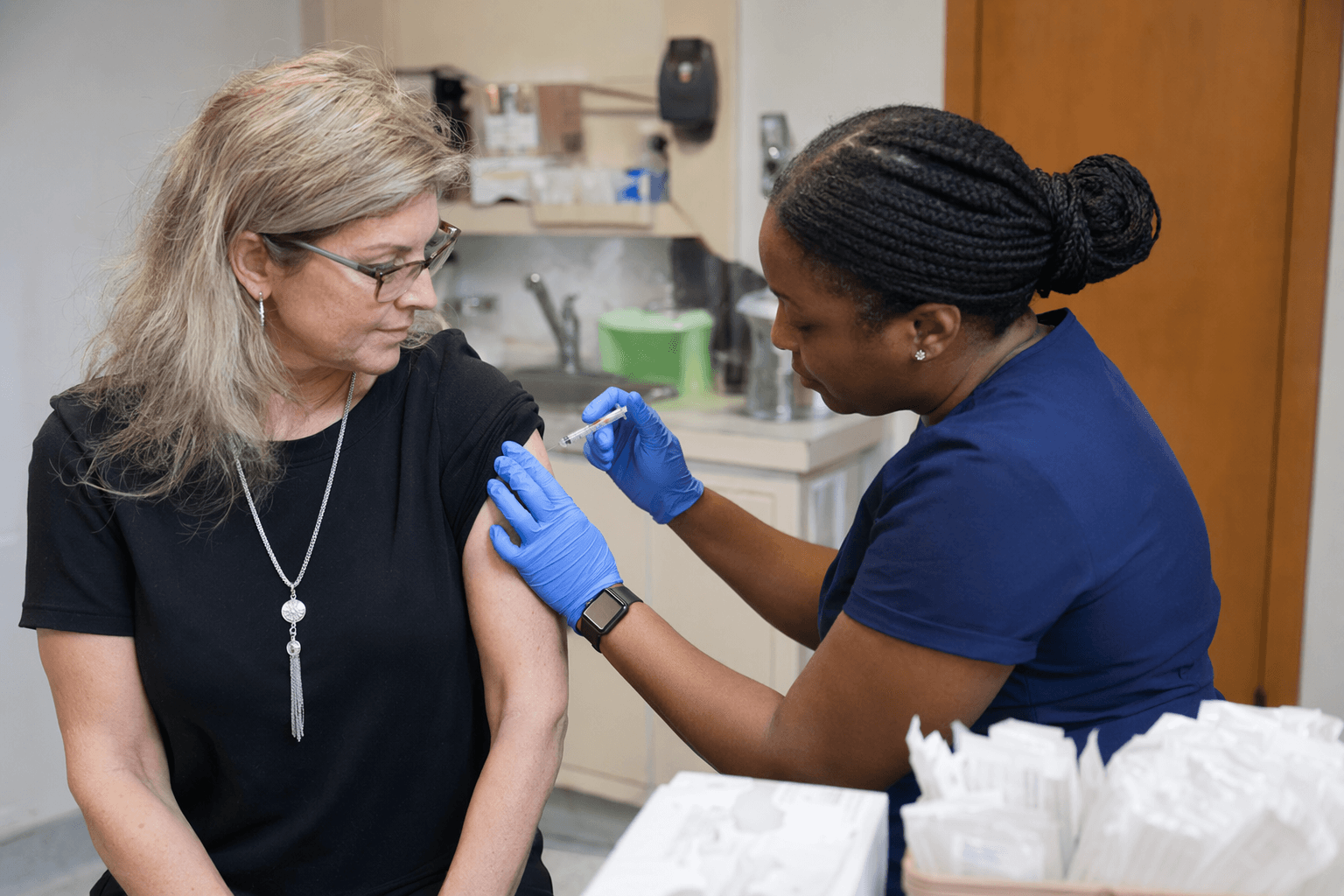
If you live in Bridgeton, Millville or Commercial Township and do not have an easy path to a doctor, Cumberland County Public Health is built to fill the gap. The department says its mission is to promote, protect and improve the public’s health in partnership with the communities it serves, and the most useful parts of that mission are the ones residents can use right away: wellness clinics, adult vaccines, immunization work, STI testing and treatment, rabies clinics, health education, special child health services and community-service referrals.
That matters in a county where access is uneven. Cumberland County Public Health serves the 13 municipalities outside Vineland, while Vineland City has its own separate health department. In practical terms, that makes the county office the public-health front door for most of the county, especially for residents who need a nearby place for preventive care, basic guidance or a quick referral before a small problem turns into a larger one.
What residents can actually use
The county’s service list is broader than a single clinic day or seasonal campaign. It includes wellness clinics, adult vaccines, immunization work, sexually transmitted infection testing and treatment, rabies clinics, health education, special child health services and referrals to other community resources. That mix is important because it gives people more than one way to enter the system, whether they need a shot, a screening, advice from a nurse practitioner or help finding another service.
The county calendar also shows that this is not just a paper list of programs. Bridgeton Wellness Clinic dates appear on a weekly basis in April 2026, which signals a recurring point of access rather than an occasional outreach event. The Board of Health meeting schedule is posted there as well, showing that the department is handling both direct services and local oversight at the same time.
The clearest low-cost services
For many households, the biggest question is what these services cost. The county is explicit about two major no-cost options. Its STI clinic offers free testing for gonorrhea, chlamydia, syphilis and HIV, with rapid HIV results in about 20 minutes. The clinic also provides free treatment, free condoms, nurse-practitioner consultation, partner services and referrals to care.
New Jersey law also makes the STI clinic easier to use for teenagers and young adults. People age 13 and older can consent to STI and HIV testing and treatment without a parent or guardian. That is a meaningful access point for a teenager who needs private care, or for a parent trying to get a child connected to help quickly without a complicated referral process.
The county’s rabies program is another clear example of a service that removes cost barriers. Rabies clinics are offered free to the public with the New Jersey Department of Health and local municipalities, and they are usually held on Saturdays in early spring between February and April. For families with dogs or cats, that gives them a no-cost way to stay ahead of a preventable public-health risk.
Who uses these services
The residents most likely to benefit are the ones who are not being well served by regular primary care. That includes people without a doctor, people who have trouble getting transportation into an office visit, families stretching tight budgets, and anyone who needs help navigating the health system without waiting weeks for an appointment. In a county like Cumberland, where distance and income can shape when care happens, a standing clinic can be more useful than a one-time event.
A Bridgeton teenager who needs confidential STI testing is one clear example. The county clinic can provide free tests, rapid HIV results in about 20 minutes, treatment if needed and referrals for follow-up care, all without requiring a parent or guardian for consent once the teen is 13 or older. That combination of privacy, speed and no-cost access is exactly the kind of service that can keep a problem from becoming an emergency.
A second example is a Commercial Township household with pets that need rabies protection before spring and summer outdoor activity picks up. Instead of paying for a separate vet visit or delaying until a problem arises, the family can use one of the county’s free Saturday clinics in early spring. That is a small service on paper, but for a household on a tight budget, it is the difference between protection now and risk later.
How the county keeps the system accountable
The county’s public-health work is not limited to clinic days. The Cumberland County Board of Health meets on the third Wednesday of each month at 5:30 p.m. in the Health Department office conference room at 309 Buck Street in Millville. That predictable schedule gives the county a regular place to review public-health operations, hear issues and keep the system moving in public view.
Planning also appears to be active. The county site posted a Community Health Assessment and Community Health Improvement Plan update on March 5, 2026. The department says its work follows the CDC-recognized 10 Essential Public Health Services framework, as well as the framework associated with the Public Health National Center for Innovations and the de Beaumont Foundation. In plain language, that means the county is expected to monitor health status, link people to needed care and evaluate whether public-health services are accessible and effective.
Why this matters in daily life
Cumberland County Public Health is most valuable when it functions like a practical backup system. A weekly wellness clinic in Bridgeton, free STI testing with rapid results, free rabies shots in early spring and a monthly Board of Health schedule all point to the same idea: public health here is not just oversight, it is a local service network.
For residents outside Vineland, that network can be the difference between delaying care and getting help quickly. When a county office can offer vaccines, screenings, treatment, referrals and recurring access points in one place, it becomes part of the daily infrastructure of staying well.
This article was produced by Prism’s automated news system from verified source data, official records, and press releases, then run through automated quality and moderation checks before publishing. The system is built and supervised by the people who set the standards it runs under. Read our full AI policy.
Did this article answer your question?