Delayed storm report details tree and wire damage in Millville
A delayed NWS report logged extensive tree and wire damage in Millville after a July 18 thunderstorm. Numerous large branches were blown down in Cumberland County.
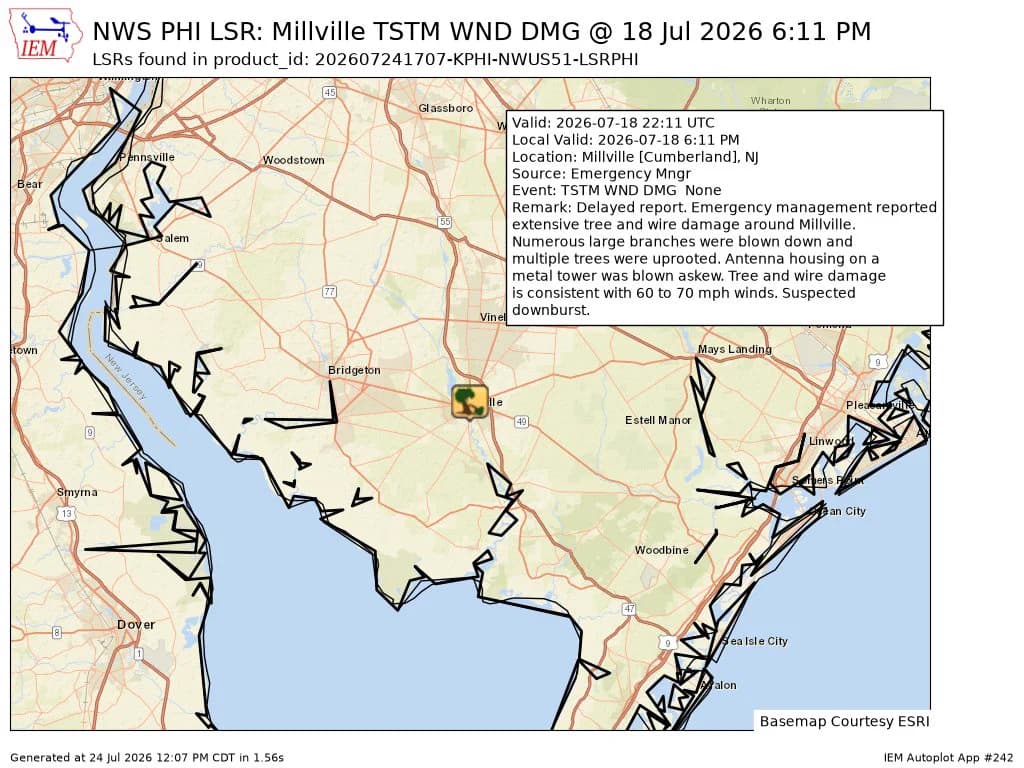
A delayed National Weather Service report logged extensive tree and wire damage in Millville after a July 18 thunderstorm knocked down numerous large branches across Cumberland County. The Mount Holly office filed the damage as a local storm report for the Philadelphia/Mount Holly forecast area, not as a narrative summary.
The report put Millville at the center of the damage record, with trees and wires affected enough to merit an official storm entry. It did not break out individual streets, but the wording points to a familiar South Jersey storm hazard: branches coming down, lines getting hit and debris creating both outage risk and a danger for anyone moving through the area.
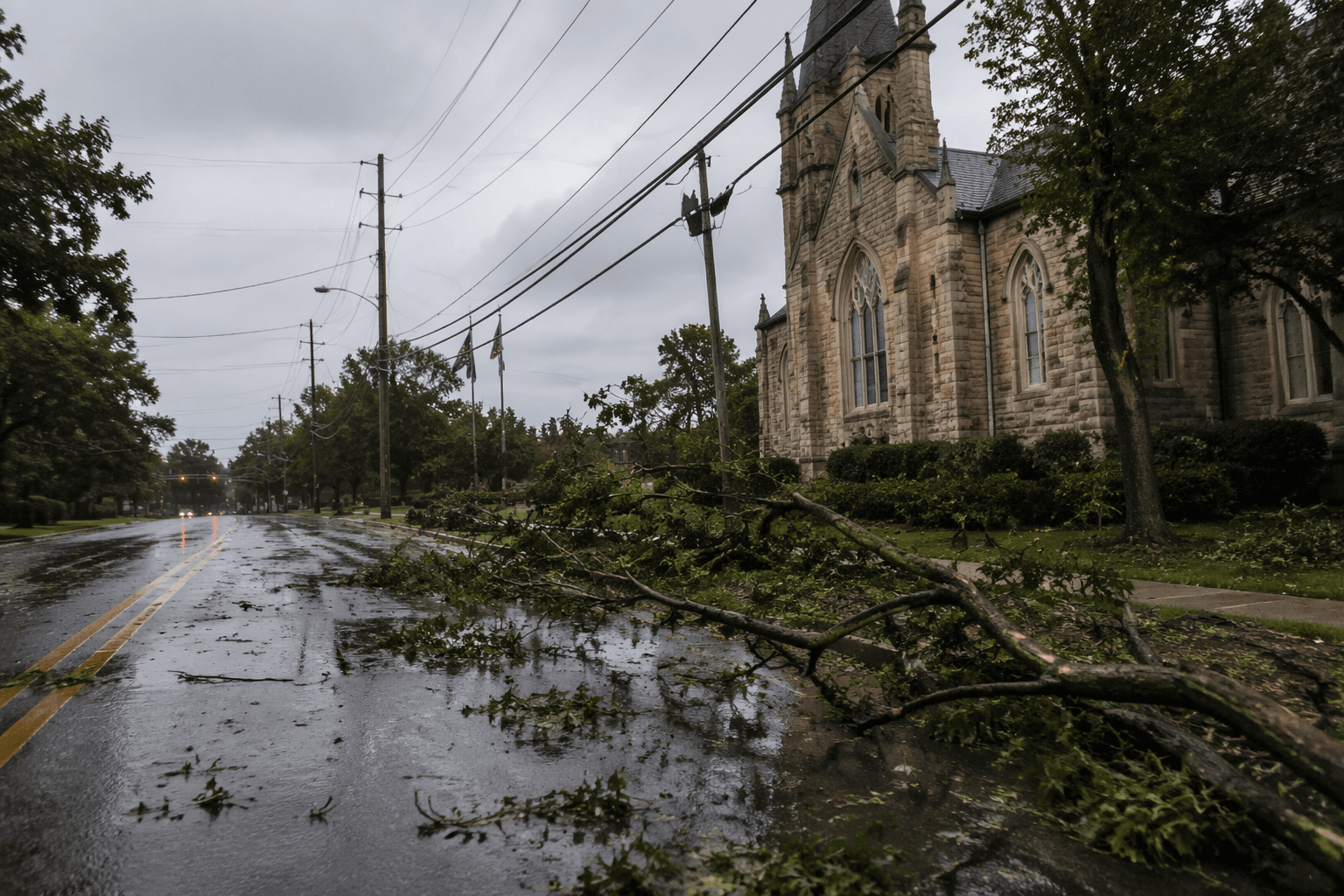
That matters because wire damage is rarely just a cosmetic problem. Downed conductors can trigger outages, slow repairs and leave neighborhoods with hidden hazards after the thunder passes, especially when large limbs have fallen into overhead utility lines. In Millville, the report’s reference to numerous large branches suggests the storm had enough force to damage the tree canopy and utility corridors at the same time.
The broader weather pattern that week was active across the region. NWS Mount Holly also issued severe thunderstorm warnings for Ocean County and Burlington County on July 16, two days before the Millville damage report, underscoring how quickly severe weather moved through South Jersey in mid-July.
For Cumberland County households, the lesson is to inspect from a distance after a storm and assume the worst around trees and wires. Split trunks, hanging limbs and cracked branches can fail later, and any wire that is down, sagging or touching debris should be kept clear. Before the next severe thunderstorm, residents can lower the risk by trimming dead limbs, securing outdoor furniture and other loose items, charging phones and making sure weather alerts are enabled.
This article was produced by Prism’s automated news system from verified source data, official records, and press releases, then run through automated quality and moderation checks before publishing. The system is built and supervised by the people who set the standards it runs under. Read our full AI policy.
Did this article answer your question?