John DuBois Maritime Museum preserves Cumberland County’s seafaring heritage
In Greenwich, the John DuBois Maritime Museum keeps Delaware Bay labor, shipbuilding, and rescue history visible, or Cumberland County risks losing the memory behind them.
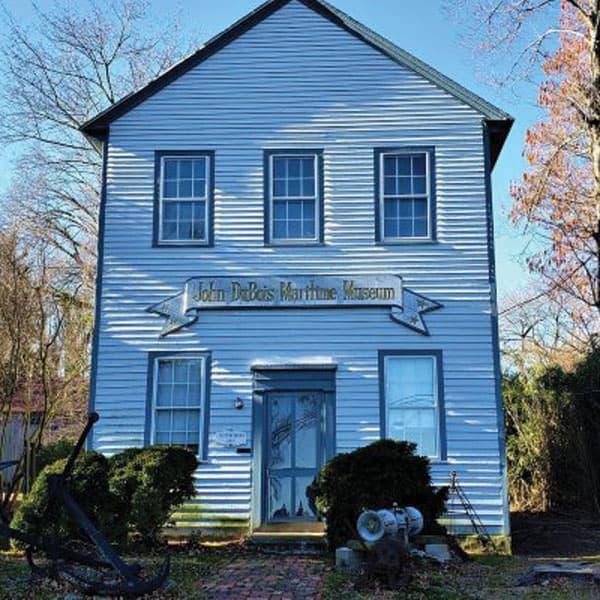
The John DuBois Maritime Museum in Greenwich holds more than old nautical objects. Its collection preserves the practical knowledge of Delaware Bay work, from boatbuilding tools and builders’ models to shipwreck finds and lifesaving gear, and that makes it part of Cumberland County’s living identity, not just its past. If the county loses this memory, it loses the record of how families, trades, and waterfront communities were built around the bay.
A museum built inside the history it interprets
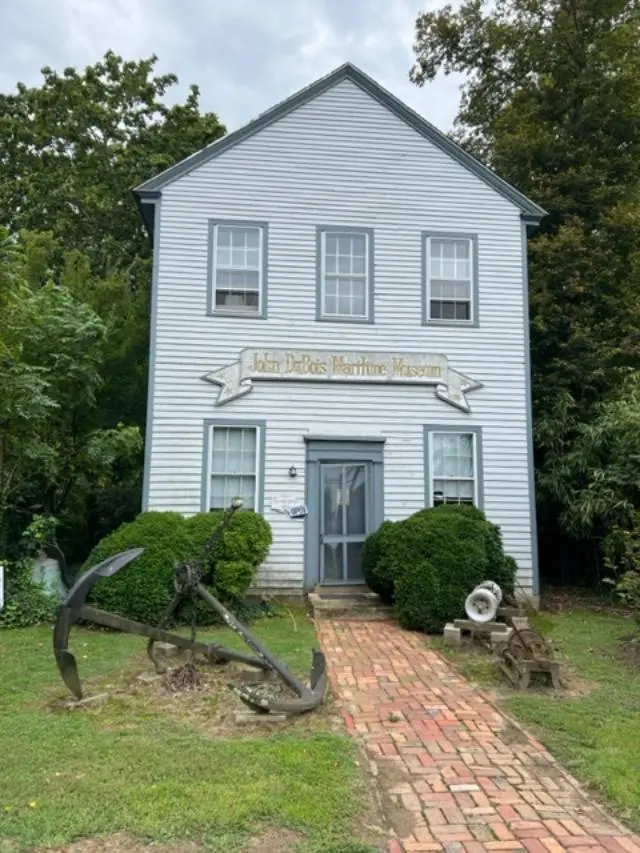
The museum sits in Greenwich, in Cumberland County, New Jersey, inside a former Presbyterian Church Hall that was constructed in 1852. That building date matters because the structure itself belongs to the same mid-19th-century world that shaped South Jersey’s maritime economy. In the heart of Greenwich’s historic district, the museum occupies a place where local history is not abstract: it is embedded in the street grid, the old buildings, and the maritime routes that once tied the town to the Delaware Bay.
Greenwich’s historic district is listed in the National Register of Historic Places, and the county’s own brochure places the museum alongside other landmarks that make the village a concentrated history stop. Those nearby sites include the 1730 Gibbon House, the Tea Burning monument, the Warren C. Lummis Genealogical and Historical Library, the Pre-Historic Museum, and the Swedish-Finnish log grange. For visitors moving through Cumberland County history, the museum is part of a broader cluster that shows how seafaring, settlement, and cultural memory overlap in one small place.
What the collection shows about working waterfront life
The strongest reason to visit is the collection itself. Descriptions of the museum note 19th- and 20th-century maritime-related objects, including builders’ models that show the planning behind ship construction. Those models are not decorative extras. They show how local boatbuilders translated timber, measurement, and labor into vessels that carried goods and people across the bay.
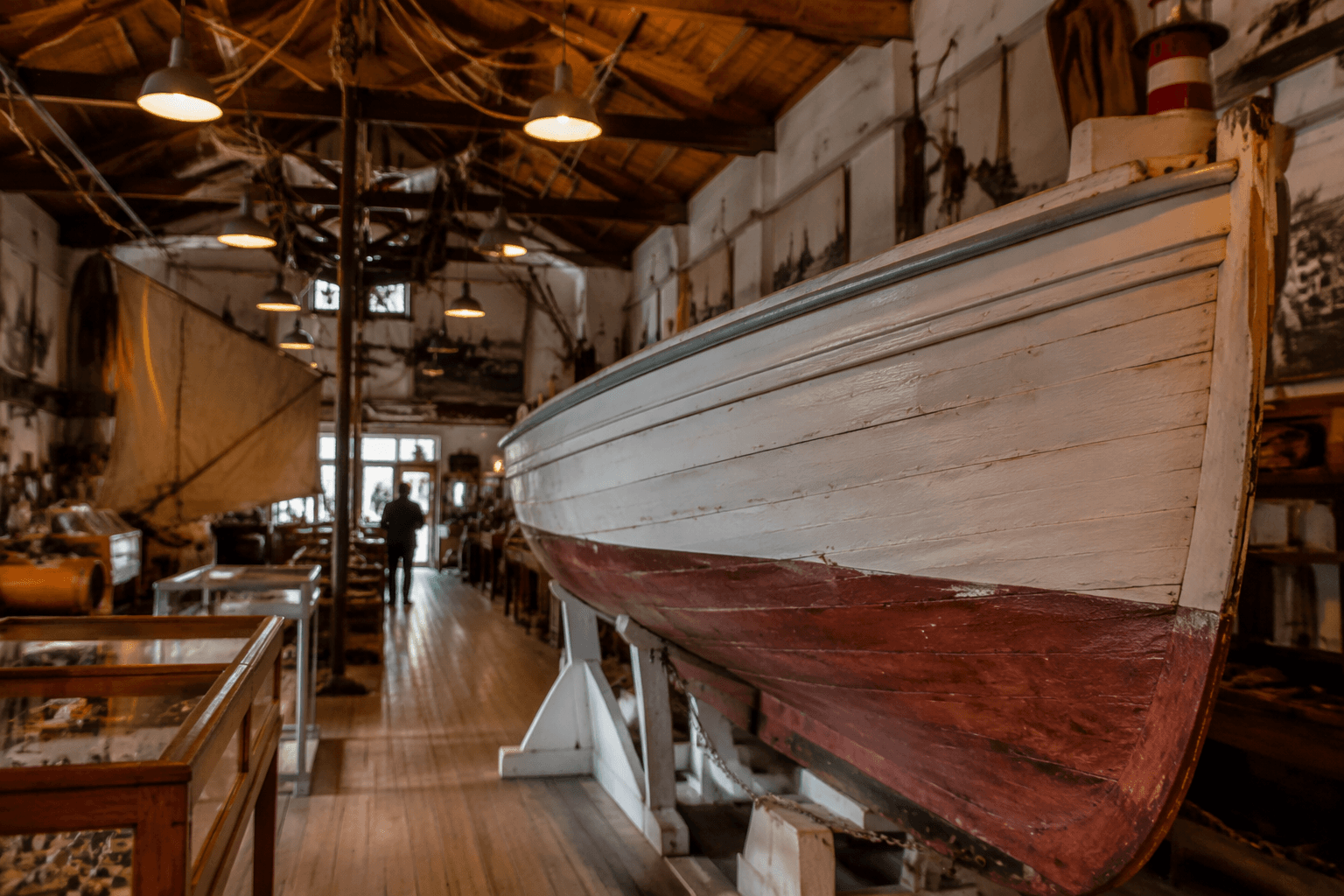
The museum also includes tools used to carve ribs, planking, masts, and booms, which helps explain the physical work behind each boat and repair job. In a region where maritime labor shaped local livelihoods, those tools connect the craft of shipbuilding to the larger economy of the Delaware Bay. Other listed items extend that story beyond construction and into risk and rescue, with salvaged artifacts from shipwrecks, historic scuba equipment, and Coast Guard and lifesaving station memorabilia. Together, the collection shows that coastal life in South Jersey depended on both production and protection.
Why this history reaches beyond the gallery walls
The museum matters because working-waterfront history still shapes how people in Cumberland County understand place, family, and loss. Shipbuilding and bay labor were not side stories; they were part of the region’s economy, and the traces of that work remain in family names, shoreline communities, and the preservation of places like Greenwich and Bivalve. A museum that displays carving tools, builders’ models, and lifesaving artifacts helps explain how those jobs were done and why they mattered.
That is also why the museum’s maritime focus has contemporary stakes. As coastal change, redevelopment pressure, and the fading of older trades affect South Jersey, local memory becomes harder to keep visible. When the details of how boats were built, repaired, and launched disappear, so do the stories that tie today’s residents to the Delaware Bay and to the generations who worked its waters.
Public preservation dollars have kept the museum on the map
The museum is not preserved by sentiment alone. New Jersey Historic Trust materials list the John DuBois Maritime Museum as a funded site, and a public post from Assemblyman Jeff Van Drew said he secured $100,000 from the State of New Jersey for preservation and exhibit development at the museum. That kind of support shows how small local museums depend on public investment to keep buildings stable, collections visible, and exhibits useful for education.
Cumberland County’s own grant records point to a wider pattern. Maritime preservation money has also supported the Commercial Bivalve Packing Houses & Docks/Meerwald project and the Bivalve Shipping Sheds and Wharves. Those projects reinforce that the county’s working-waterfront landscape has long been considered worth saving, not just for nostalgia but because it documents the labor systems that built South Jersey’s coastal communities.
How to plan a visit in Greenwich
A visitor listing places the museum at 949 Ye Greate Street in Greenwich and notes Saturday hours. The county brochure also gives a contact number, 856-455-4055, for more information about the Greenwich historic district and its sites. That makes the museum easy to fold into a broader day in Greenwich, especially if you want to see how maritime history connects with the town’s other preserved landmarks.
- John DuBois Maritime Museum, 949 Ye Greate Street, Greenwich
- Saturday hours listed in a visitor guide
- More information: 856-455-4055
A stop at the museum works best as part of a wider route through Greenwich’s historic district. The Gibbon House, the Tea Burning monument, the genealogical library, the Pre-Historic Museum, and the Swedish-Finnish log grange all sit within the same preserved landscape, so the town itself becomes part of the interpretation. That is where the museum’s value is strongest: it helps Cumberland County keep the material evidence of its seafaring past in view, while the surrounding district shows that this history still has a physical home.
This article was produced by Prism’s automated news system from verified source data, official records, and press releases, then run through automated quality and moderation checks before publishing. The system is built and supervised by the people who set the standards it runs under. Read our full AI policy.
Did this article answer your question?