New Jersey farmland assessment map gets Rutgers upgrade
Rutgers has moved New Jersey’s farmland assessment map to a new platform that could sharpen tax valuations for Cumberland County's 539 farms.

A Rutgers upgrade to New Jersey’s farmland assessment map could affect how Cumberland County farms are taxed, preserved and challenged when land values are disputed. The new platform is meant to give owners, assessors and planners cleaner soil data by tax parcel, a change that matters in a county with 539 farms, 68,491 acres in farms and $305,002,000 in farm product sales.
The New Jersey Department of Agriculture says the tool now runs with support from the Rutgers Center for Urban Policy Research after beginning with the Rowan University Geospatial Research Lab. It lets users view, print and compare detailed soil reports, and it can draw custom polygons to sort land uses such as cropland harvested, permanent pasture or woodland. The system combines USDA soil survey data, parcel data and the National Commodity Crop Productivity Index in one interface, so a parcel’s productivity can be measured against the same standard across the state.
That is important because New Jersey’s Farmland Assessment Act of 1964 ties property assessment to productivity value rather than straight market pressure. To qualify, land generally must include at least 5 contiguous acres in agricultural or horticultural use, with two consecutive years of that use before the tax year and an August 1 filing deadline. The minimum gross sales threshold is $1,000 for the first 5 acres, plus $5 for each additional acre. Woodland or wetland under a Woodland Management Plan must generate at least $500 for the first 5 acres and 50 cents for each additional acre.
The State Farmland Evaluation Committee sets the agricultural productivity values assessors must use each year, and local assessors determine whether land qualifies. If an application is denied, landowners can appeal to the County Board of Taxation. That makes the mapping tool more than a technical upgrade. It is part of the evidence that can shape whether a farm is taxed as farmland, kept in production or pulled into a higher-value land assessment fight.
Rutgers said the old reference document, Productive Capacity of New Jersey Soils, was created in 1964, when the law passed, and classified 215 New Jersey soils into six groups from A through F. Rutgers said that information became outdated and hard for the public to access, which helped drive a 2019 legislative mandate for an accessible mapping platform. The Department of Agriculture later chose the National Commodity Crop Productivity Index after consulting USDA Natural Resources Conservation Service.
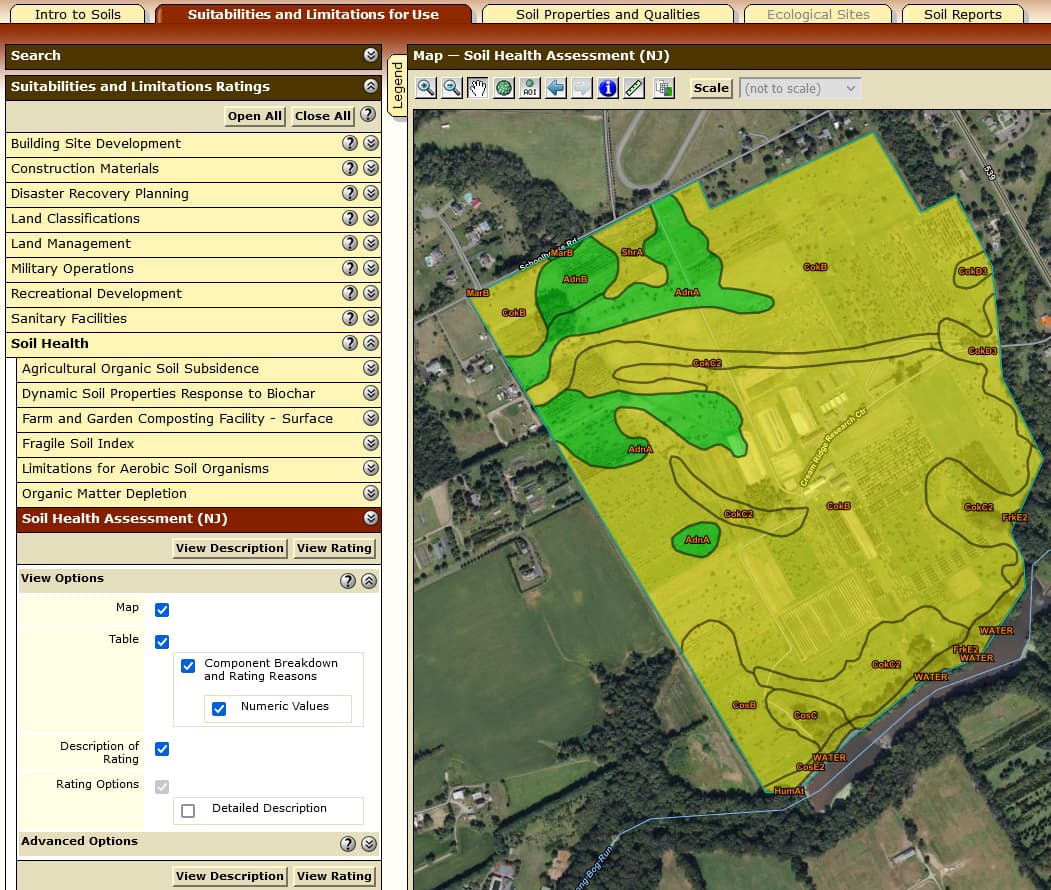
For Cumberland County, where cropland makes up the overwhelming share of farm sales and 18,737 acres were irrigated in the latest census profile, a more precise mapping system could mean fewer costly errors and fewer delays for farmers trying to prove what their land is worth. Secretary Ed Wengryn said the Rutgers changes strengthen the data architecture and mapping functions, a sign that farmland valuation in New Jersey is increasingly being decided as much on digital maps as in tax offices.
This article was produced by Prism’s automated news system from verified source data, official records, and press releases, then run through automated quality and moderation checks before publishing. The system is built and supervised by the people who set the standards it runs under. Read our full AI policy.
Did this article answer your question?