Beacon’s railroad past reshaped a small Decatur County community
Beacon’s name, business core, and travel patterns all changed as rail, then highway, then storm damage redrew the map of Decatur County.

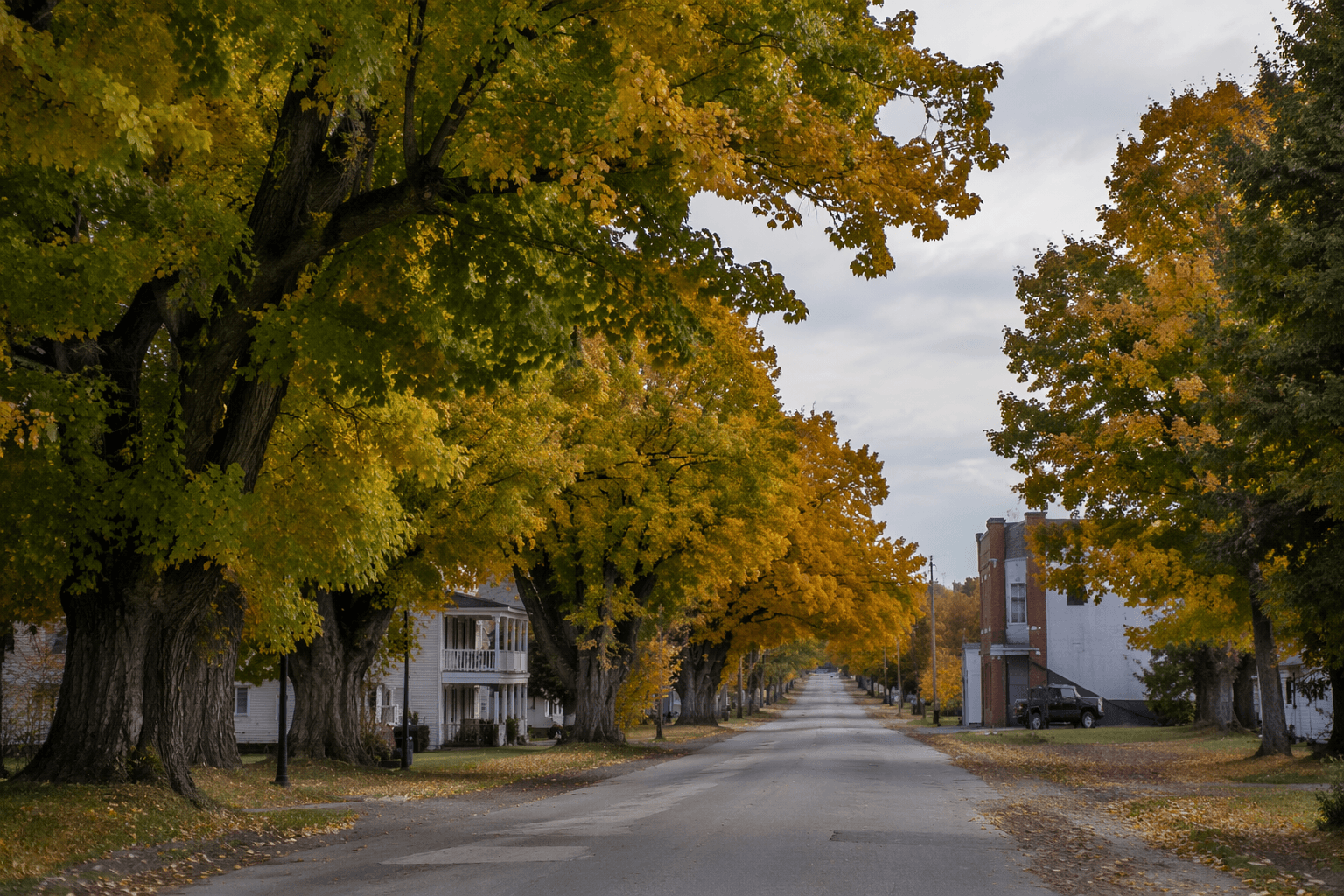
Beacon sits four miles west of Parsons and offers a compact lesson in how infrastructure can remake a rural place. The community was first known as Moray, had about 150 citizens, and was later renamed when the Tennessee Midland Railroad came through Decatur County. A highway bypass and a 1942 tornado pushed that change even further, leaving Beacon and Beacon Junction as reference points for how small places survive by moving with the roads.
Railroad arrival and the move from Moray to Beacon
Beacon’s first transformation began with the Tennessee Midland Railroad Company, which was chartered on December 29, 1886, to extend from Memphis eastward to the Virginia state line. That line did more than add a transportation corridor. In Decatur County, it helped determine where settlement would concentrate, where commerce would gather, and even what a town would be called.
Before the railroad reached the area, the community was known as Moray. Once the railroad came through, the name changed to Beacon, a simple shift that marked a larger one: the town’s identity was being tied to the route that connected it to broader markets and movement. That pattern was not unique to Beacon. In neighboring Parsons, railroad-related development helped create a new town site in 1889, when Henry Myracle deeded 143 1/3 acres to the Tennessee Midland Railroad Company on April 11 of that year. In Decatur County, the rail line did not merely pass through the landscape, it rearranged it.
A small business district built around local needs
Beacon’s business life was larger than its size suggests. Mercantile operators included Jess Long, Will Dodd, Ike Smith, Chess Myracle, C. C. Thomas, Aussie Duke, and Glen Tolley, names that point to a community where trade was personal, local, and tightly linked to the surrounding farms. The town also supported the kinds of businesses that made daily life possible without long trips to a bigger center.
Charley Thomas and Jess Long operated two cotton gins and blacksmith shops, showing how closely Beacon’s economy followed agricultural production and the repair work that came with it. Jim Bartholomew and Riley Hobbs ran grist mills, and Jess Long also operated a sawmill. That mix matters because it shows Beacon as a processing and service point, not just a stop on a map. Grain was ground, cotton was ginned, equipment was fixed, and lumber was cut within a small footprint, which is how rural commercial hubs often held their place in the county economy.
The town also had communication and service businesses that made it function like a self-contained center. Bill O’Guinn owned the home telephone company, while Ethel Hayes and Carrie Hayes served as operators. Pink Lewis ran a barber shop, John Douglas operated a cafe, and Aaron Bartholomew barbered there in the 1930s. Taken together, those businesses show a place where people lived, worked, traded, and gathered in close proximity, with daily life organized around a few essential streets and a handful of owners.
When Highway 20 bypassed Beacon, the center moved
The next major shift came when Highway 20, now Highway 412, was constructed and bypassed Beacon. That change altered more than traffic flow. Business moved to the highway, and Beacon Junction was born.
This is the kind of transportation change that can redraw a community without erasing its name. Highway 20 is now part of the broader U.S. 412 corridor, and Tennessee State Route 20 runs unsigned and concurrent with U.S. 412 for nearly its entire length. In Decatur County, State Route 202 connects Saltillo with Beacon via Decaturville and ends at U.S. 412 in Beacon. Those route details matter because they explain why Beacon still functions as a geographic marker even after its original business center lost momentum.
Beacon Junction is now recognized as a populated place in Decatur County, a sign that the commercial life that once clustered in Beacon shifted rather than vanished. The county’s road network still turns Beacon into a reference point for travelers moving between Saltillo, Decaturville, and the U.S. 412 corridor. For a small community, that kind of position can mean the difference between fading from use and remaining on the map.
The 1942 tornado and the limits of location
Beacon’s history was not only shaped by transportation. On March 16, 1942, a tornado partially destroyed the town and killed Bill O’Guinn. The force of that storm was severe enough that homes were twisted like rope and pieces of roofing were found miles away. Those details show how exposed small inland communities can be when severe weather tracks through the same settled corridors that once drew rail and road builders.
The tornado was part of the larger March 16 to 17, 1942 outbreak, which killed 149 people and injured at least 1,312 across the Central and Southern United States. Beacon’s damage fits into that wider disaster, but the local impact was specific: a business and residential place already reshaped by the highway also had to recover from a violent storm that hit homes and lives directly.
That layering of disruption helps explain why some small places in Decatur County persist in altered form. Roads shift commerce. Storms damage buildings and memories. Communities adapt by moving business to new routes, by preserving old names in new places like Beacon Junction, and by keeping the history visible in places such as the old cemetery, where Henry Myracle, the founder of Parsons, is buried.
Why Beacon still matters in Decatur County
Beacon remains useful because it shows three countywide forces in sequence. The railroad renamed and reorganized the settlement. The highway bypass moved commerce to a different node. The tornado revealed how vulnerable a small, low-density place can be when disaster strikes.
For Decatur County, Beacon is not just a memory of a lost town center. It is a working example of how access determines growth, how bypasses shift economic gravity, and how storms test the resilience of places that have already been moved once before.
This article was produced by Prism’s automated news system from verified source data, official records, and press releases, then run through automated quality and moderation checks before publishing. The system is built and supervised by the people who set the standards it runs under. Read our full AI policy.
Did this article answer your question?