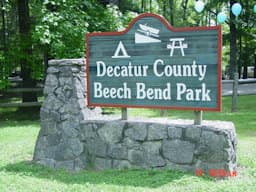
Sugar Tree named for sugar maples that lined its main street
Sugar Tree was named for the sugar maples that lined its main street. Its stores, trades and post office made it a working center for rural Decatur County.
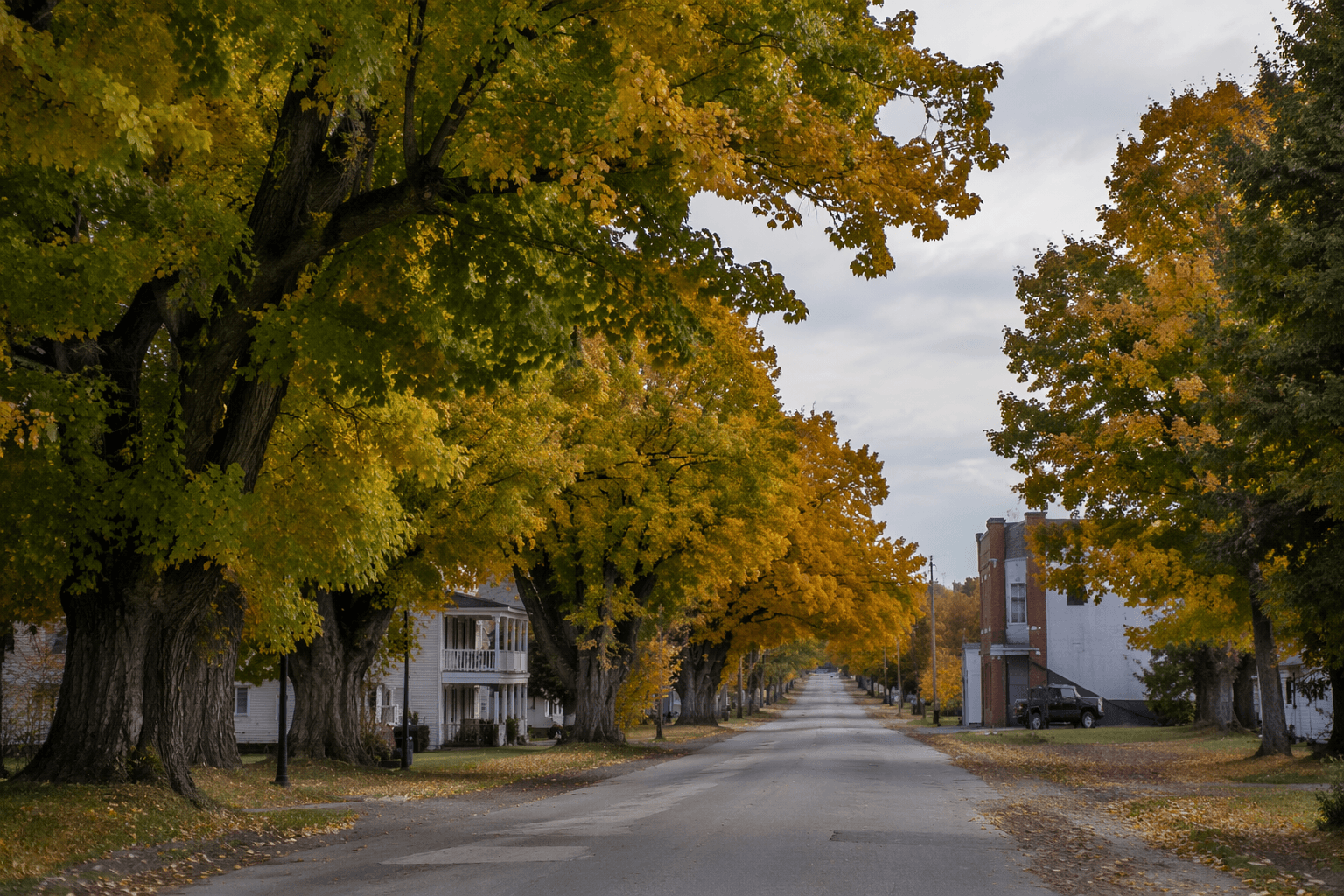
Sugar Tree carries one of the most literal place names in Decatur County: a community named for the sugar maple trees that once lined its main street. That detail is more than a curiosity. It points to a place where the business strip, the post office and the surrounding farms all met in one compact center of daily life.
Local history places Sugar Tree in the northern or northwest corner of Decatur County, about 12 to 18 miles from Parsons. The difference in distance is small; the larger point is clear. Sugar Tree sat far enough from the county seat to need its own trade, services and gathering places, and close enough to Parsons to remain tied into the wider county economy.

A name rooted in the center of town
The name came from a cluster of sugar maple trees standing in the heart of the business section, and one account says only a hollow trunk remained when that history was written. Another says the trees lined one side of the main street. Either way, the image is the same: the settlement grew around a visible landmark, not a planned square or railroad depot.
That kind of origin matters because it shows how small rural communities were identified by what people saw every day. Sugar Tree was not simply a label on a map. It was a place where the street itself was memorable enough to become the town’s name, and where the trees became part of local identity.
Built inside the larger history of Decatur County
Sugar Tree belongs to a county with a long frontier history. The land that became Decatur County came from the 1818 Jackson-Shelby purchase from the Chickasaw, a strategic acquisition tied to the expansion of West Tennessee. Decatur County itself was created in 1845 from Perry County, which gives Sugar Tree’s later development a clear place in the timeline of settlement and county formation.
That context helps explain why the surviving record matters. Small communities like Sugar Tree were often documented in local histories, newspaper items and business directories rather than in big county narratives. Those sources preserve the details that show how a rural center actually functioned: who sold goods, who repaired tools, who took in boarders and who provided specialized work when residents needed it.
The first post office was established in 1874, a firm late-19th-century marker that shows Sugar Tree had become established enough to need formal mail service. In a rural part of Decatur County, that was not a minor convenience. It meant a recognized commercial core, a steady flow of residents and business, and a reliable point of contact with the wider world.
What a small service center looked like on the ground
Sugar Tree worked as a real local economy, not just a crossroads. Fry and Wesson General Mercantile sold everything from hair pins to horse collars, a span that tells you exactly how broad the shop’s role was. A small drug store handled more specialized needs, and doctors came there to fit glasses and make teeth. Wylie Coble and Joe Odle operated a hotel, and Nattie Fisher kept boarders, which shows that travelers and workers had somewhere to stay when business kept them in town.
Those businesses mattered because they reduced the need to make a long trip for everyday necessities. In a place with limited population and scattered farms, a store that could supply both household items and farm gear became part of the county’s basic infrastructure. Sugar Tree’s main street was therefore not decorative. It was useful.
Labor, processing and transportation
The working life around Sugar Tree went well beyond retail. The historical record names blacksmiths Jack Bates, Dol Spence, Tom Bates, John Farlow and Bill Terry, and says Bill Terry’s shop stood beneath a big sugar maple tree. That detail links the town’s name to the work done there: a visible tree shading a trade that served wagons, tools and farm equipment.
Nathaniel A. Wesson owned a tobacco factory, and the community also had a two-story barn used to smoke tobacco leaves. Arthur Odle ran a cotton gin, and a stave mill operated there for a time. Even the transportation route is specific: staves were hauled to Ledbetter’s Landing by oxen-drawn wagons. That kind of detail shows Sugar Tree as part of a wider production chain, not just a place where people bought finished goods.
The mix of trades points to a diversified rural economy. Tobacco processing, cotton ginning, blacksmithing and milling all required local skill and local equipment. In that setting, a small place could still serve a wide surrounding area if it offered the right services at the right time.
Population, footprint and the scale of the place
Modern directory-style figures underline how small Sugar Tree remains. ZIP code 38380 is associated with about 529 people and 242 households. Another demographic estimate puts the population at 525, the median age at 58.8 and the median household income at $61,319. A ZIP-code data source lists the area at 38.22 square miles and says it has only five businesses.
Those numbers help explain the community’s history. A place that small does not need a large downtown to matter. It needs a few concentrated institutions that carry more weight than they would in a city. Sugar Tree once had exactly that kind of footprint: a mercantile, a hotel, a boarding house, a drug store, blacksmith shops, processing facilities and a post office.
Church life, music and schooling
Sugar Tree was also a social place, not only an economic one. A brass band was organized there and received publicity, and the members traveled by wagon and team in uniform for Children’s Day appearances at local churches. The band paid its own way through box suppers and other fund drives, which shows how community culture was financed at the local level.
The town also once had a college, with as many as 60 students taught by one teacher. That detail gives Sugar Tree a stronger educational history than its size might suggest. In a rural community, a school or college was a marker of ambition as well as service, proving that the settlement was a place where families could stay, learn and build community life without leaving the county.
Sugar Tree’s story is not just that it had a memorable name. It is that the name sat on top of a working main street, and that street supported the practical business of rural Decatur County for generations. The sugar maples are gone, but the record they left behind is clear: this was a place where commerce, labor, schooling and church life all fit within one small center.
This article was produced by Prism’s automated news system from verified source data, official records, and press releases, then run through automated quality and moderation checks before publishing. The system is built and supervised by the people who set the standards it runs under. Read our full AI policy.
Did this article answer your question?