Decatur County website centralizes services, notices, and department contacts
Residents can reach Decatur County offices, agendas, and emergency contacts from one refreshed site, with clear public-comment rules and county contact information.

Decatur County’s website now works as a single front door for the business people need handled quickly: office contacts, meeting notices, records, and emergency information. For a county spread across multiple communities and anchored by a courthouse in Decaturville, that kind of central directory cuts down on guesswork when someone needs help with a title, a tax bill, a public meeting, or a safety alert.
A central directory for county business
The site presents Decatur County as a Tennessee Three-Star community on the banks of the Tennessee River, but its real value is practical. The county mayor page names Mike Creasy and invites visitors to browse a refreshed site, while the departments page gathers the offices most residents use most often into one place. That list includes County Clerk, Courts, Election Commission, Emergency Management, Emergency Services Rescue, Health Department, Highway Department, Parks & Recreation, Property Assessor, Register of Deeds, Senior Center, Sheriff’s Office, Trustee, Volunteer Fire Departments, Title VI Coordinator, Schools, and Convenience Centers.
That structure matters because county government in Decatur County is not concentrated in one big civic campus. The work of daily life, whether it involves vehicle paperwork, land records, road issues, health information, or sheriff’s office contact details, is spread across ordinary county departments. Putting those offices on one website gives residents a faster starting point when they need to know who handles what.
Where to go for records, titles, and tax questions
The county clerk page makes the clerk’s office one of the county’s information centers. It also says the office serves as custodian of a wide variety of records and handles motor-vehicle titles and registrations, which makes it one of the first places residents turn for paperwork tied to ownership, licensing, and official documents. For anyone trying to track down county records or figure out where a form belongs, that page is built to reduce back-and-forth.
The trustee page is equally direct. It identifies Beth Hays as trustee and says the office acts as the county’s banker and tax collector. That makes the trustee page one of the most useful stops on the site for residents checking on county finances, tax responsibilities, or payment-related questions. In a rural county, where people may not visit county offices every week, having the trustee clearly named and described helps make those tasks less opaque.
Meeting notices and public-comment rules are posted in plain view
The notices section turns the website into more than a directory. It includes 2026 agendas and the county commission’s public-comment guidelines, so residents watching budget decisions, hearings, or other commission business can see what is coming without hunting through multiple postings. That is especially useful for people who only need county information occasionally but still want to follow decisions that shape schools, roads, taxes, and services.
The public-comment rules shown on the site are specific. The commission allows up to 15 minutes total for public comments, and each speaker gets up to three minutes. The agenda for every county commission meeting includes a place for comments from the public, which gives residents a predictable way to participate when county government is in session. For anyone planning to speak, those limits are the kind of detail that determines whether a meeting visit is useful or rushed.
Public safety information sits alongside routine services
The emergency management page adds another layer to the site’s usefulness. It names Andrew Sparks as emergency management director and points residents to Code Red notification sign-up, which makes the website a public-safety hub as well as an administrative one. In a county where weather, road conditions, and local emergencies can affect travel and response times across a wide area, direct access to alert enrollment is a practical feature, not a decorative one.
That matters alongside the other department pages because residents do not usually experience county government in neat categories. A single household might need a sheriff’s office phone number, a road department contact, and an emergency alert system within the same week. The county’s layout brings those options into one place instead of forcing people to search office by office.
A county seat with a small-town footprint
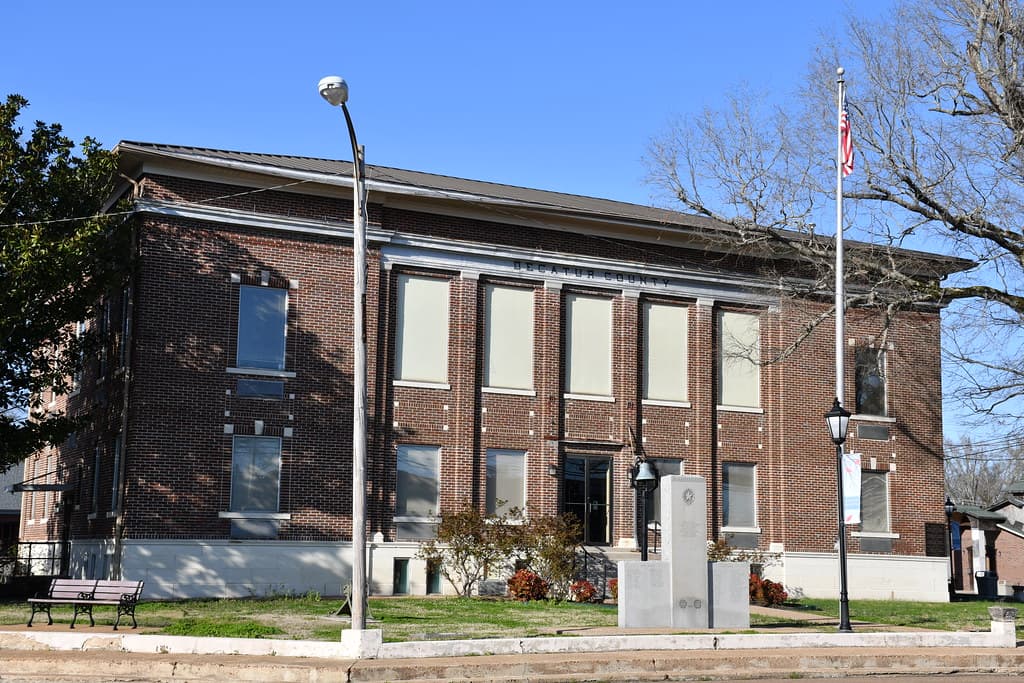
The county website identifies Decaturville as the county seat and says the courthouse is on Main Street in Decaturville. It also notes that Court Square is used for community events, which keeps the courthouse area tied to more than formal government business. That combination of administrative center and civic gathering space is part of what makes the county site so useful: it connects digital information to a real place people already know.
The scale of the county helps explain why the website matters. Decatur County’s FAQ page says the county had a population of 11,435 in the 2020 Census, and the U.S. Census Bureau estimates the population at 11,820 as of July 1, 2025. The same FAQ page says Decaturville had 795 residents, Parsons had 2,590, and Scotts Hill had 855 in the 2020 Census. Those numbers show a county where residents may live in several towns and communities but still depend on the county site as the clearest common reference point.
A history shaped by place and planning
Decatur County was created in 1845 to 1846 from parts of Perry County and Henderson County and was named for Commodore Stephen Decatur. That history sits behind the modern website in a quiet way: a county built from surrounding territory now uses a centralized online directory to knit together offices, notices, and services across a scattered geography.
The Tennessee Three-Star program gives that effort a wider frame. It is a state community-development program intended to help communities plan for the future, and the county’s homepage uses that branding alongside its Tennessee River setting. Taken together, the refreshed site, the posted agendas, the named offices, and the alert sign-up all point in the same direction: Decatur County has built its website to be a working tool, not just a digital brochure.
This article was produced by Prism’s automated news system from verified source data, official records, and press releases, then run through automated quality and moderation checks before publishing. The system is built and supervised by the people who set the standards it runs under. Read our full AI policy.
Know something we missed? Have a correction or additional information?
Submit a Tip