Decaturville courthouse square reflects Decatur County's layered history
Decaturville’s courthouse square links county government, fire-lost records, and the veterans monument in one short walk that explains how Decatur County sees itself.
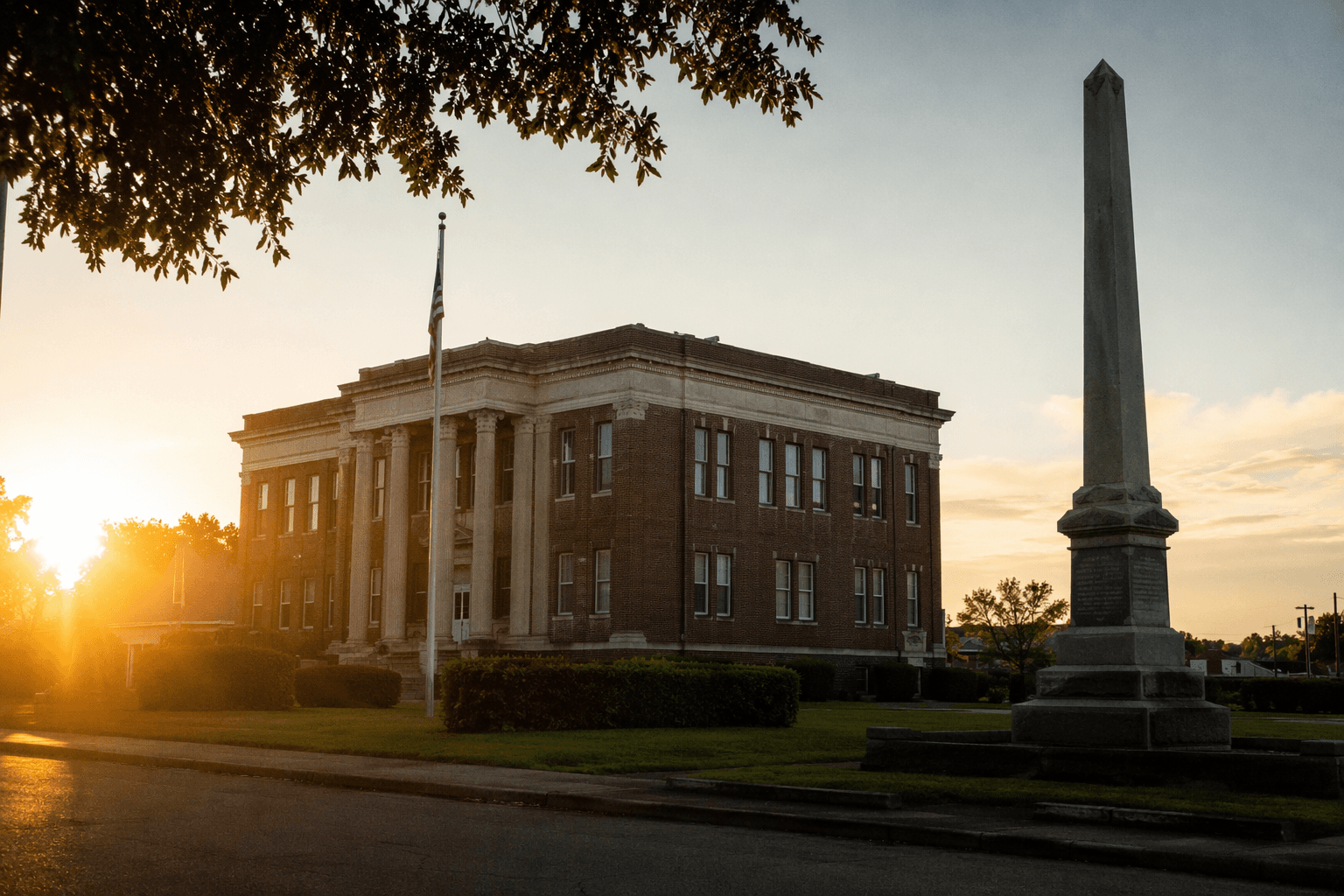
Decaturville’s courthouse square packs Decatur County’s civic memory into one walkable place. The county was formed in 1845 from Perry County, Decaturville is the county seat, and the courthouse burned in 1869 and again in 1927, leaving the square as a visible record of both continuity and loss.
Start at the courthouse square
The courthouse square is the best place to begin because it still functions as the county’s public front door. Local-history materials describe Decaturville as the county seat and the civic center of the county, and that is exactly what the square says in plain view: this is where county government lives, where records matter, and where residents have long come to handle official business.
A square like this is never just about one building. It is where the clerk, court, commissioners, voters, veterans, and visitors all intersect, which is why courthouse-centered communities tend to carry layered histories. Even when the building changes, the square keeps the county story in one place.
What the courthouse fires changed
The fires are the reason Decatur County’s courthouse story carries so much weight. The Tennessee State Library and Archives fact sheet notes that the courthouse burned in 1869 and again in 1927, and FamilySearch adds a crucial detail about the earlier fire: many records were damaged, and nearly all records except deeds were lost.
That loss still matters for anyone trying to understand how local memory survives. Deeds, land boundaries, and property transfers often become the backbone of county research when other records disappear, so the fact that deed records survived the 1869 fire helps explain why courthouse documents remain so important to family history and land history in Decatur County.
The two fires also place Decatur County inside a wider Tennessee pattern. Courthouse fires recur across the state’s county history, and Decatur County’s fire-and-rebuild story fits that larger pattern of public buildings being lost, replaced, and remembered through the square that remains.
Pause at the veterans monument
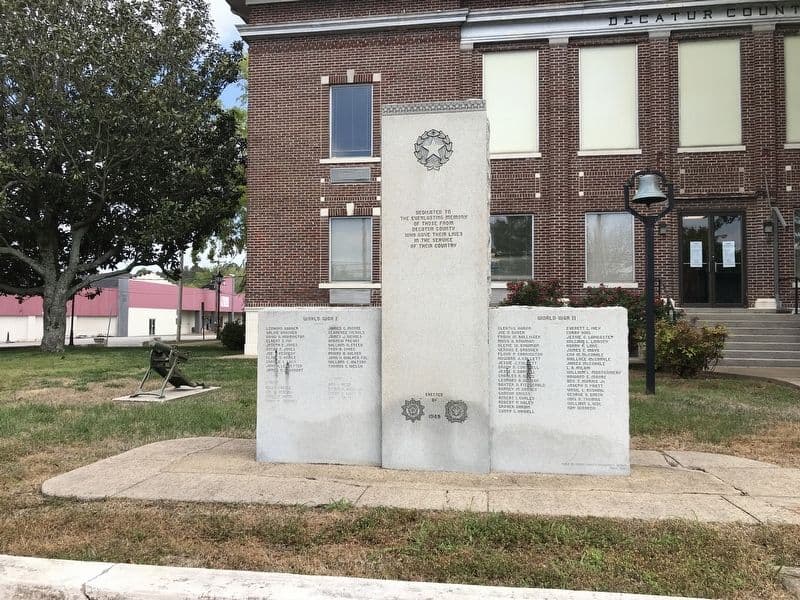
From the courthouse, the veterans monument gives the square a different kind of authority. The Historical Marker Database includes a Decatur County Veterans Monument entry in Decaturville, and that placement matters because it turns the square into more than an administrative center. It becomes a place of public remembrance, where the county honors military service alongside civil government.
That pairing tells you something direct about Decatur County’s identity. The courthouse marks the authority of law and records; the veterans monument marks sacrifice and shared memory. Together, they show how a small county seat can serve both the practical business of government and the ceremonial work of remembering who served.
Read the square as part of a wider marker landscape
Decaturville’s square is not the only place in the county where history has been marked in public. The Historical Marker Database’s Decatur County results page shows 17 historical markers and war memorials in the county, which means the courthouse and veterans monument sit inside a broader landscape of memory rather than standing alone.
That broader count helps explain why the square feels so central. In a county with multiple markers and memorials, the courthouse area remains the most concentrated civic site, the place where local government and public remembrance can be seen in the same short walk. It is the clearest starting point for understanding how Decatur County organizes its past in public space.
Follow the paper trail beyond the square
The Tennessee State Library and Archives fact sheet points readers toward selected published county histories, including Lillye Washburn Younger’s *Decatur County* from 1979. It also points to a county history-and-families compilation, which matters because courthouse losses make published local history more than a curiosity. When records burn, books, family compilations, and historical summaries become part of the surviving record.
That is why Decaturville’s courthouse square works so well as an introduction to the county. It points outward to the books, names, and documents that still help reconstruct the past, even after the courthouse fires interrupted the paper trail. In Decatur County, history is not confined to an archive room; it is built into the square itself.
A practical way to walk the story
A short visit works best when you move in the same order the county’s identity appears on the ground.
- Start at the courthouse, the center of county government and the clearest marker of Decaturville’s role as county seat.
- Circle the square and take in the veterans monument, which shifts the space from administration to remembrance.
- Keep the 1845 formation from Perry County in mind as the county’s starting point, because the square reflects that longer timeline of reorganization and civic growth.
- Remember the 1869 and 1927 courthouse fires, since they explain why the square carries both continuity and interruption in the same place.
- If local history is part of the visit, note that surviving deeds and later published histories help fill the gaps left by courthouse loss.
Decaturville’s courthouse square still works as Decatur County’s most readable public landscape. In one short walk, it shows how the county was formed, how it governed itself, what it lost, and how it chose to remember.
This article was produced by Prism’s automated news system from verified source data, official records, and press releases, then run through automated quality and moderation checks before publishing. The system is built and supervised by the people who set the standards it runs under. Read our full AI policy.
Did this article answer your question?