Dolores County Road and Bridge outlines permits for rural access
Dolores County’s road rules reach far beyond grading: they govern driveways, mailboxes, plowing, and right-of-way, all of which affect winter access and emergency response.
Dolores County roads are not just a surface to drive on. In a county where a blocked lane can delay ranch work, winter travel, or an ambulance, Road & Bridge sets the rules for driveway access, snow plowing, right-of-way permits, and special transport. The office that handles those permits is in Dove Creek, and residents can reach it at PO Box 426, Dove Creek, CO 81324, by phone at 970-677-2328, or by fax at 970-677-2244, Monday through Thursday from 7:00 a.m. to 4:30 p.m.
Who handles access in Dolores County
Dolores County Road & Bridge is the office that deals with the practical side of getting onto and staying on county roads. Its permit lineup includes driveway permits, plow permits, right-of-way permits, and special transport permits, which makes it the place to start before building anything that could affect a road corridor. The county also lists two staff email contacts, cara.bingham@dolorescountyco.gov and amberfisher@dolorescountyco.gov, so the process does not have to begin with guesswork.
That matters in a rural county where the difference between a clear approach and a bad one can be measured in minutes on a gravel road and in hours during a snowstorm. When landowners add fences, mailboxes, driveways, or other roadside improvements without checking the rules first, the result can be a hazard for plows, graders, and emergency vehicles. Road & Bridge is the county’s front line for keeping those conflicts from turning into delays.
The setbacks, mailbox rules, and right-of-way standards
The county’s road specifications are specific for a reason. Any private structure or fence must be placed at least 30 feet from the center of an existing county road, and the county repeats that rule in its notice for fences and mailboxes. Mailboxes come with their own measurements: the upright post must be 6 feet from the edge of the driving surface, the mailbox opening must sit at least 18 inches back from the driving surface, and the mailbox or mailbox platform must be at least 42 inches above the road level.
Those details are the kind of local standards that can keep a roadside project from becoming a road problem. A mailbox too close to the driving surface can be struck by plows, while a fence or other structure pushed too near the road can interfere with maintenance, drainage, or future widening. Dolores County also says any right-of-way must be at least 60 feet wide, and each abutting landowner must execute a right-of-way agreement with the county, which shows how the county protects the road corridor before the first load of gravel or ditch work begins.
The county’s Road and Bridge Standard Specifications PDF is dated June 30, 2008, so these rules are not a one-off checklist. They are part of the county’s written roadway framework, and the driveway permit application repeats the mailbox guidance as part of the approval process. For anyone building or modifying access along a county road, the permit is not just paperwork. It is the county’s way of making sure the road still works after the project is finished.
Winter access and private plowing
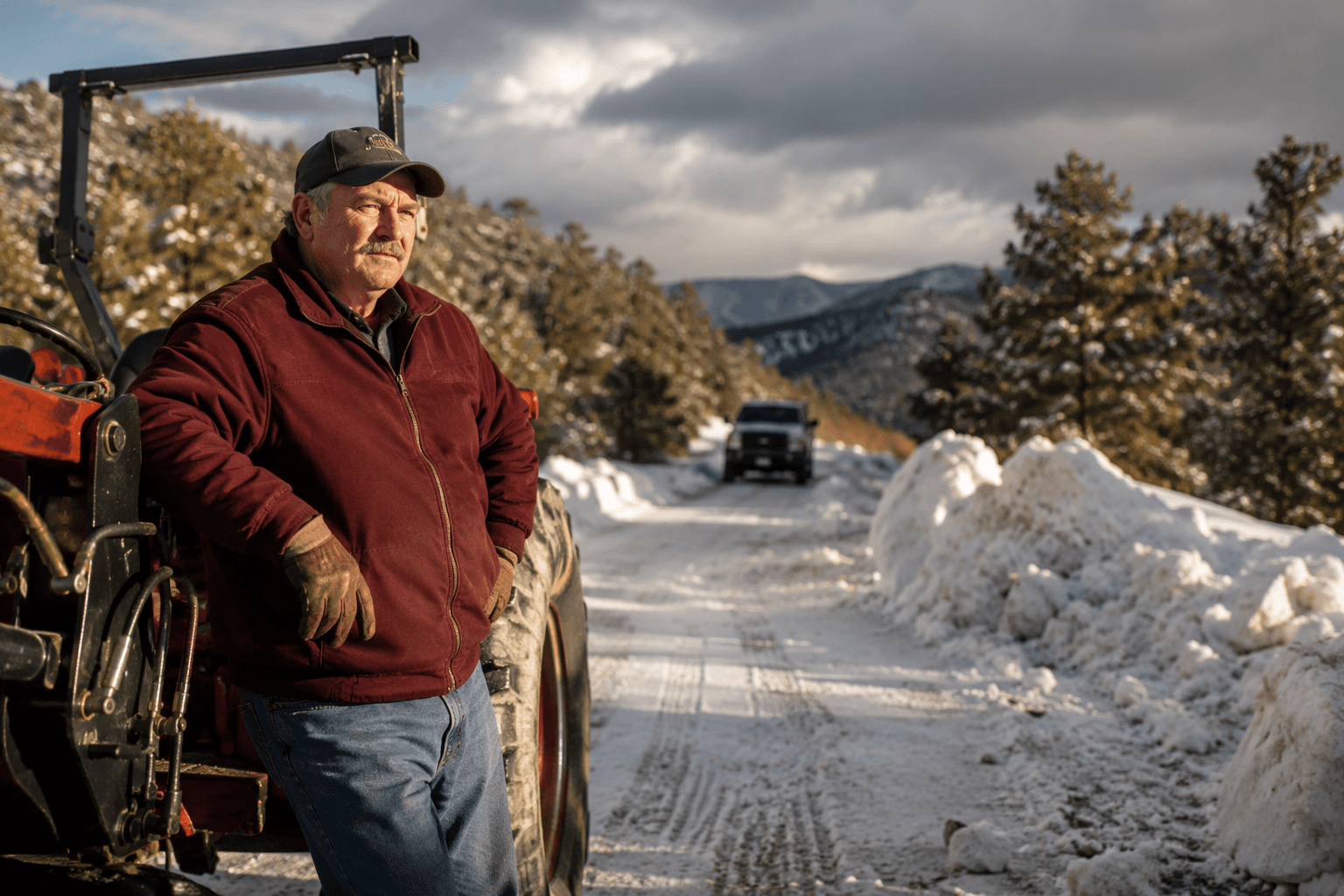
Snow is where Dolores County’s road rules become especially practical. The county’s Permit to Plow Dolores County Road requires the permittee to certify that they have received and read the county road specifications and that all plowing will be done so the roads continue to meet county standards. That language makes plain that private plowing on county roads is not treated as a casual convenience. It is a roadway-safety issue.
That matters in a place where access can change fast with elevation and weather. Dolores County’s snow and wind load table lists ground snow loads from 30 pounds at 4,000 to 5,500 feet up to 100 pounds at 9,501 to 11,000 feet, a reminder that winter conditions are not uniform across the county. A plow permit can therefore affect more than a single driveway; it can influence whether a road stays passable for neighbors, deliveries, school travel, and emergency response.
The county has also shown that plow arrangements can change when conditions change. On Jan. 5, 2026, county commissioners unanimously approved an amendment to a plow permit for County Road S, adding roughly $100 and extending plowing about 0.61 miles from the Cottonwood compressor station to the Formston turnoff. That kind of adjustment shows how closely local road access is tied to the actual stretch of road in question, not just to a generic permit category.
Reporting problems and knowing who is responsible
When a county road needs attention, Dolores County provides a Road Repair Request Form for potholes, road damage, debris, and vegetation issues. That gives residents a direct channel for reporting problems that can become larger if they are ignored. The county also draws a firm line around responsibility: it is not responsible for private roads, state highways, or roads within city limits.
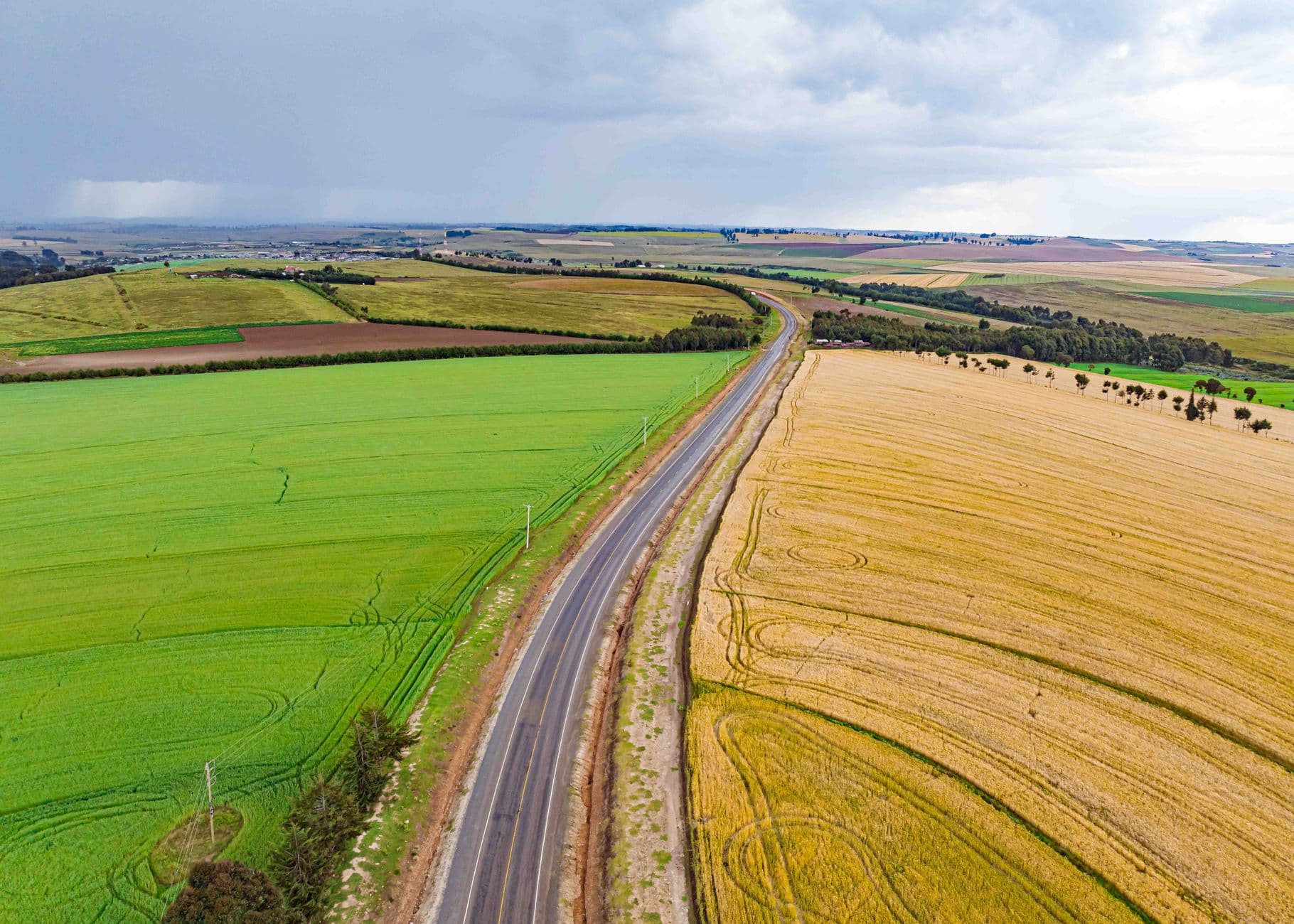
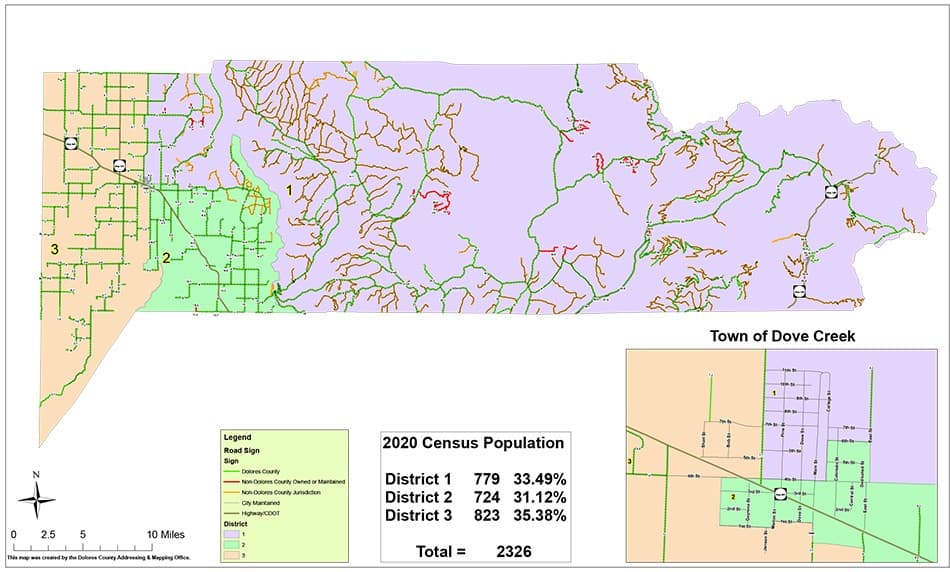
That distinction is critical in a county where the road network crosses multiple jurisdictions. The county road map advises residents to contact local agencies to determine whether a road is open for public use, and it notes that Dolores County addresses increase from north to south and west to east. That address system is part of how a rural county organizes navigation and response, especially when road names and access points can be spread across large distances.
The county’s road responsibility also fits into the broader Colorado system. In April 2025, the Colorado Department of Transportation urged motorists to contact CDOT Customer Service directly about highway concerns rather than local municipalities, which helps separate state highway issues from county road issues. In practical terms, that means a ditch problem on a county road belongs with Dolores County Road & Bridge, while a state highway concern belongs with CDOT.
A county road network that stretches beyond county lines
Dolores County’s road and access questions do not stop at the county border. The Dolores County Sheriff’s Office says deputies regularly patrol state and county roads, parts of San Miguel County, and national forest land, and the sheriff’s office and the Town of Dove Creek jointly provide law enforcement under contract. That is one more reason the county’s road system matters for everyday safety: road access affects where law enforcement can go and how quickly it can get there.
Nearby public agencies face similar logistics. Lake County Road and Bridge says its crews plow approximately 250 lane miles of roads, a useful comparison for residents trying to picture the scale of rural maintenance work. The Bureau of Land Management posted a July 16, 2024 notice about a road closure on D Disappointment Road from the Dolores-San Miguel county line, showing how access issues can involve more than one public agency at once. The U.S. Forest Service has also issued road-reconstruction notices in the broader region, including a Cottonwood Road reconstruction project aimed at improving safety.
Taken together, those details show a county where roads are managed through permits, measurements, and jurisdictional lines, not just through graders and plows. For Dolores County residents, that system is what keeps a road usable long after the first snowfall, the first mud season rut, or the first roadside project that comes too close to the traveled way.
This article was produced by Prism’s automated news system from verified source data, official records, and press releases, then run through automated quality and moderation checks before publishing. The system is built and supervised by the people who set the standards it runs under. Read our full AI policy.
Did this article answer your question?