Dolores County senior services help rural residents stay independent
Meals, rides, and in-home help keep isolated Dolores County seniors independent, but 24-hour ride notice and sparse meal days leave real gaps for caregivers.

When a ride falls through in Dolores County, the problem is bigger than an appointment missed. It can mean a doctor visit in Cortez or Durango gets delayed, a frozen meal has to stretch another day, or a caregiver has to absorb one more errand across long miles of open country. That is why Senior Services matters here: it is the county’s rural support system for people in Dove Creek, the Rico/Dunton area, and scattered homes that sit far from town.
A county service built for distance
Dolores County says Senior Services has operated from the same location since 1976, with a mission to help seniors live independently, with dignity, in their homes as long as possible. The department is led by Director Alisa Schultz and is based at 8450 Road 7.2 in Dove Creek, a practical hub for a county that covers 1,064 square miles. The county says about 700 people live inside Dove Creek, while others live outside town and in the Rico/Dunton area, which helps explain why the county’s support system is built around distance rather than a single neighborhood.
That geography shapes everything from meal delivery to transportation windows. In a county this spread out, independence often depends on whether a service can reach a ranch road, a side valley, or a household too far from town for daily travel. Senior Services is designed to do exactly that.
Meals that cover more than one kind of need
The Senior Nutrition Program offers congregate meals at two meal sites during the week, and hot congregate meals are served three times a week, on Monday, Tuesday, and Thursday at noon at the Pioneer Center. For older residents who can get to a meal site, that gives them a set routine and a place to eat without having to drive far or cook at home.
For people who cannot make the trip, the county delivers home meals on the same three days. Frozen meals are provided on Wednesday and Friday, or whenever hot meals are not served. For homebound clients who live too far away for hot meal delivery, the county delivers a week’s worth of frozen meals on Friday. That detail matters in a county where distance can turn a short drive into a half-day plan, especially for residents who no longer drive regularly or whose families live outside the area.
The meal program is not a luxury service layered on top of convenience. In rural Dolores County, it is part of the daily structure that keeps people at home instead of forcing earlier moves to assisted living or long drives for food.
How rides work, and why medical trips come first
Transportation is one of the county’s most visible lifelines. Dolores County Senior Services runs demand-response transportation Monday through Friday from 8:00 a.m. to 5:00 p.m., and it also operates for prescheduled special events. A 24-hour notice is requested to schedule rides, and trips are handled on a first-call basis, so planning ahead matters. When demand is tight, medical access trips take precedence in scheduling.
The county provides rides from Dove Creek to Cahone, Egnar, Pleasant View, Cortez, Durango, Monticello, Moab, and Farmington, New Mexico. That reach tells its own story: residents are not just getting across town, they are crossing county lines and, in some cases, state lines for care, errands, and services that do not exist nearby. The county also provides a set fare schedule for public clients and a suggested donation schedule for senior clients, while Medicaid transportation is coordinated through Social Services.
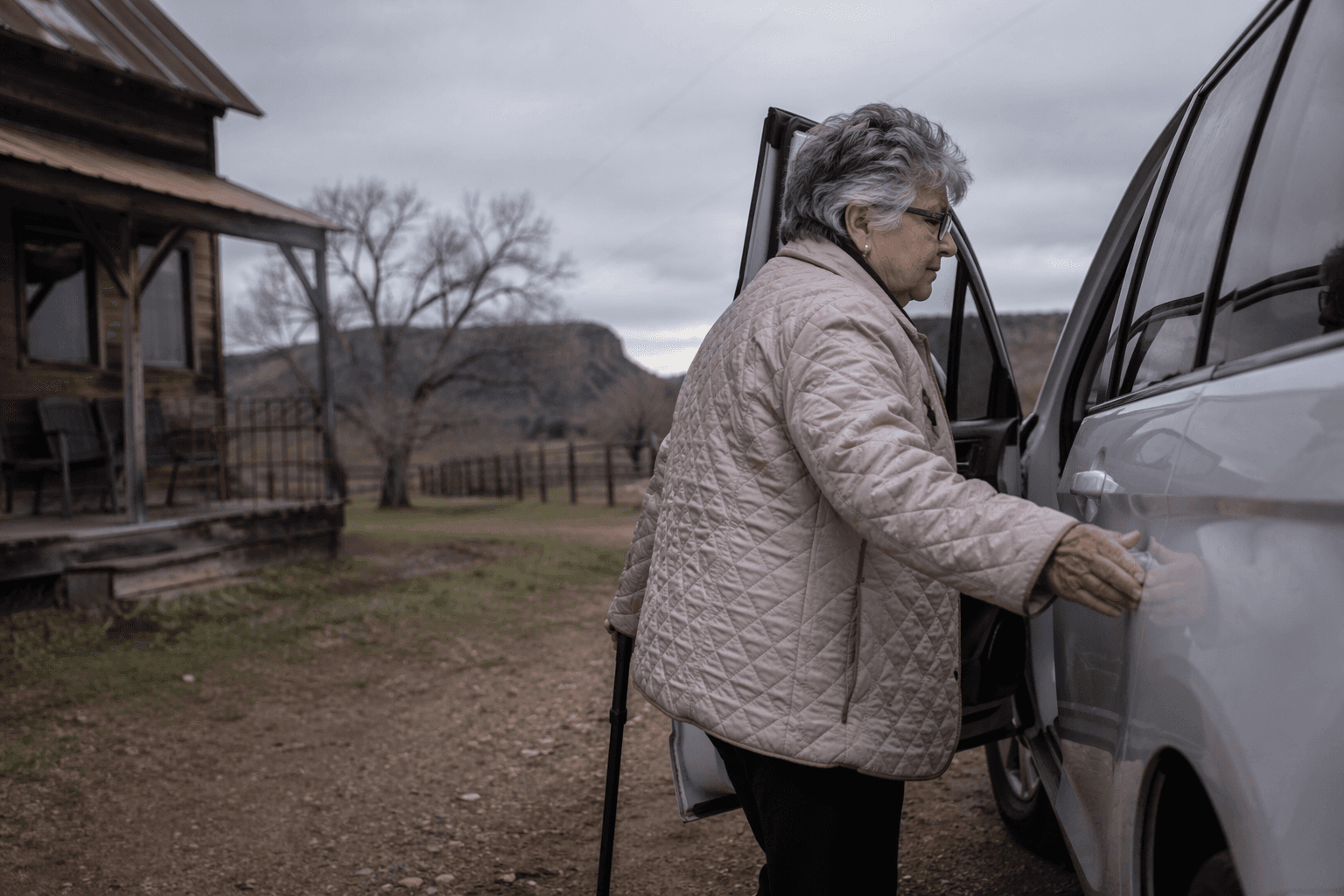
For caregivers, that means one missed scheduling call can create a cascade. A resident waiting on a ride to a clinic or specialist may lose the day’s appointment if the request comes too late. A family member covering transportation from a distance may also need to know that the county’s first priority is medical travel, not convenience trips.
In-home help for the tasks that make a house livable
Not every need in a rural household involves transportation. Dolores County’s Homechore and Homemaker Program offers minor home modification, chore maintenance, light housekeeping, laundry, minor cooking, and errands as needed. Homemaker clients receive two hours a week of light housekeeping, laundry, minor cooking, and errands.
That service is often the difference between keeping a home manageable and letting small tasks pile up until they become safety problems. For older residents living alone, two hours of help can cover the jobs that most threaten independence: clearing walkways, staying on top of laundry, managing light cleaning, and handling short errands that are difficult to do on icy roads or with limited mobility.
The county’s caregiver program adds another layer. The National Family Caregiver Program includes information, assistance, respite care, supplemental services, a hot home-delivered meal for the caregiver and loved one, and a Carelink Button for emergencies such as a fall. In a county with long response times between households, that emergency button is not a convenience feature. It is a backup plan for the moments when a caregiver is not in the room.
How Dolores County fits the wider state picture
Colorado’s Department of Human Services says transportation is one of the most common needs expressed by older Coloradans. It also lists outreach, information and assistance, care coordination, in-home services, home health care, and telephone reassurance among the supports older adults commonly need. Dolores County’s mix of meal delivery, rides, homemaker help, and caregiver support fits that state pattern, but on a scale shaped by rural geography instead of city density.
The county’s transit numbers show how small that system is, and how much it still does. The Federal Transit Administration’s 2024 National Transit Database profile for Dolores County Senior Services lists 3,610 annual unlinked passenger trips, 65,014 vehicle revenue miles, 2,414 vehicle revenue hours, and seven revenue vehicles. Those figures describe a modest fleet and a modest service footprint, but they also show a real network moving people across a county where options are limited and distances are not.
For families trying to keep an older parent or neighbor at home in Dolores County, the lesson is straightforward: the system works best when it is planned around early notice, medical priority, and the reality of long drives. Meals, rides, and in-home help do not erase the county’s gaps, but they are the infrastructure that lets many residents stay put when the road between dependence and independence is measured in miles.
This article was produced by Prism’s automated news system from verified source data, official records, and press releases, then run through automated quality and moderation checks before publishing. The system is built and supervised by the people who set the standards it runs under. Read our full AI policy.
Did this article answer your question?