Dolores County weed district targets noxious weeds across the county
Dolores County can order landowners to clear noxious weeds in 10 days or be billed for county spraying. A limited spray special and applicator testing help are available.

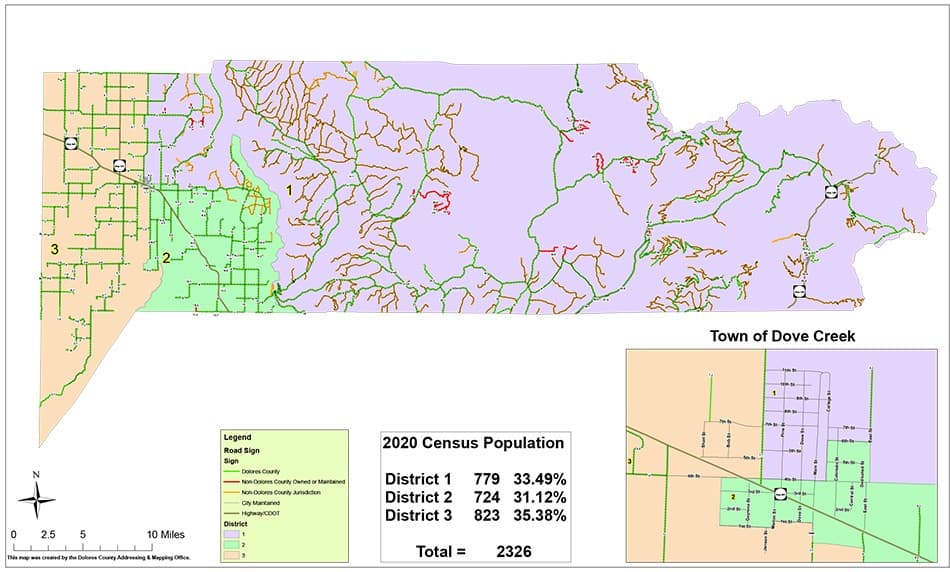
Dolores County’s Mandatory Weed Control District can require landowners to clean up problem weeds, then step in and bill them if the infestation is left alone. The rule reaches farms, subdivisions, roadside edges, and the native habitat those plants can crowd out.
What the district covers
The weed control district is responsible for noxious weed control throughout the county, including subdivisions. Weeds are spreading across Colorado, and while they may look attractive, they displace native plants and wildflowers that wildlife depends on and can invade farm ground.
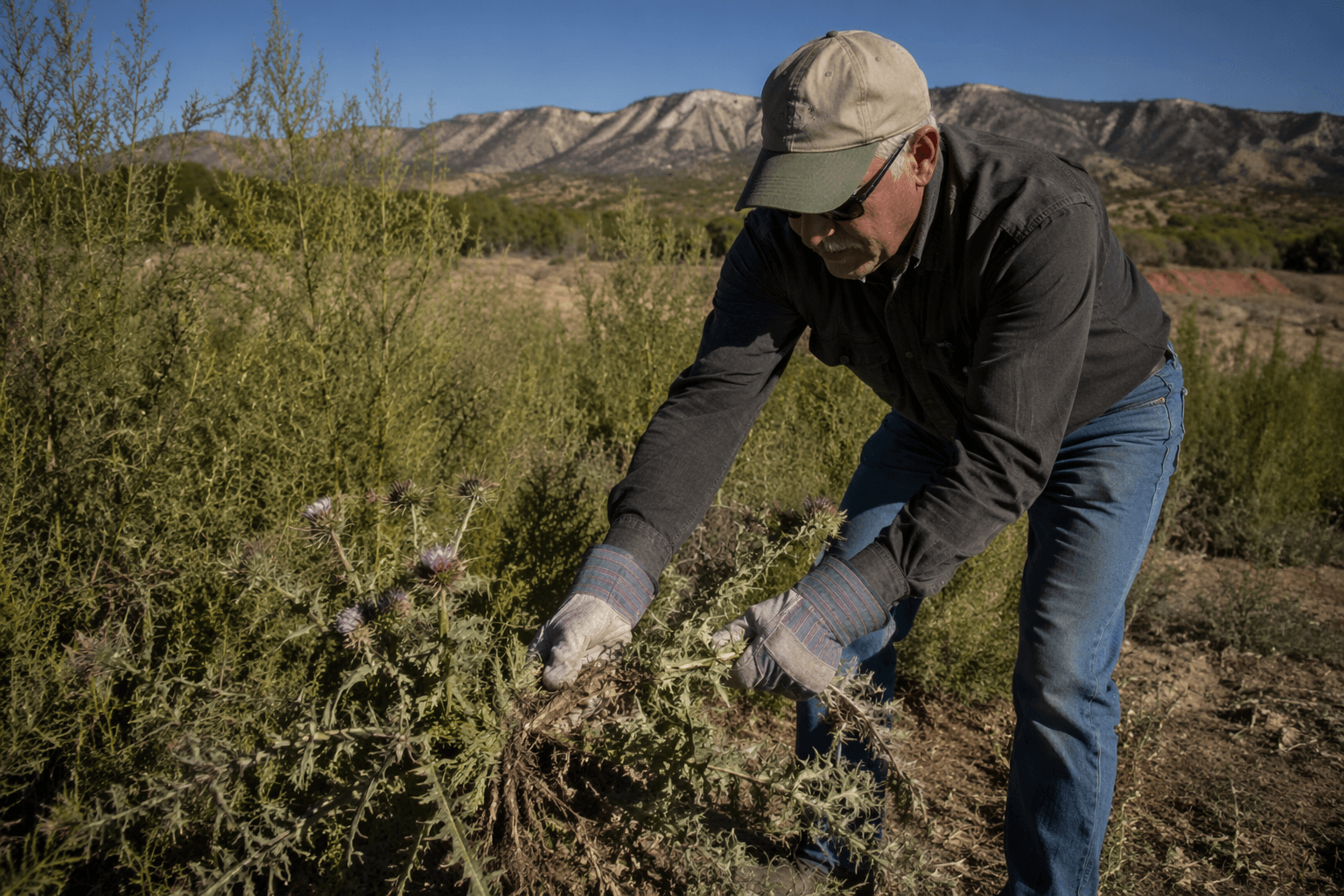
The district’s target list is specific. Its main focus includes Canada thistle, musk thistle, leafy spurge, diffuse and spotted knapweed, bindweed, oxeye daisy, Dalmatian toadflax, Russian knapweed, western whorled milkweed, whitetop, houndstongue, and dyers woad. Landowners and road crews are trying to keep those plants from spreading into pastures, field margins, and open space.
Colorado’s broader noxious-weed system gives the local work its framework. The state classifies invasive, non-native plants into Lists A, B, and C, with eradication, containment, or suppression goals depending on the species and how widespread it is. List B includes familiar problems such as Canada thistle, leafy spurge, and spotted knapweed, while List C covers weeds that are already widespread and established across the state.
What happens if weeds are ignored
The district’s enforcement process is direct. If it receives complaints or sees uncontrolled weeds, it sends a control notice to the landowner. The owner then has 10 days to eliminate the problem weeds. If nothing happens, the district may spray the property and bill the landowner for the work.
Once weeds are established, the cost is not just the spray bill. Musk thistle, one of the county’s problem weeds, can produce up to 20,000 seeds per plant, which is why early removal and preventing seed production are so important. Every ignored patch can turn into a new source of spread for neighboring property, county road rights-of-way, and other ground that gets managed later in the season.
The county’s weed program is not limited to private parcels. The district’s mill levy was created in the 1980s, and that funding helps pay a commercial applicator who works on county road rights-of-way in Dolores County and does custom spraying.
Help is available before the district has to act
The district also offers a spray special through the Dove Creek Mandatory Weed Control District. Under that program, landowners get two hours of spray time, while they pay for chemicals and any additional time. The special runs on a first-come, first-served basis as long as funding lasts, and grants may be available to help with labor.
The county office also has study material and tests for private pesticide applicators, which helps residents who need to handle weeds themselves rather than wait for a district crew. A private pesticide applicator uses or supervises pesticide use to produce an agricultural commodity on land they own or rent.
How Dolores County fits into the state system
Local weed control sits inside a larger state program that coordinates local, state, and federal weed managers and provides education, biological control resources, and funding support for local projects.
Colorado’s categories also explain why the county treats some species so aggressively. List A weeds are managed toward eradication, while List B and List C species are handled with containment or suppression goals depending on their spread. The system is built to stop rare weeds from becoming common and to reduce the damage caused by established invaders that can dominate land and water edges.
The Dove Creek Conservation District works with the Natural Resource Conservation Service, Colorado State Conservation Board, Colorado State University Extension, and others to help landowners with noxious weed control, soil erosion prevention, irrigation and water management, and range management.
County government still treats weed control as a standing business item, too. Dolores County’s 2026 commissioners’ agenda includes a Weed Control District Advisory Board and repeated references to Weed District Areas of Operation Approval, a reminder that the district remains part of regular county oversight.
This article was produced by Prism’s automated news system from verified source data, official records, and press releases, then run through automated quality and moderation checks before publishing. The system is built and supervised by the people who set the standards it runs under. Read our full AI policy.
Did this article answer your question?