Dolores water district splits scarce runoff between tribe, northern farmers
Runoff is so thin that Dolores district split about 385 acre-feet each between the Ute farm and northern irrigators, while full-service growers face just 3 inches.
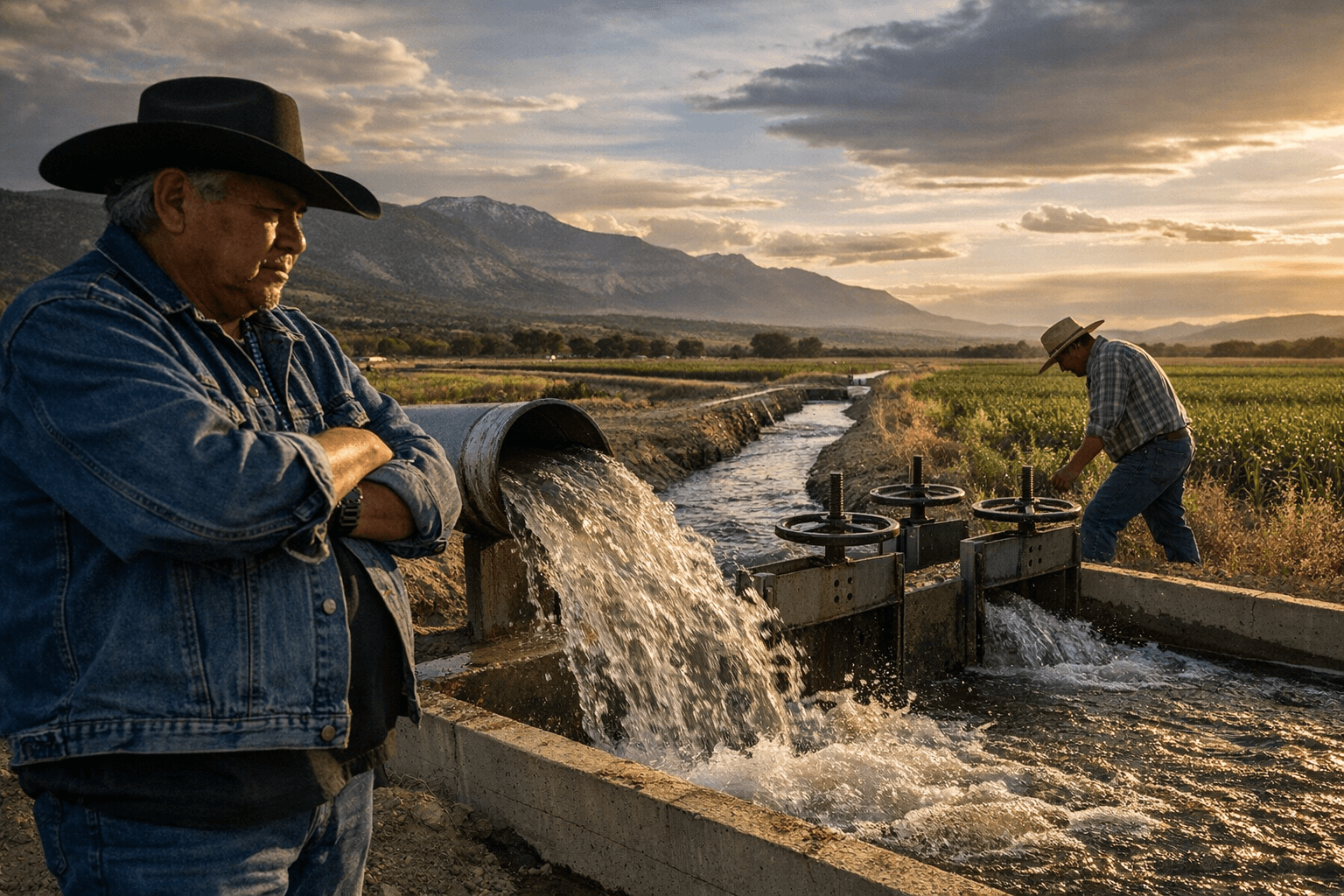
With runoff arriving early but water already tight, the Dolores Water Conservancy District board split the season’s extra irrigation supply between the Ute Mountain Ute Tribe Farm and Ranch Enterprises and full-service irrigators on the district’s northern side, including Yellow Jacket, Pleasant View, Cahone and the corridor toward Dove Creek. After an initial tie at its April 10 meeting at 60 S. Cactus St., the board voted again and divided about 385 acre-feet to each side, a hard choice that shows how little margin is left in a dry year.
That allocation matters on the ground. For the tribe’s operation in Towaoc, the water helps keep acreage in production, but it still falls far short of what a large farm and ranch complex can use. For northern farmers, it means another season of rationing on fields that depend on McPhee Reservoir. General manager Ken Curtis said the district’s forecast for full-service farmers is only about 3 inches out of a full 22-inch allocation, or roughly 14% of normal.
The same reservoir system underpins more than irrigation. McPhee Reservoir, part of the Dolores Project authorized by Congress in the Colorado River Basin Act of Sept. 30, 1968, has a total capacity of 381,195 acre-feet, including 229,200 acre-feet of active capacity, and the project also carries an annual municipal and industrial supply of 8,700 acre-feet. That means a water shortfall does not stop at the headgate. It reaches towns, downstream uses, fish and wildlife, and the broader regional system built around the Dolores River.
District water resources manager Eric Sprague told the board that March was the warmest March in 132 years of record-keeping, and his drought outlook map showed much of Colorado in red. The University of Colorado Boulder Western Water Assessment has put seasonal streamflow forecasts across the state’s major basins at only 45% to 60% of average runoff, and district leaders said final runoff numbers will not be known until late June or July. In other words, the water picture is still moving, but not in a direction that offers much relief.
The last few years show how fast conditions can swing. In 2021, the drought left farmers tied to the district with about a 90% shortage, and the Ute Mountain Ute Tribe’s 7,600-acre farm received just 10% of its supply. By contrast, the district was able to fill McPhee Reservoir and deliver a full irrigation supply in 2022 for the first time since 2019. Simon Martinez pressed the board to weigh the tribe’s needs, noting the farm has thousands of acres to cultivate but water for only part of them, a reality now shared by nearly every irrigated field from Towaoc to Dove Creek. The same dry pattern also leaves little cushion for fire season, and this spring’s runoff split makes that risk harder to ignore.
This article was produced by Prism’s automated news system from verified source data, official records, and press releases, then run through automated quality and moderation checks before publishing. The system is built and supervised by the people who set the standards it runs under. Read our full AI policy.
Did this article answer your question?