Durango blotter logs abandoned rooster, dead chickens, ATV traffic complaints
A rooster was dumped at Pastorius Reservoir, a dog was reported killing chickens on County Road 311, and two older men on ATVs blocked Pine Ridge Drive, La Plata County blotter shows.
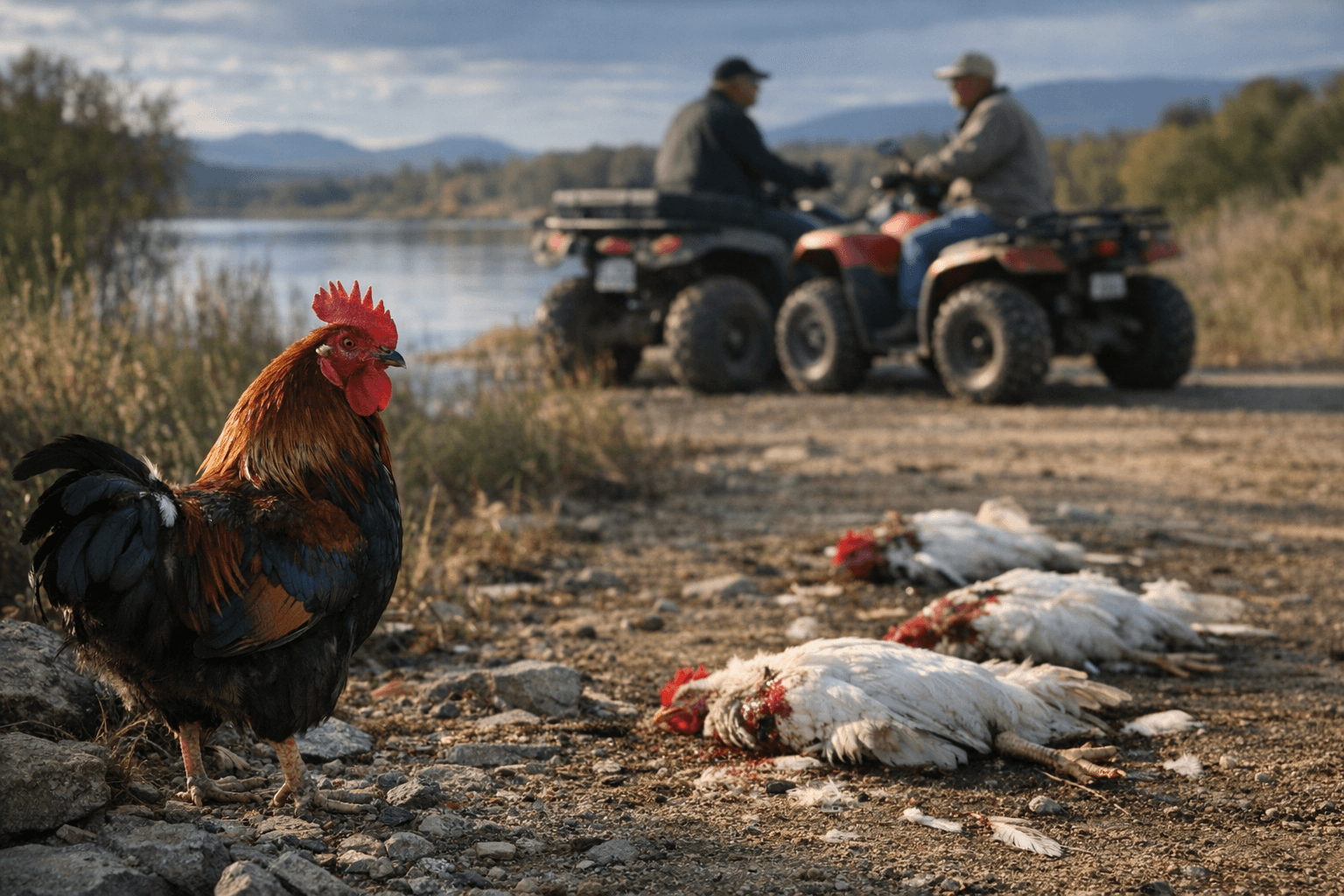
A rooster was left at Pastorius Reservoir, a Colorado State Wildlife Area on County Road 304, an entry logged at 10:48 a.m. in the Durango Herald’s "The Blotter, April 3-10," published April 10, 2026 by Scout Edmondson. The reservoir, about 6–7 miles southeast of Durango and managed by Colorado Parks and Wildlife, requires a hunting or fishing license or an SWA pass for visitors 16 and older, which helps explain why abandonment there drew attention from users and the La Plata County Sheriff’s Office.
That single rooster entry carries multiple practical problems for managers and first responders. Pastorius Reservoir is part of a tightly managed set of state wildlife areas where illegal introductions and animal abandonments have strained staff time in the past; Colorado Parks and Wildlife restricts access and enforces rules because nonnative or released animals can alter habitat or spread disease. For a small agency with limited field staff, recovering and rehousing an abandoned rooster or coordinating with rescue groups imposes logistical and budgetary costs beyond the incident’s backyard-theater headline.
The blotter also records a call of a dog killing chickens on County Road 311 during the same week. Colorado law, including C.R.S. § 35-43-126, gives livestock owners remedies and in some cases authorizes lethal response to dogs that worry stock, while C.R.S. § 18-9-204.5 defines dangerous-dog liabilities. Those statutes turn a routine neighborhood complaint into a matter with civil damages and potential criminal exposure for an owner, and they require deputies and county attorneys to triage evidence, owner contact, and possible restitution.
Public-safety work shifted from animals to traffic later in the week when a 2:57 p.m. blotter entry noted two "older males" driving ATVs that blocked Pine Ridge Drive and disregarded other traffic. Colorado law, chiefly C.R.S. § 33-14.5-108, generally prohibits off-highway vehicles on public streets and roads except on designated routes or for agricultural crossings, so what looks like a quaint small-town annoyance can be an enforceable OHV violation. The national safety backdrop amplifies the concern: U.S. Consumer Product Safety Commission data show tens of thousands of OHV-related injuries annually and recent analyses report rising OHV fatalities, which elevates local ATV-on-road incidents from curiosity to public-safety risk.
Taken together, the Durango Herald blotter entries reveal where La Plata County deputies spend routine patrol hours: animal-control calls, livestock complaints with statutory consequences, and road-safety enforcement tied to OHVs. These are the same everyday burdens that shape budgets and response priorities in neighboring rural counties. The entries were logged in La Plata County, not Dolores County, but the pattern — abandoned poultry at a SWA, dog-livestock conflicts on County Road 311, and ATVs impeding traffic on Pine Ridge Drive — frames a broader Four Corners issue about how small Western jurisdictions allocate finite law-enforcement and wildlife-management resources. Clearer OHV route designations, bolstered animal-control capacity, and targeted public education would reduce time deputies spend on low-level but legally consequential calls and free patrol capacity for higher-priority emergencies.
This article was produced by Prism’s automated news system from verified source data, official records, and press releases, then run through automated quality and moderation checks before publishing. The system is built and supervised by the people who set the standards it runs under. Read our full AI policy.
Did this article answer your question?