Low Flows and Zebra Mussels Threaten Dolores River Recreation in 2026
Rica Fulton of Dolores River Boating Advocates warns 533 cfs on the Dolores signals a potentially record-low water year, just as zebra mussels close in on the Four Corners.
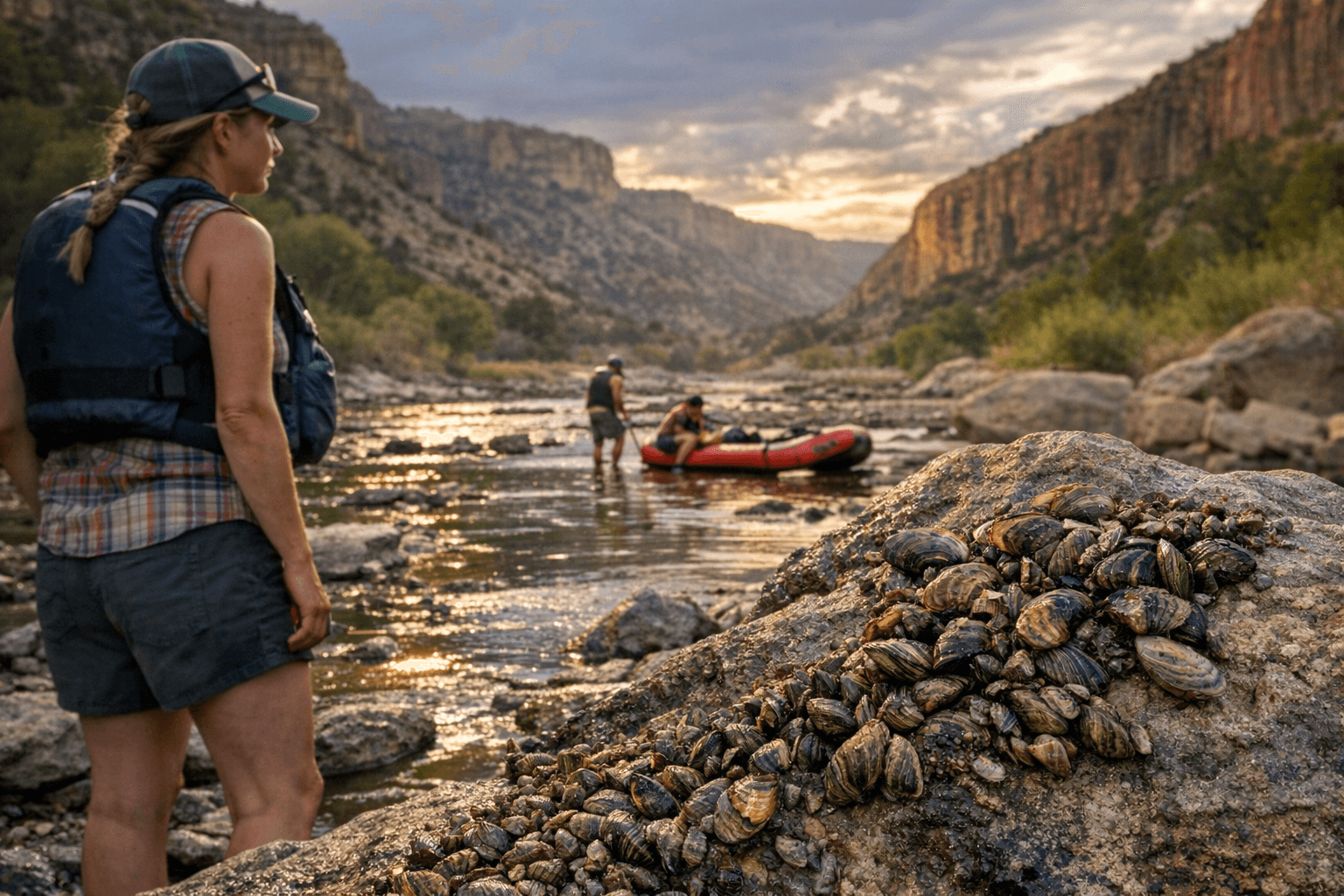
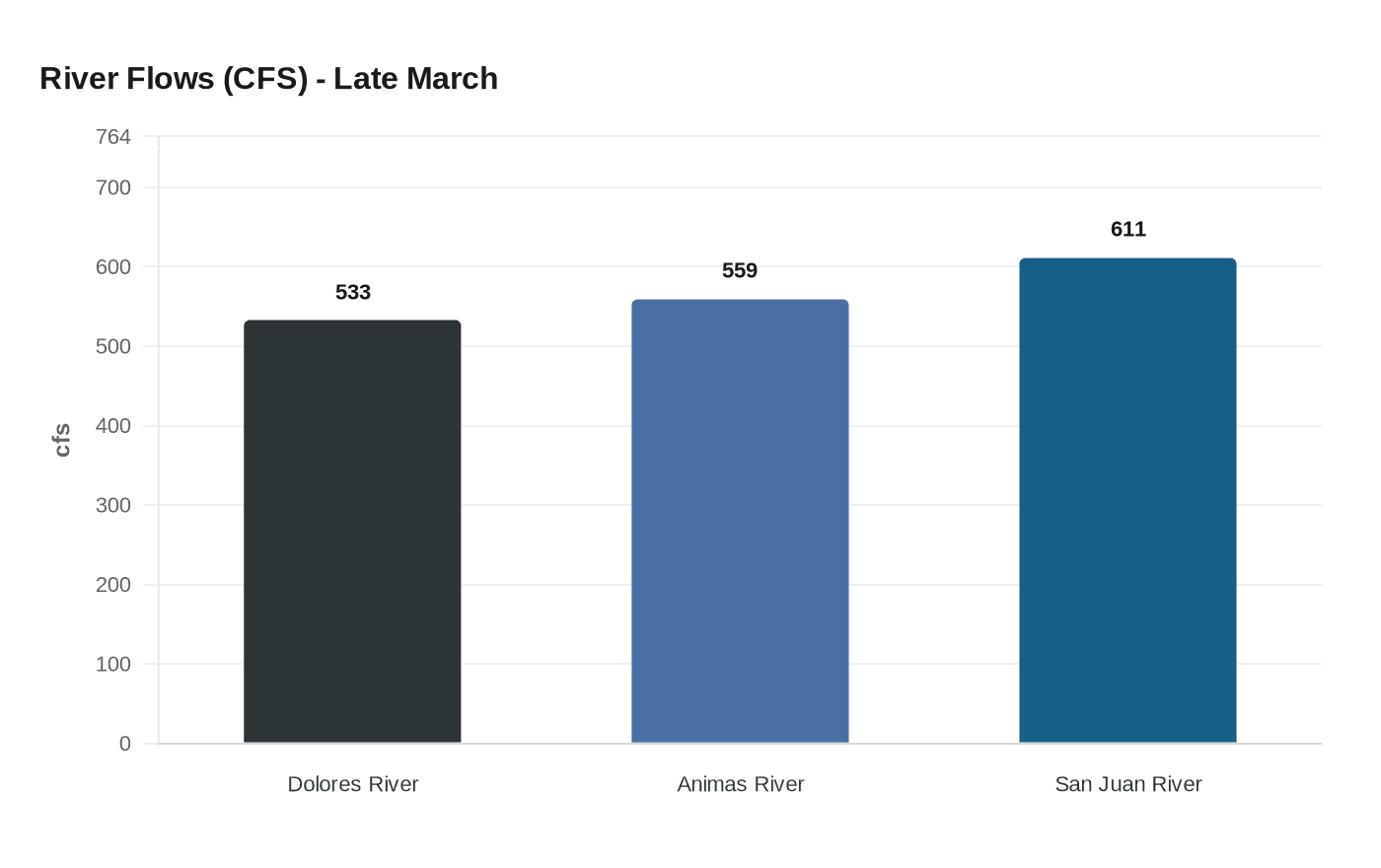
Rica Fulton has seen lean water years before, but the Dolores River Boating Advocates representative is sounding an early alarm for 2026: with the Dolores running at roughly 533 cubic feet per second in late March, a season that typically builds toward navigable spring flows is already showing signs of falling short before it starts.
Snowpack across the San Miguel-Dolores-Animas-San Juan region sat at just 47% of median snow-water equivalent as of early February, part of what federal forecasters have called one of the worst snow droughts in the past 40 years for the Colorado and Rio Grande Basins. Soil moisture conditions heading into the 2026 spring runoff season are below normal across most areas as a result of warmer and drier than normal weather during the 2025 water year, compounding the already bleak snowpack picture. The Animas measured approximately 559 cfs and the San Juan about 611 cfs at the time of Fulton's warning, each reflecting the same drought-stressed conditions rippling across the Four Corners.
For Dolores County, those numbers carry immediate, on-the-ground consequences. The Dolores River's boating season runs April to early June depending on snowpack and releases from McPhee Dam and inflow from the San Miguel River, leaving an already narrow window that could close much earlier than normal this year. McPhee Dam's operators can cut off releases altogether if need be, and the riverbed below the dam has been deprived of a spring runoff during 13 of the last 23 seasons. With inflows at current levels, water managers at McPhee Reservoir face hard choices between irrigation deliveries, tribal water allocations, and any recreational release at all.
Shortfalls below the dam aren't the only threat this season. The expanding presence of zebra mussels on Colorado's Western Slope adds a second and potentially longer-lasting problem. Colorado Parks and Wildlife confirmed the presence of reproducing adult zebra mussels in the Colorado River near Grand Junction, designating the area as "infested." Subsequent surveys found additional reproducing adults near Rifle and within Glenwood Canyon, resulting in the Colorado River being designated as "infested" from the confluence with the Eagle River to the Colorado-Utah border. That corridor sits upstream of the Four Corners watershed, putting Dolores County's interconnected irrigation canals, pump intakes, and McPhee's downstream tunnel system squarely in the path of potential spread.
The biological stakes are significant. A single zebra mussel can produce up to 30,000 free-floating larvae in a single spawning event and up to 1 million in a year. As they multiply, they root and anchor to surfaces, clogging and damaging infrastructure as well as threatening entire food chains, and complete eradication has proven nearly impossible in Colorado and other states. It is estimated that mussels cause $1 billion in damages to water infrastructure and industries across the United States annually. For a county whose agricultural economy depends on functioning irrigation screens, pump stations, and canal systems, even a partial infestation would mean sustained maintenance costs with no easy exit.
Colorado Parks and Wildlife conducted more than 438,000 boat inspections at various bodies of water in 2025, and the agency's Aquatic Nuisance Species program decontaminated 30,039 high-risk boats and intercepted 136 boats fouled with invasive mussels before they could launch. Anyone putting a boat in the water this season should expect mandatory inspections before launch; boats found carrying mussels are pulled for decontamination and cannot enter the water. Of the 16 mussel-bearing boats intercepted at Highline Lake in 2025, 15 had traveled from Lake Powell, and any vessel found with mussels was required to go through mandatory decontamination before launching.
The prevention protocol is straightforward: clean all mud, plants, and debris from boats and gear immediately after leaving the water, drain all water from livewells, bilges, and motor cooling systems before transport, and allow everything to dry completely, ideally for several days, before the next launch. The main message from state wildlife officials is clean, drain and dry your gear, and if you think you have found a zebra mussel or are not sure, contact the state's aquatic nuisance species program. It is illegal to possess or cause invasive aquatic species to be released in Colorado under a 2008 law, and boaters can face fines if they skip inspection stations during operating hours.
Fulton and other river advocates are urging boaters to check real-time USGS stream gauges before heading to any put-in, and to follow Colorado Parks and Wildlife updates as sampling intensifies through spring. The Dolores has survived lean years before, but 2026 is arriving with two compounding threats at once, and the boating window, if it opens at all, may be measured in weeks rather than months.
Know something we missed? Have a correction or additional information?
Submit a Tip