Rep. Hurd Meets Durango Business Leaders on Affordability, Trade Uncertainty
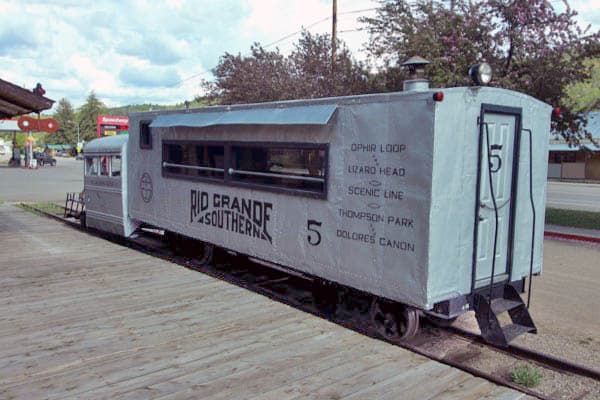
Half of Dolores County is federal land. La Plata County got the meeting: Hurd sat with 17 Durango business leaders to discuss tariffs, housing, and regulation.
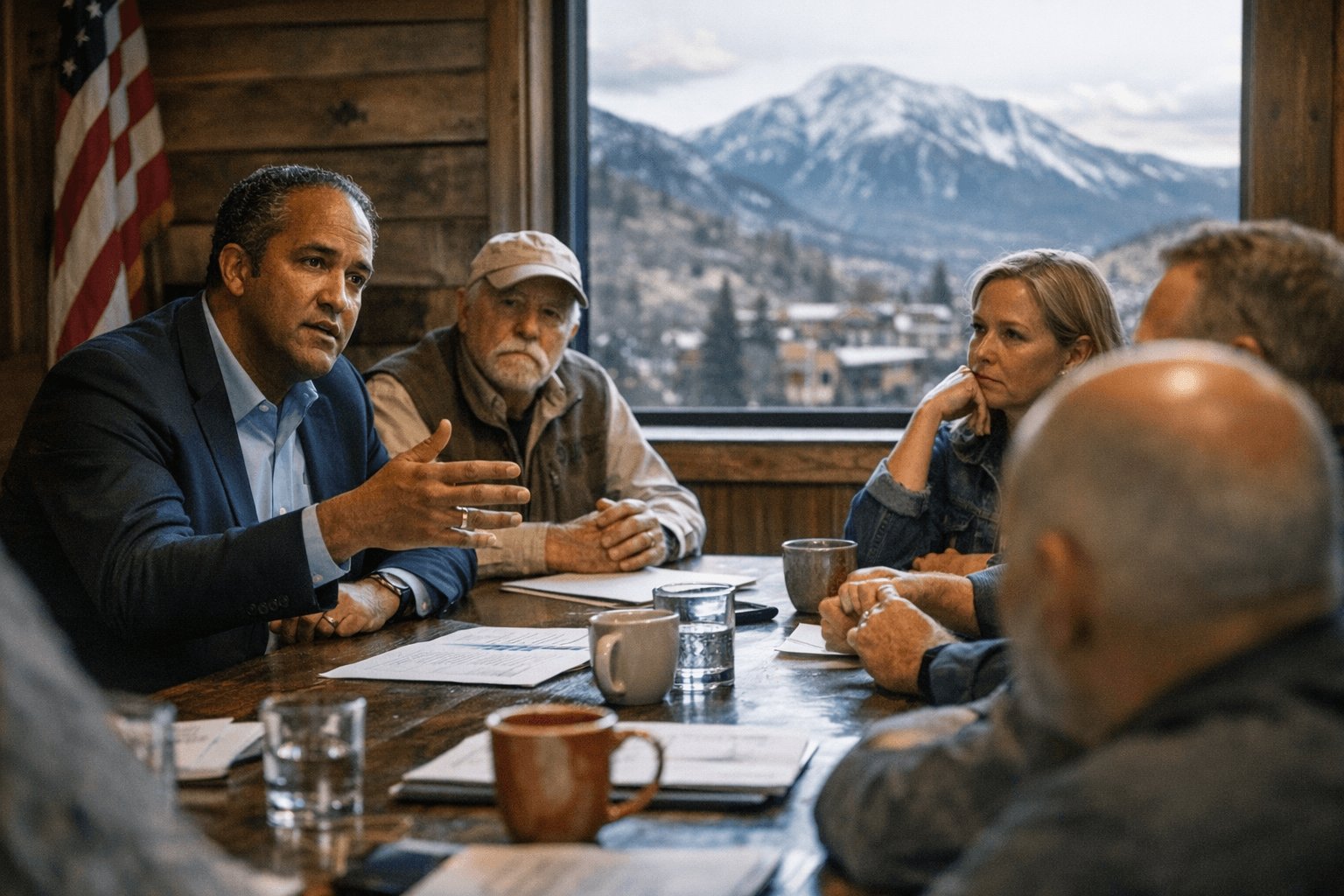
Half of Dolores County sits inside the San Juan National Forest, locked out of private development, while 13.1% of its 2,326 residents live below the poverty line. That's the economic backdrop for Colorado's 3rd Congressional District as Rep. Jeff Hurd spent a Friday morning in Durango with 17 La Plata County business leaders, discussing affordability, housing, and the cost of Washington's trade decisions.
The April 3 roundtable at the Durango Chamber of Commerce drew owners and executives from across La Plata County, including Trevor Bird of Durango Harley-Davidson, Zachary Ray of Desert Sun Coffee Roasters, Symone Massey of Vectra Bank, and Vaughn Morris, CEO of the La Plata County Boys & Girls Club. Also at the table: Michelina Paulek of the La Plata County Energy Council, Sarah Tober of the La Plata Economic Alliance, and the dean of Fort Lewis College's Katz School of Business.
Business leaders pressed four concerns: affordability, workforce housing, business regulation, and the volatility of federal trade policy. On housing, the stakes are quantifiable. A January 2026 white paper from Durango's Innovative Housing Solutions Division called housing affordability "the single most significant structural constraint affecting Durango's economy." Active projects such as Pine River Commons and Rock Creek Housing aim to provide deed-restricted homes capped at 140% of area median income for La Plata County residents, with 30-year resale controls.
Tariffs emerged as the most politically charged topic. The Durango Chamber, which serves more than 700 member businesses, has noted that tariff volatility has compressed planning windows and driven up input costs, an effect amplified across Southwest Colorado by remote freight distances. Hurd has broken from his party on the issue: in February, he was one of only six Republicans to vote for House Joint Resolution 72, which sought to rescind the Trump administration's 25% tariffs on Canada. He cited direct harm to agricultural producers and steel mills in his district.
Energy costs drew a pointed response. "Bad energy policy is a hidden tax on every single Coloradan, every single American," Hurd said, framing price stability as a core commitment.
Thirty-one percent of residents across Hurd's district rely on Medicaid, a figure that underscores how thin the margin of economic stability runs on the Western Slope. In Dolores County, that margin is thinner still. The county's farm economy runs on high-altitude dryland agriculture, with an average farm size of 623 acres and most operations still held by descendants of original homesteaders. It is one of the few genuinely farm-dependent economies remaining on Colorado's West Slope, and one with almost no buffer against tariff-driven input spikes or regulatory cost increases.
La Plata County's businesses got a seat at the table on April 3. For Dolores County, where half the land is federally controlled and the state once designated the entire county its most economically depressed, the question is when a similar conversation finds its way to Dove Creek.
This article was produced by Prism’s automated news system from verified source data, official records, and press releases, then run through automated quality and moderation checks before publishing. The system is built and supervised by the people who set the standards it runs under. Read our full AI policy.
Did this article answer your question?