SMPA Proposes Battery Microgrid to Shield Rico From Extended Power Outages
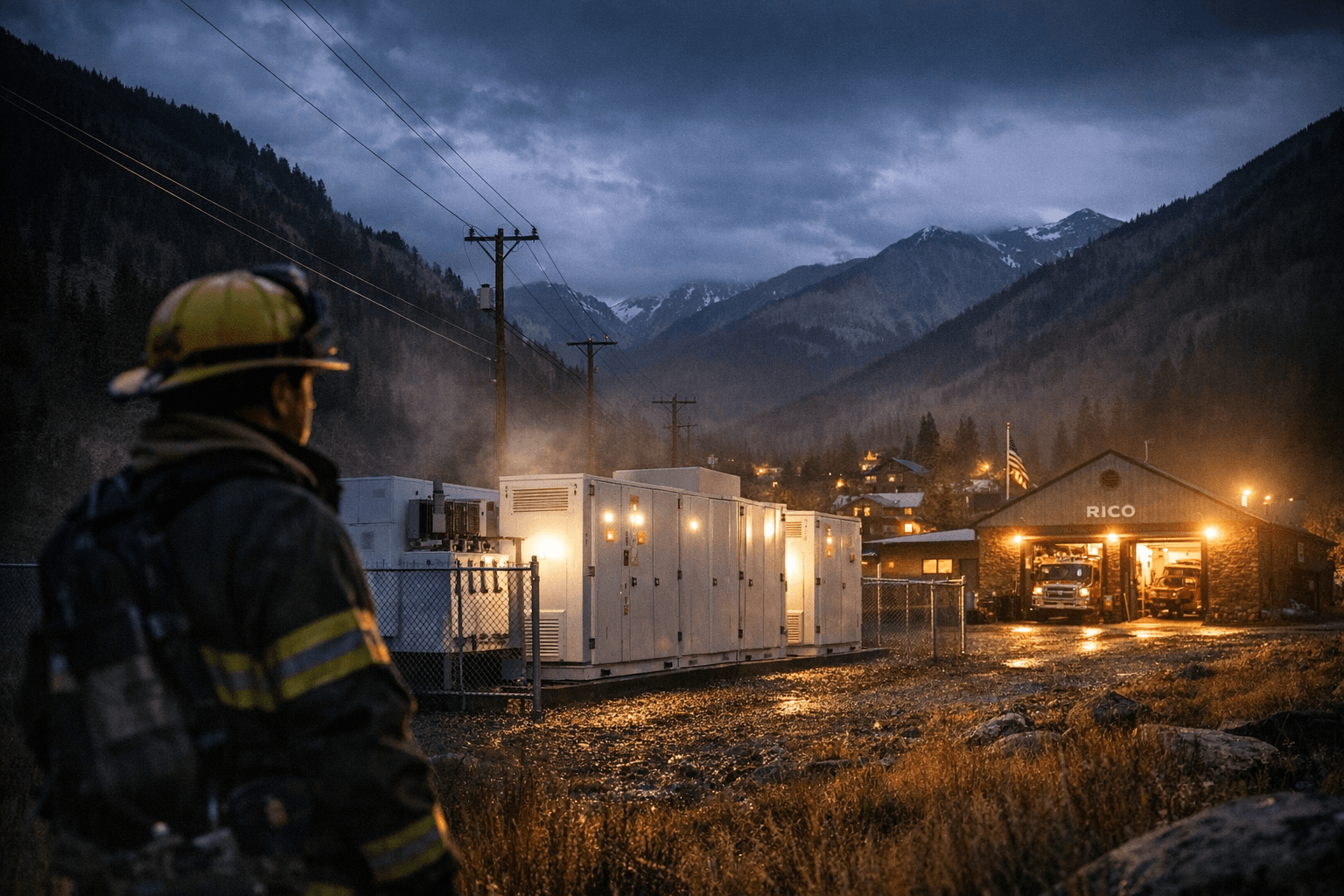
Rico's single power line has no local backup; a 1,500-KWh SMPA battery could keep the fire station and town grid lit for up to six hours when that line fails.

Every watt of electricity reaching Rico travels down a single San Miguel Power Association distribution feeder. The town generates nothing locally, and when storms, landslides, or equipment failures sever that one line, the community goes dark with no fallback. SMPA is now pushing to change that before summer, but the clock is running on both a grant deadline and a narrow construction window at more than 8,700 feet in elevation.
The cooperative has proposed a 1,500-kilowatt-hour battery energy storage system sized to carry Rico's full load for four to six hours during an outage, keeping the fire station, municipal buildings, and communications infrastructure powered while the broader regional grid is offline. The system's capacity was quietly upgraded from the 1,320 kilowatt-hours that Colorado's Department of Local Affairs originally approved for grant funding, with SMPA absorbing the additional cost to account for Rico's gradual growth in year-round electricity use.
That DOLA construction grant, worth $1.4 million from the state's Microgrids for Community Resilience program, carries a hard financial trigger: SMPA must spend half of the award by June 2026. That schedule leaves little room for prolonged permitting debates, since summer is the only practical season for major civil and electrical construction in the San Juans.
Two Rico parcels have been formally evaluated for the battery installation. In September 2025, SMPA consultant Terry Schuyler submitted written correspondence to Town Manager Chauncey McCarthy proposing both 101 S. Glasgow and the Rico School property as candidate sites. The Rico Board of Trustees has since identified the school property as its preferred location, specifically the vacant parcel north of the long-closed school building, where a large propane tank currently occupies the ground. That existing infrastructure adds a layer of fire-safety review to siting decisions, as battery energy storage systems carry their own thermal risk profiles that must be addressed through SMPA's permit applications and local approvals. Any approval will also need to weigh the system's operational noise and its visual footprint in a compact historic townsite.
Silverton, another isolated SMPA-served mountain community, illustrates what Rico faces without a resilience solution. A blizzard that severed all road and line access to Silverton prompted SMPA to pursue community-scale microgrid planning for small towns dependent on single transmission corridors. Rico shares the same structural exposure, compounded by the fact that Dolores County has no local electricity generation of any kind within its borders.
SMPA first brought the Rico microgrid concept to the town's trustees in February 2023. The project's siting and permitting work is now entering the phase where trustee meeting agendas will carry direct budget consequences: a delayed local approval means a delayed construction start, which puts the June grant milestone at risk and, with it, the federal matching funds tied to the DOLA award. The Rico school-property decision, whenever it comes, will set the precedent for how similarly remote Dolores County communities can pursue battery-backed resilience without first building local generation capacity from scratch.
This article was produced by Prism’s automated news system from verified source data, official records, and press releases, then run through automated quality and moderation checks before publishing. The system is built and supervised by the people who set the standards it runs under. Read our full AI policy.
Did this article answer your question?