Southwest Colorado fire crews worry drought could limit wildfire water supplies
As drought deepens, crews worry a major fire could outpace the water needed to defend homes, ranches and escape routes in Southwest Colorado.
Fire crews across Southwest Colorado are heading into summer with a hard reality: in a bad fire season, every gallon matters. If a fast-moving wildfire breaks out, scarce water could slow the attack on flames, limit how long engines can keep pumping and force tougher choices about which homes, ranches and evacuation routes to defend first.
The pressure is building as the Colorado Water Conservation Board says severe drought conditions have developed across the Colorado River headwaters region. State officials say 83% of Colorado’s water originates as snow or rain, which makes a low-snow year especially serious for farms, towns and fire suppression. They also said Colorado was experiencing the warmest start to a water year in the Colorado Climate Center’s 131-year record, while statewide snow water equivalent ranked among the lowest in more than four decades of records.
That drought has already pushed local governments to act. Cortez and Durango both moved to restrict outdoor water use, and Cortez began urging residents to conserve during an unusually dry year. In Southwest Colorado, the message is no longer just about lawns and gardens. It is about preserving enough supply in municipal systems and local reserves so firefighters can use water immediately when a blaze starts.
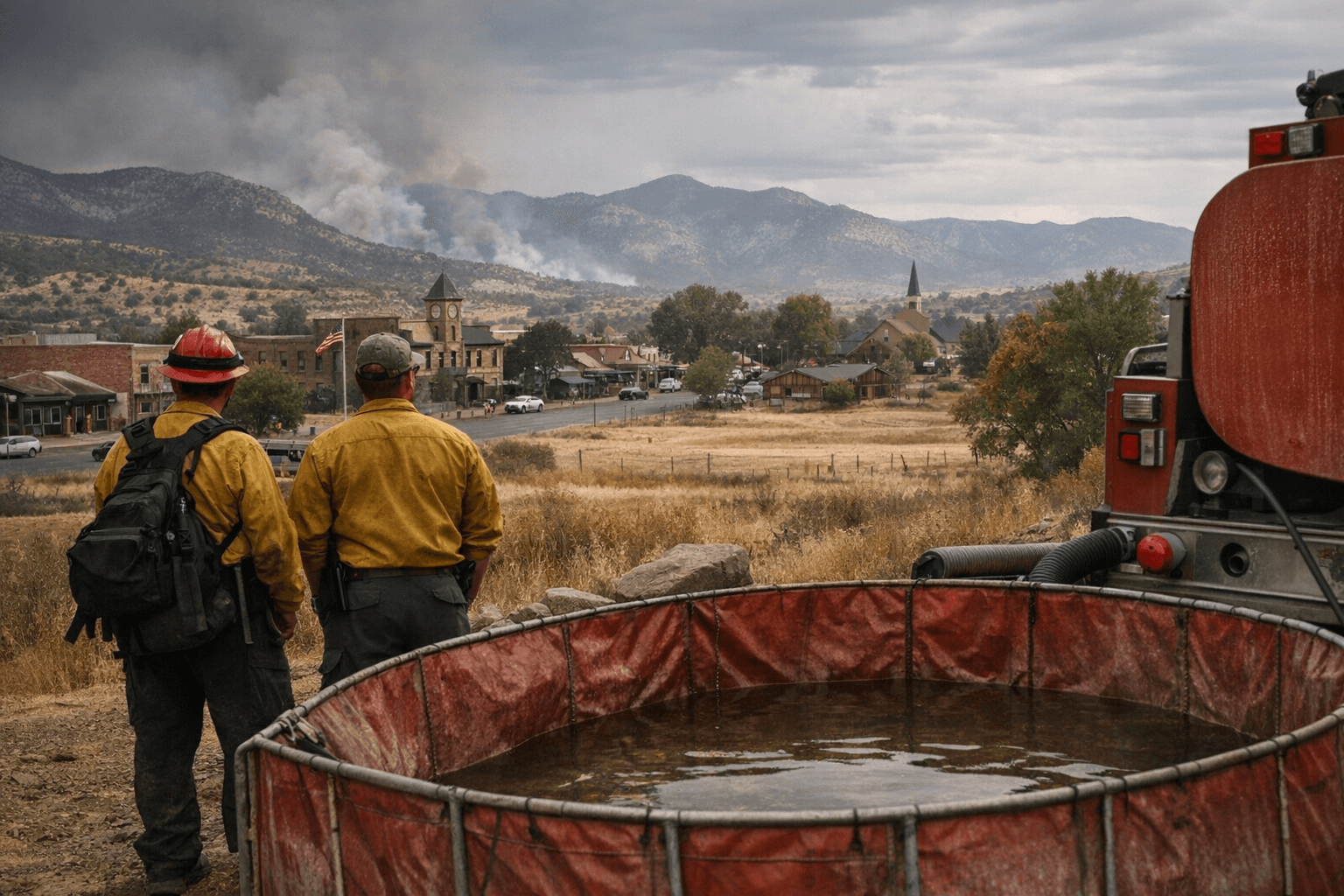
For Dolores County, the concern reaches beyond city limits. Dove Creek and Rico sit in the same fire weather pattern as the rest of the region, where hot, dry and windy conditions can turn a small ignition into a fast-moving threat. The Colorado State Forest Service says nearly half of Coloradans live in the wildland-urban interface, where homes, ranchland and open space mix together and where wildfire can spread quickly. The agency says Community Wildfire Protection Plans are the best opportunity to address those hazards with locally supported solutions.
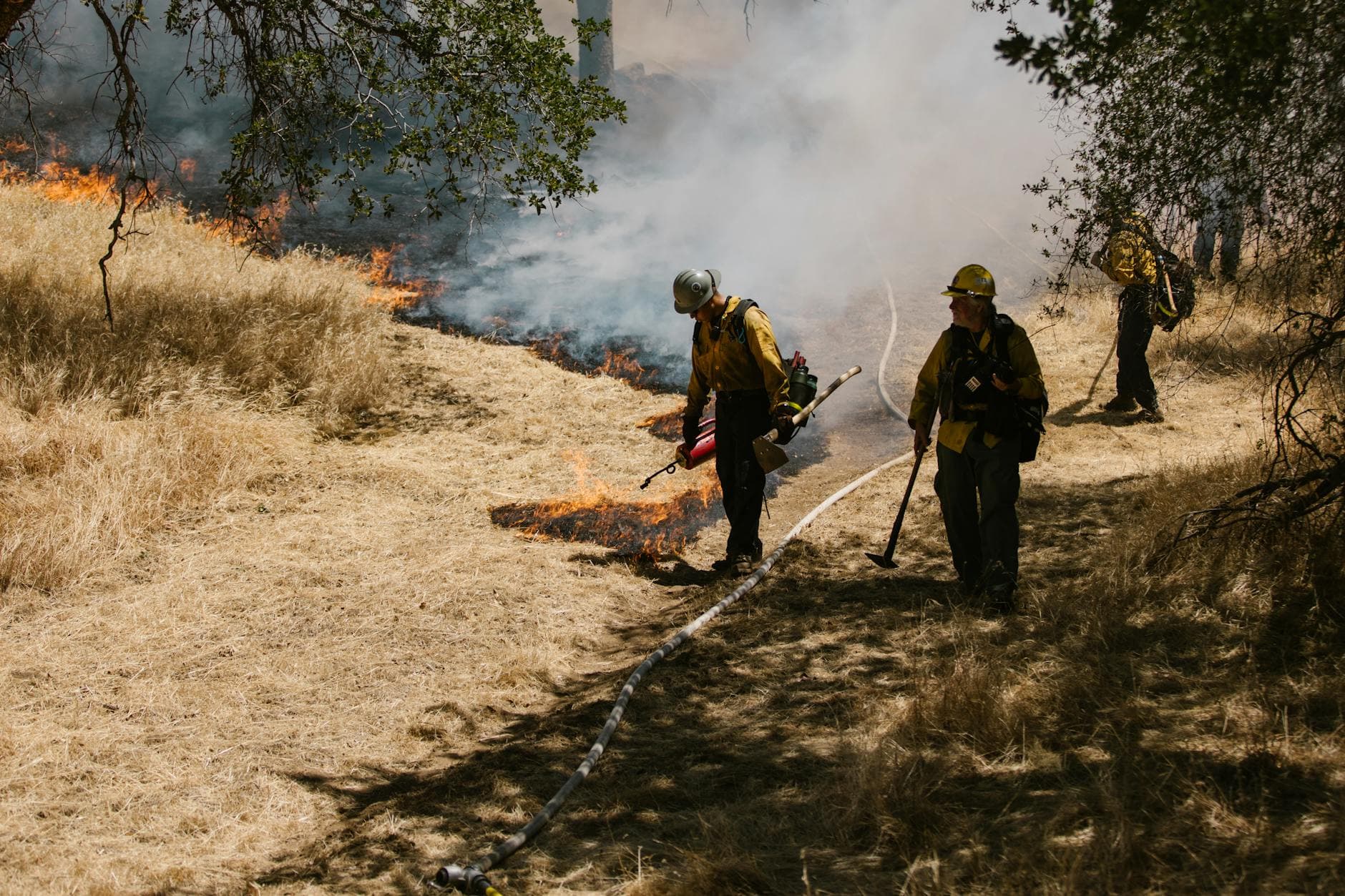
That makes mitigation work a first line of defense. Clearing fuels near homes, hardening structures and keeping defensible space open can reduce the amount of water crews must spend to keep a fire from reaching a house or outbuilding. The timing matters because fire crews do not control when a lightning strike or human-caused fire starts, but they do have some control over how much work the landscape forces them to do once it does.
The concern is reinforced by a USDA Forest Service-linked study that found wildfire may impair water quality in 15.7% to 19.4% of years for diversions from large Colorado watersheds. That means drought can weaken firefighting ability before a fire, and fire can then damage the water systems communities depend on afterward.
Gov. Jared Polis activated the state’s Drought Task Force and Phase 2 of Colorado’s Drought Response Plan on March 17, putting drought response on the same level as other emergency planning. For Southwest Colorado, that is a warning that wildfire readiness now depends on more than engines and crews. It depends on keeping water in the system long enough to protect the people who live along the front lines.
This article was produced by Prism’s automated news system from verified source data, official records, and press releases, then run through automated quality and moderation checks before publishing. The system is built and supervised by the people who set the standards it runs under. Read our full AI policy.
Did this article answer your question?