Southwestern Colorado ranchers gather in Montezuma to address drought, stock ponds
Ken Curtis told ranchers at the Montezuma County Fairgrounds that high-elevation snowpack is “roughly half of what it should be” and that “water is going to be a tough one this year.”
Coffee cooled on tables and booted legs crossed beneath chairs as ranchers settled in for morning updates on wildlife, drought and fires," setting the tone as ranchers and agricultural producers from across southwestern Colorado gathered at the Montezuma County Fairgrounds for the Southwestern Colorado Livestock Association’s annual meeting. General Manager Ken Curtis of the Dolores Water Conservancy District opened the water update bluntly: "Water is going to be a tough one this year."
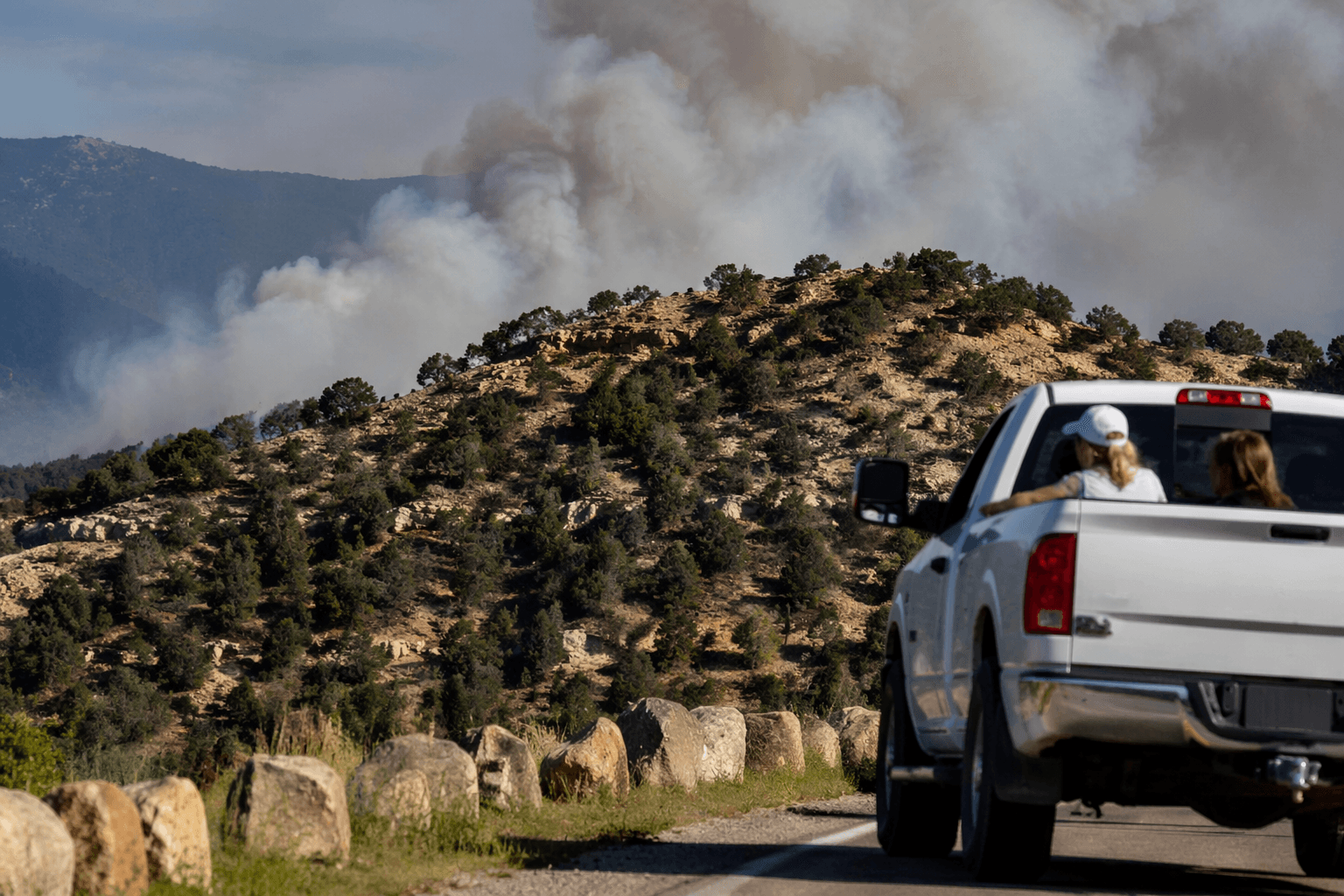
Curtis told the meeting that high-elevation snowpack was "roughly half of what it should be" and described recent conditions as "unseasonably warm" and "weak." He warned that "the timing of runoff and spring showers will matter" for pastures and stock water, and added, "I expect we are going to see a weird fire season." Curtis said the district office will have thorough updates April 1, signaling a key date for local ranchers watching reservoir and runoff forecasts.
The morning session included reports from Montezuma County Commissioner Jim Candelaria, Dolores County Commissioner Eric Stiasny, and Sheriff Steve Nowlin; State Sen. Cleave Simpson, R-District 6, and Rep. Larry Don Suckla, R-District 58, also spoke mainly to address the start of the new legislative year. Meeting organizers identified "upcoming state regulatory mandates" as a central concern, but did not provide specifics on which mandates were referenced during the sessions.
Stock ponds and on-ranch water supplies were discussed as essential to grazing operations, echoing technical research on remote monitoring. Troy Smith’s 2011 assessment was cited in background materials: "Whether cattle are grazing native range, fescue, Bermuda grass or any other kind of pasture, its value as a grazing resource is dependent upon the availability of livestock water. For the grazer, an ample supply of stock water is a blessing, while a shortage presents a serious challenge."

Remote-sensing tools offer a way to track stock pond availability across remote rangelands, according to recent technical work. The Surface Water Identification and Forecasting Tool, or SWIFT, developed from a 2021 NASA DEVELOP study, uses Landsat 8 OLI, Sentinel-1 C-band Synthetic Aperture Radar, and Sentinel-2 Multispectral Instrument data to produce time series charts and a Google Earth Engine-based tool that "will enable ranchers and wildlife managers to remotely monitor stock ponds water extent." SWIFT was initially devised for Arizona but can be deployed elsewhere in the Southwest U.S. with potential adjustments to algorithms and data inputs.
Attendees stood in line for a communal meal after the morning session, a reminder of the meeting’s local fabric: "Emily Wofford, left, helps serve lunch as attendees line up during the Southwestern Colorado Livestock Association’s annual meeting Saturday at the Montezuma County Fairgrounds. Lunch was served after the morning session."
Organizers and speakers left several open items that will affect Dolores and neighboring counties: the precise content of the state regulatory mandates discussed, local reservoir and streamflow numbers tied to the weak snowpack, and whether local fire agencies have modeling to support Curtis’s forecast of a "weird fire season." Curtis’s April 1 district update was presented as the next concrete checkpoint for ranchers and county officials planning grazing, stock-pond management, and fire preparedness.
This article was produced by Prism’s automated news system from verified source data, official records, and press releases, then run through automated quality and moderation checks before publishing. The system is built and supervised by the people who set the standards it runs under. Read our full AI policy.
Did this article answer your question?