Castle Rock depot museum preserves rare railroad history in Douglas County
Castle Rock’s old depot shows how rail access turned a county-seat village into today’s Douglas County hub. The museum preserves rare stone railroad architecture, not nostalgia.
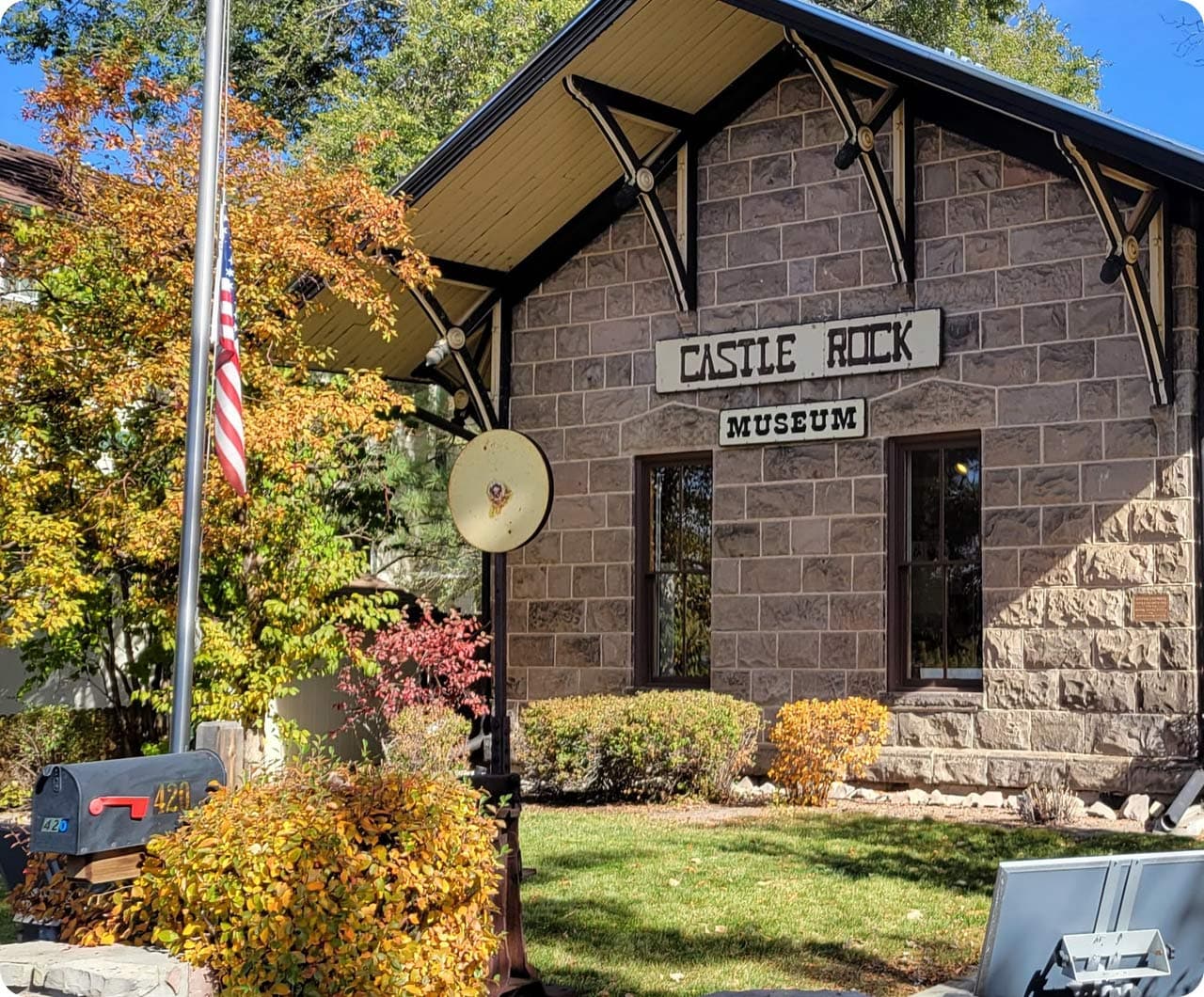
Castle Rock’s old Denver & Rio Grande depot is more than a preserved station: the building is the artifact. It shows how rail access helped turn a county-seat village on Third Street into the commercial and civic center residents know today, and it still carries the physical traces of that change, from the ticket window to the baggage area and 145 years of graffiti. The story starts with General William Jackson Palmer’s rail line between Denver and Old Colorado City in 1871, then the county seat move from Franktown to Castle Rock in 1874 and the depot’s construction in 1875.
Railroad access built Castle Rock’s center
The depot makes the case for railroad economics in plain sight. Douglas County was organized in 1861, Franktown was the first county seat, and the move to Castle Rock in 1874 put public power and private commerce on the same growing corridor. By the time the depot went up on Third Street in 1875, Castle Rock was no longer just a waypoint on the line. It was becoming the place where the county’s business, travel, and settlement patterns converged.
That shift still shapes the town’s layout. The depot sits close to the streets that defined early Castle Rock, and the museum’s downtown walking tour uses that historic core as the backdrop for the town’s origin story. Castle Rock has since become the most populous municipality in Douglas County, with 73,158 residents counted in the 2020 census, so the depot now stands as a compact reminder of how a railroad stop and county-seat decision helped produce the larger suburban center that exists today.

A rare stone depot with a local footprint
What separates this building from an ordinary railroad relic is its material and style. History Colorado identifies it as a rare surviving stone depot built by the Denver & Rio Grande Railroad, and the stone came from Castle Rock quarries. Historic Douglas County calls it the town’s finest example of stone construction and the area’s best illustration of the Italian Villa style, which gives the structure a place in Colorado railroad architecture beyond local nostalgia.
The details inside reinforce that rarity. The old ticket window and baggage area remain visible, and the building still carries 145 years of graffiti, a physical archive of how many people passed through when the depot was still doing railroad work. It is also listed in the Railroads in Colorado, 1858-1948 historic context, which puts Castle Rock’s depot in the broader story of the state’s rail network rather than treating it as an isolated landmark.
The National Register of Historic Places added the depot on October 11, 1974, and Historic Douglas County later recognized it on the Castle Rock Register of Local Landmarks in 1994. Those designations matter because they mark the building as more than an old structure that survived by accident. It is a documented piece of the county’s built history, preserved because the material, architecture, and railroad connection all line up in one place.

From trackside utility to museum
The depot’s preservation story has its own clear timeline. In 1970, the building was moved from its original trackside location and converted into a private residence. The Castle Rock Historical Society bought it in 1996, restored it with help from a Colorado State Historical Fund grant of $52,753, and opened the museum in October 1997 with support from local businesses and the Town of Castle Rock.
That sequence matters because it explains why the museum feels grounded rather than curated from scratch. The structure itself changed jobs, first as a railroad depot, then as a house, and finally as a public museum for Castle Rock and the surrounding area. The result is a building that still reads like a working part of town history, not a reconstruction. Even now, the preservation story is visible in the stonework, the preserved openings, and the way the building occupies a small but important place in the downtown fabric.
What to see inside and how to use the museum as a guide to downtown
The museum does not just preserve the building. It uses the depot to interpret the wider community. Inside, rotating exhibits, early-settler dioramas, models, artifacts, and photographs expand the story from railroad architecture to everyday life in early Castle Rock. That mix keeps the museum useful for understanding how people lived, moved, and built businesses around the rail line and the county seat.
The best way to experience that context is through the historical society’s 45-minute walking tour of Historic Downtown Castle Rock. The tour begins at The Courtyard on Perry Street, between Third and Fourth streets, and ends at the museum, which makes the depot both destination and interpretive anchor. The Town of Castle Rock also maintains an interactive walking tour map covering historic properties downtown and in the Craig and Gould neighborhood, so the depot becomes a starting point for reading the rest of the town’s preserved core.
The historical society’s monthly presentations, guest speakers, tours, events, and activities add another layer. That programming keeps the depot museum connected to current community use while still centering the railroad era that shaped the town’s street pattern, its civic geography, and its earliest commercial growth. In Castle Rock, the depot is not just where history is displayed. It is where the case for the town’s railroad origins is still built into the walls.
This article was produced by Prism’s automated news system from verified source data, official records, and press releases, then run through automated quality and moderation checks before publishing. The system is built and supervised by the people who set the standards it runs under. Read our full AI policy.
Did this article answer your question?