Castle Rock's trails, parks and open space define outdoor life
Castle Rock’s trail system has outgrown the town that built it, and new links in northeast Castle Rock will shape where residents feel that growth next.
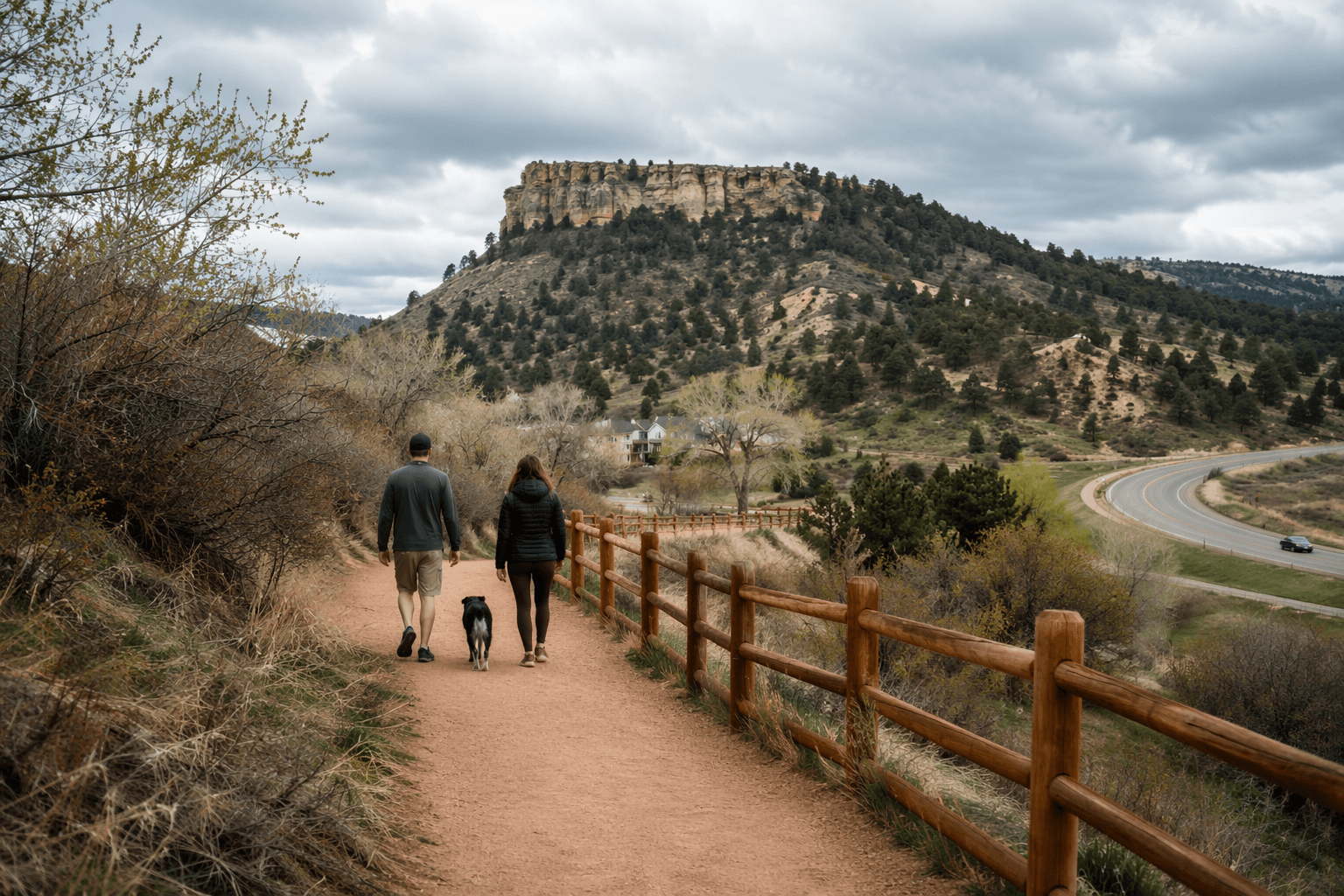
Castle Rock manages 104 miles of trails, 25 parks and more than 4,000 acres of open space, a system built for a town that has grown from about 2,000 residents when the parks department was established in 1977 to more than 85,000 people today.
A recreation network built for a fast-growing town
With local partners, that network grows to more than 130 miles of trails, more than 60 parks and more than 6,900 acres of open space inside and around town. Roughly 30% of Castle Rock is designated open space.
The Parks and Recreation Department now serves a community that has expanded far beyond the population it was designed to cover, and the system has become part of daily life for neighborhoods across town.
Where the system is most visible on the ground
Castle Rock keeps parks open from 5 a.m. to 11 p.m. Residents can use interactive maps, trail-condition alerts and trail tips for an early morning walk, an after-work ride or a weekend family outing. The town’s official partnership with AllTrails lets users compare distance, difficulty, elevation, photos, reviews, trail conditions, closures and alerts before they go.
Two places show the range of what Castle Rock has built. Rock Park offers views of downtown Castle Rock, the I-25 corridor, Pikes Peak and the Front Range, which makes it one of the town’s most recognizable public spaces. Ridgeline Open Space, by contrast, is a 367-acre property with four interconnected loops, the kind of soft-surface network that draws repeat use from runners, walkers and cyclists who want a longer outing without leaving town.
Those kinds of assets shape how different parts of Castle Rock experience growth. In older and more central neighborhoods, access to Rock Park and the town’s developed park system gives residents an easy, visible connection to public space. In newer or expanding areas, the pressure falls more heavily on trail connections, parking and open-space access.
The next phase is about connections, not just acreage
Castle Rock’s current strategic plan is aimed at that next layer of growth. Town Council formally approved the 2025 to 2027 plan in December, and the department’s master plan is built around responding to growth by expanding parks, recreation facilities, protected open spaces and interconnected trails. The plan also calls for a more active public role, with the community as a partner and the department becoming more efficient and service-oriented.
Several projects show where the town is pushing next. Lost Canyon Ranch Open Space is slated for activation, and the Industrial Tributary Trail connection to Philip S. Miller Park is one of the clearest examples of a needed link between existing assets. The plan also calls for improvements at the Recreation Center and Miller Activity Complex, plus facility upgrades at Cantril School and Red Hawk Ridge Golf Course.
The county partnership in northeast Castle Rock
The most significant expansion gap is in northeast Castle Rock, where the town and Douglas County are working together on the Cobblestone Macanta Open Space project. The partnership spans about 680 acres, combining the town-owned 230-acre Cobblestone Ranch parcel with Douglas County’s 450-acre Macanta Regional Park.
The goal is public access through parking and trails within the next two to three years, extending Castle Rock’s outdoor network into a large contiguous open-space area for residents on that side of town.
Why the system reaches beyond recreation
Castle Rock’s parks and recreation system also functions as civic infrastructure. The Parks and Recreation Division manages the Recreation Center, Miller Activity Complex, two outdoor pools, three splash pads, a state-licensed preschool and special-event facilities. It also uses sales and use tax revenue to support free special events, concerts, scholarships and lower membership costs, which means the system reaches families who use it for daily recreation, scheduled programs and community events, not just trail access.
Castle Rock has been around for nearly 150 years.
This article was produced by Prism’s automated news system from verified source data, official records, and press releases, then run through automated quality and moderation checks before publishing. The system is built and supervised by the people who set the standards it runs under. Read our full AI policy.
Did this article answer your question?