Devil’s Head Lookout offers Douglas County a hike with history
Devil’s Head Lookout is a steep Douglas County hike that still watches for wildfire at 9,748 feet. The trail is short, but its history, staffing, and fire risk are not.

Devil’s Head Lookout is one of the few places in Douglas County where a trail, a historic landmark, and an active wildfire role all converge in the same climb. The tower sits at 9,748 feet on the highest point of the Rampart Range, and the Forest Service still staffs it in the late May to early September window, keeping a 20th-century fire-detection job alive on the county’s western edge.
A lookout that never stopped working
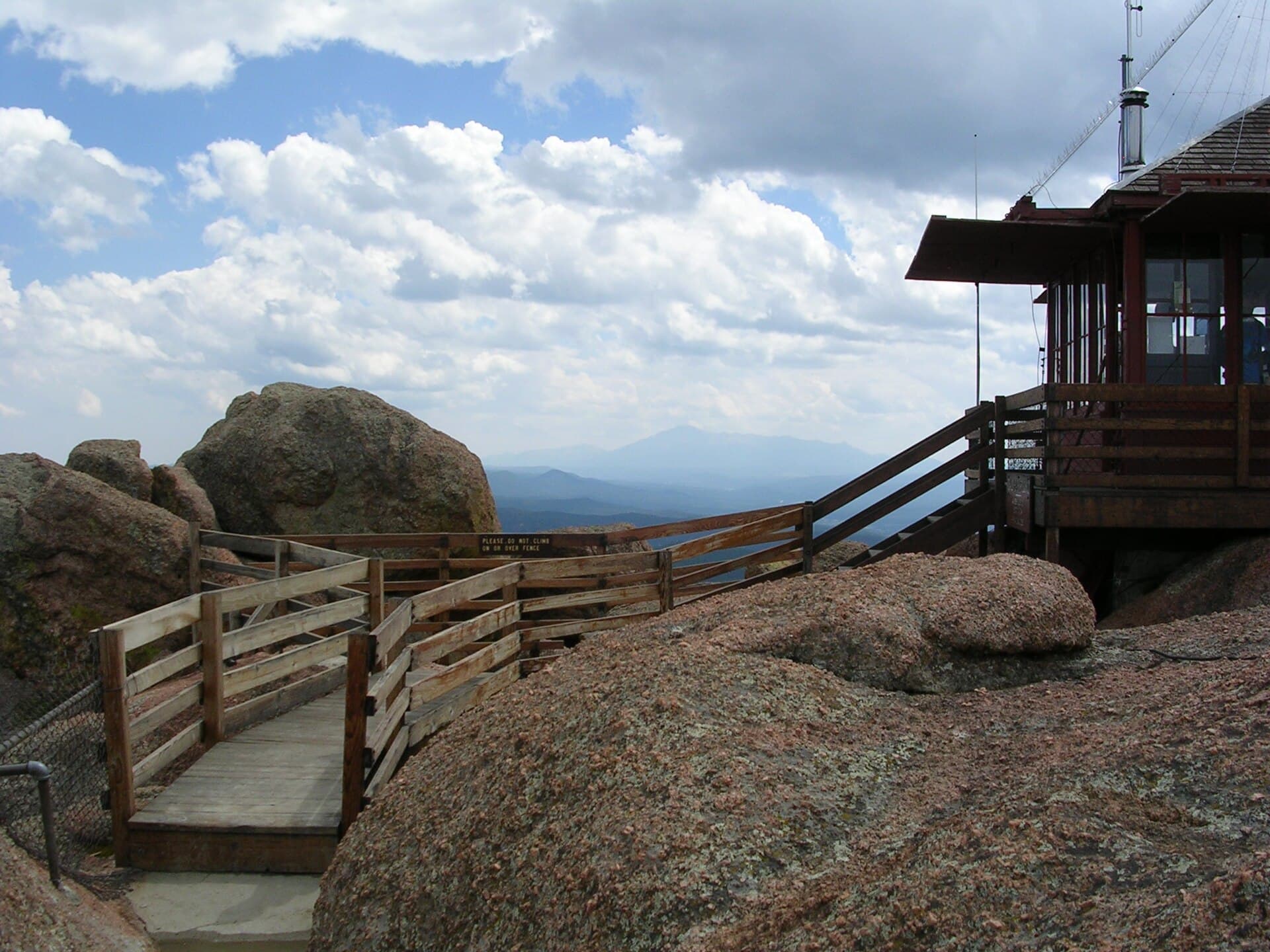
The tower is not just a scenic stop above Pike National Forest. In 1907, the newly created Forest Service planned seven principal Front Range lookouts between New Mexico and Wyoming, and Devil’s Head became one of the surviving pieces of that system. It is the last of the four original Front Range fire lookout towers still in continuous use, which makes it part of Colorado’s public-safety history as much as its outdoor recreation scene.
That history matters in Douglas County because wildfire is not a museum subject here. The lookout’s continued staffing shows how land managers still rely on eyes in the high country, especially across the ridgelines west of Castle Rock. For homeowners, insurers, and forest managers, the tower is a reminder that fire detection still depends on access, staffing, and fast reporting, not just technology and prediction models.
What the hike actually asks of you
Trail #611 begins at the picnic area next to Devil’s Head Campground and climbs 1.4 miles one way to the base of the tower. On paper, that sounds like a quick outing; in practice, the Forest Service says the route gains 865 feet, which makes it a compact but strenuous climb. The short distance is one reason the trail draws so much traffic, but the elevation gain is what turns a casual stop into a real effort.

The lookout may be open to public visitation when staffed, so the experience can include a direct look at a working fire tower rather than just the outside of a historic structure. That is part of the appeal, but it also means the site carries visitor pressure that deserves care. The Forest Service notes the trail receives heavy use, which makes parking, timing, and staying on the trail part of the visit, not just extra advice.
Why Douglas County keeps this site on the map
Douglas County’s historic-properties inventory includes Devil’s Head Lookout among 37 landmarked properties, placing it among the county’s recognized heritage sites rather than leaving it as a hidden Forest Service asset. The lookout is also listed on the National Register of Historic Places, a formal marker that ties local recreation to national preservation standards. On the county’s western edge, that dual status helps explain why the site still carries both local pride and public responsibility.
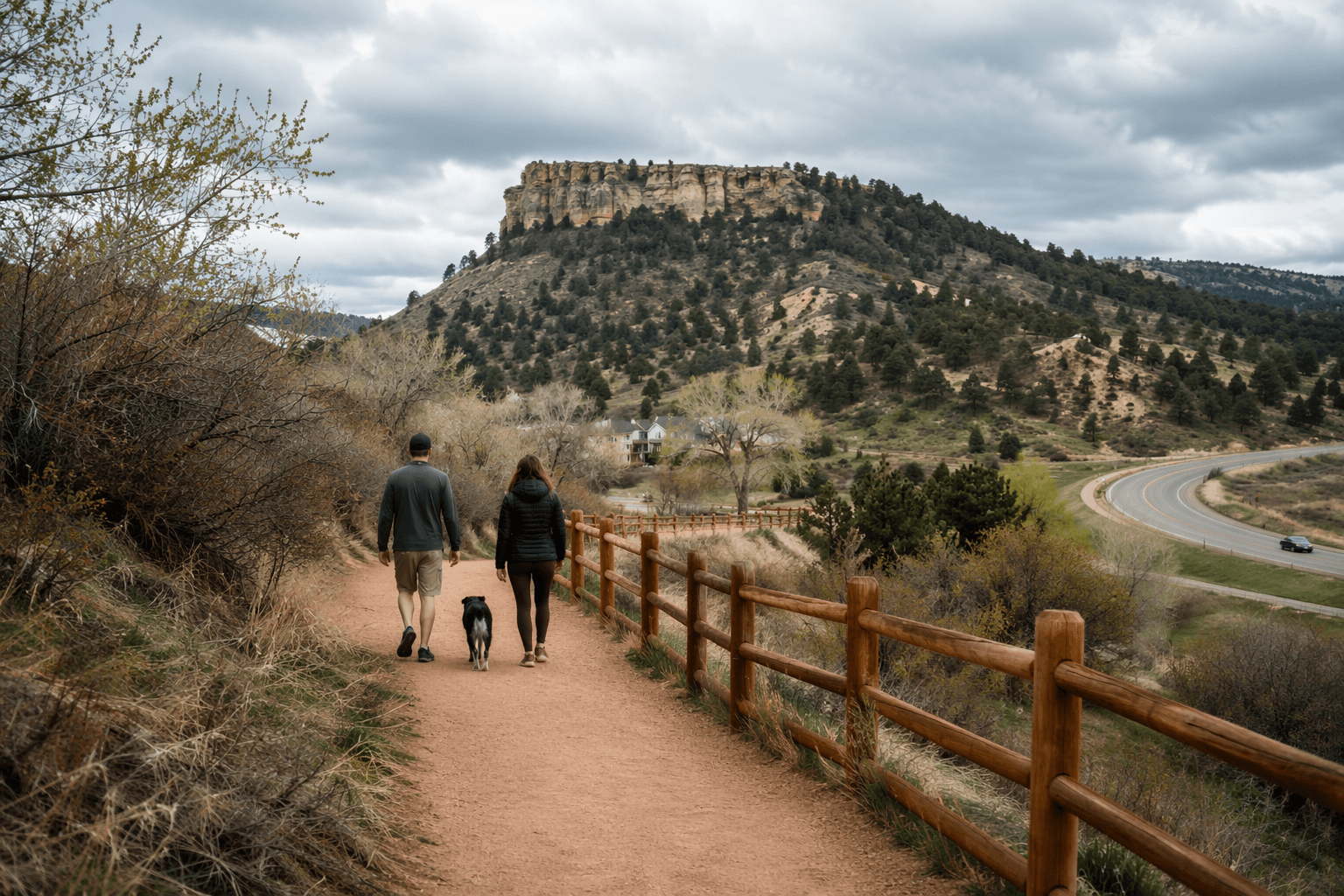
The lookout itself is a distinct granite outcropping visible from Castle Rock to Woodland Park, and that visibility is part of its identity. The rock formation sits within a landscape that has long shaped how people move, build, and monitor the Front Range. For residents living closer to Castle Rock, the tower is not distant scenery; it is part of the same ridge system that frames the county’s open space, development pressure, and wildfire exposure.
A preservation story with real dates behind it
History Colorado says Devil’s Head Lookout has been in continuous use since 1912, and it remains the last full-time lookout in Colorado. The site was listed on the National Register of Historic Places on April 22, 2003, and the current lookout tower and ranger cabin date to 1951. Those dates matter because they show the site has evolved without losing its original purpose.
The older structure beneath the current complex tells an even earlier story. The National Historic Lookout Register says the 14-by-14-foot ground house was constructed in 1912, the year the site entered continuous use. Since 2013, HistoriCorps volunteers and the U.S. Forest Service have worked to restore the deteriorating lookout tower and repair the ranger cabin roof, giving the landmark a preserved face while keeping its working role intact.
The human history built into the tower
Devil’s Head also carries an important women’s history tied to public lands. The National Historic Lookout Register says Helen Dowe staffed the lookout from 1919 to 1921, making her the first lookout in Colorado to be staffed by a female U.S. Forest Service employee and the second female Forest Service lookout in the country. That detail adds another layer to the site’s story: it was not only an early warning post, but also a place where federal land work expanded who could hold the job.
That human history sits alongside the practical demands of the station itself. A lookout at 9,748 feet on a granite high point is not a decorative installation; it is a vantage point chosen for a reason. The site’s endurance, from the 1912 ground house to the 1951 tower and cabin, shows how wildfire response and preservation can overlap when a structure still serves the purpose it was built for.
What to notice when you go
The most useful way to approach Devil’s Head Lookout is to treat it as a working site first and a scenic one second. The climb begins at Devil’s Head Campground, follows Trail #611, and ends below the tower, where the terrain opens enough to explain why this ridge was chosen for lookout duty in the first place. The route’s heavy use also means the experience is shaped as much by other visitors as by the landscape.
- Expect a short trail with a steep payoff, not a casual stroll.
- Plan for the 1.4-mile one-way hike and the 865-foot climb.
- Treat the lookout as active fire infrastructure, especially when it is staffed.
- Build in time for crowding, since the trail receives heavy use.
- Pay attention to the setting itself, because the granite outcropping is part of the story.
For Douglas County, Devil’s Head Lookout is more than a summit destination. It is a standing reminder that wildfire readiness, public access, and historic preservation are still linked on the same ridge, and that connection is as relevant now as it was when the Forest Service first began placing lookouts across the Front Range.
This article was produced by Prism’s automated news system from verified source data, official records, and press releases, then run through automated quality and moderation checks before publishing. The system is built and supervised by the people who set the standards it runs under. Read our full AI policy.
Did this article answer your question?