Douglas County Exhibit Traces Centuries of Trails Across Local Land
A new exhibit at Parker's Old School House traces Indigenous corridors, wagon routes, and railroad lines across Douglas County land spanning millennia.
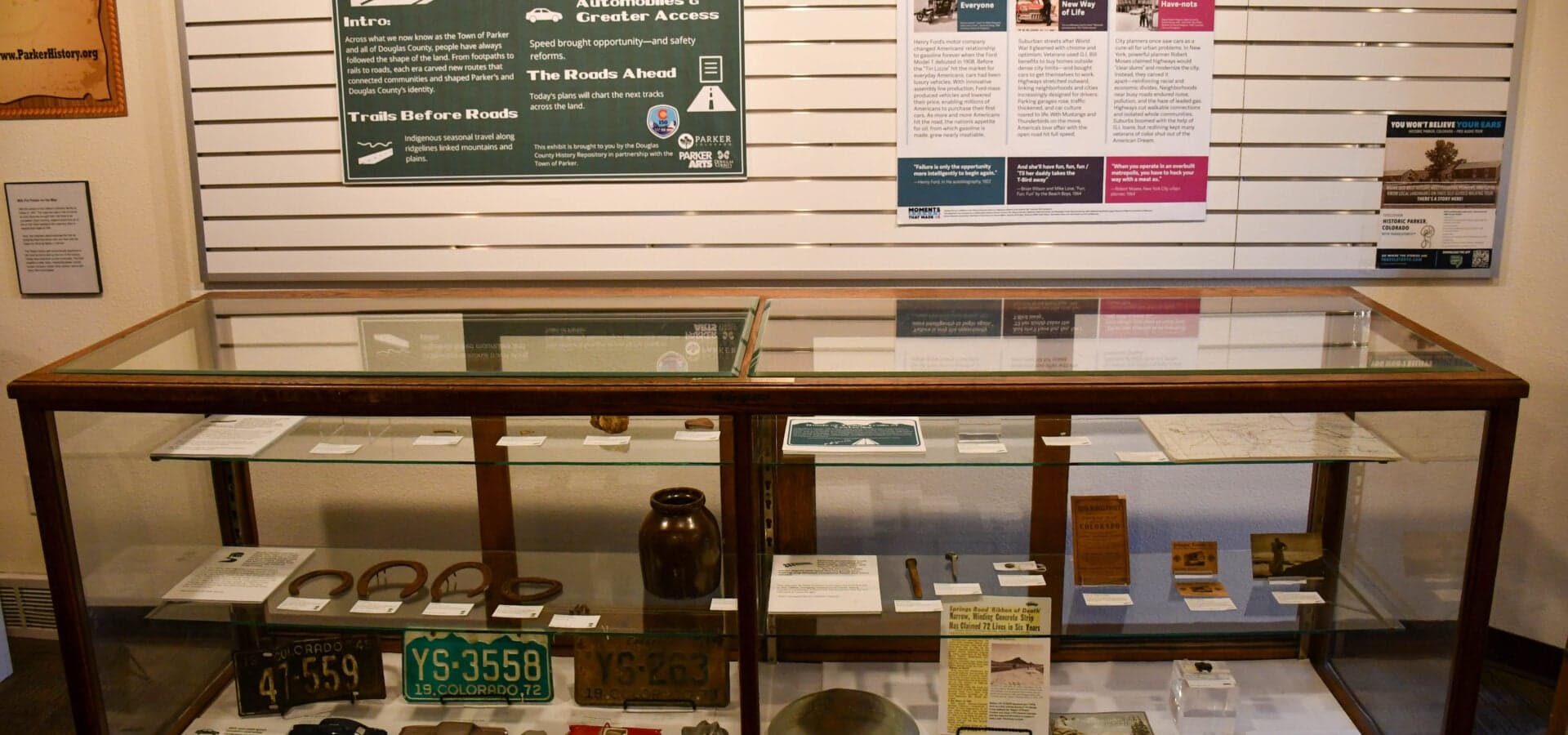
A small exhibit now on display at the Parker Heritage Center asks a deceptively simple question: what came before the road you drove in on?
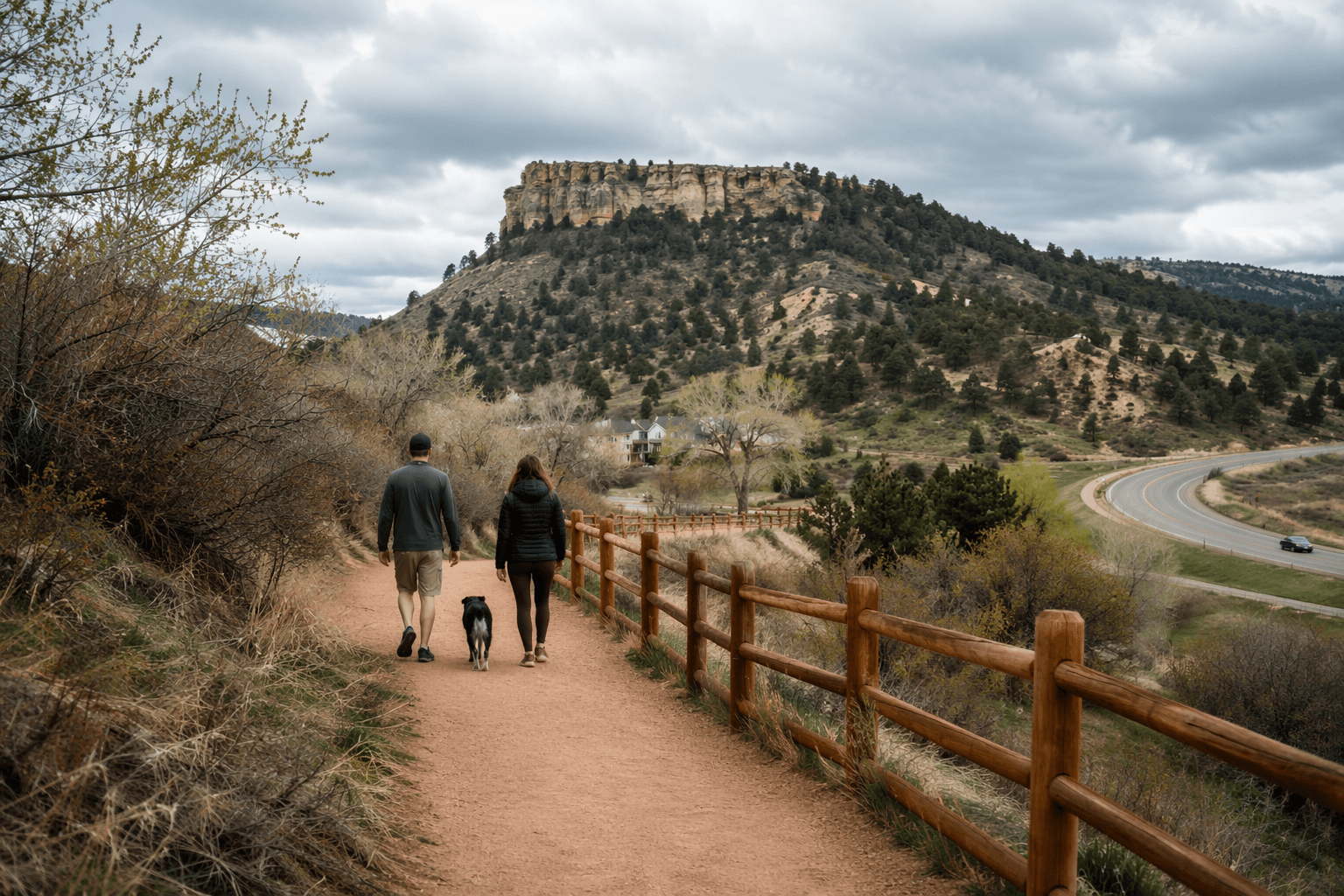
"Tracks Across Our Land," which Douglas County announced on March 9, opened at the Old School House building at 19650 Mainstreet in Parker. The exhibit traces the layered history of movement across Douglas County, from Indigenous travel corridors tied to water and seasonal migration, through territorial wagon routes and railroad alignments, to the county roads and recreation trails locals use today.
The exhibit's framing is deliberately cumulative. "Long before mapped roads or rail lines, Indigenous peoples moved across this landscape along well-known paths tied to water, trade, seasonal movement, and cultural meaning," the exhibit states. "Later, homesteaders, ranchers, freighters, and railroad crews inscribed new lines across the prairie." The exhibit describes each successive layer, from highways and fences to irrigation ditches and recreational trails, as reflecting "changing priorities, technologies, and relationships to the land."
The interpretive approach pushes back against any single founding moment. "The story of this landscape did not begin in 1876, nor in 1776," the exhibit reads. "It extends backward through millennia and forward into decisions we are making today."
"Tracks Across Our Land" arrives as part of a broader county interpretive effort. A larger companion exhibit, "Thriving Through Time: Adaptation on the Palmer Divide," opened at Parker Water and Sanitation District headquarters at 13939 Ancestry Drive on November 21, 2025, following a grand opening ceremony that drew county officials and community members. That exhibit, open 7:30 a.m. to 4:30 p.m. weekdays in the first-floor lobby, is free to enter and includes mammoth remains, early hunting tools, artifacts from the gold rush era, mining resources, minerals, and a converted oil wagon. County officials described it as "the largest public display of Douglas County artifacts to date."
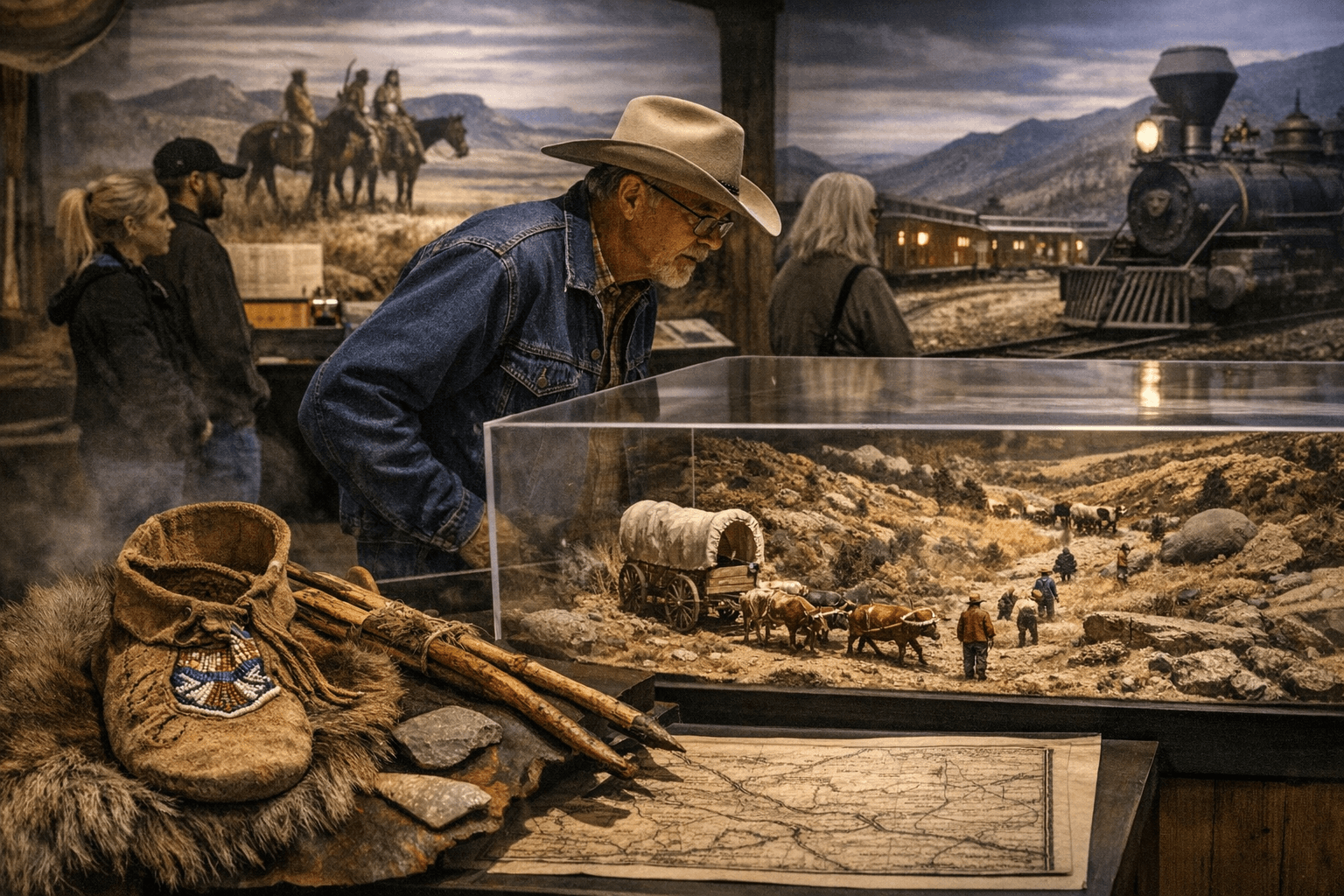
The Palmer Divide exhibit grew from a partnership between the Douglas County History Repository, established by the Board of County Commissioners, and Parker Water and Sanitation District. Officials at the repository described it to The Denver Gazette as "a rare partnership with the County's historic preservation community and a water district working together to communicate a deeper understanding of place."
Water runs as a connective thread through both exhibits. A PWSD official identified only as McMahon described water resources as a "defining thread" for human life across the Palmer Divide. Indigenous communities established camps near springs, creeks, and snow-fed drainages, McMahon said; for later European-descendant settlers and ranchers, water determined homestead claims, ranch boundaries, and where early roads and towns emerged. "Today, municipal water districts, reservoirs and groundwater management continue to shape development patterns," McMahon added.
The Palmer Divide exhibit reflects years of archaeological research and consultation with representatives from the Ute, Northern and Southern Arapaho, Cheyenne, Apache, and Pawnee peoples. Douglas County Commissioner George Teal called the showcase "a bridge between generations" in a statement. "It honors the resilience of those who shaped this land and invites us to reflect on how we continue to adapt and grow as a community," Teal said.
The Parker Heritage Center exhibit offers a more focused companion to that larger collection, inviting visitors to reconsider familiar ground. "Every road has a prehistory," the exhibit states. "Every boundary replaced another way of knowing the land. Every trail carries memory.
This article was produced by Prism’s automated news system from verified source data, official records, and press releases, then run through automated quality and moderation checks before publishing. The system is built and supervised by the people who set the standards it runs under. Read our full AI policy.
Did this article answer your question?