Douglas County exhibit traces Palmer Divide history, growth, adaptation
A Parker exhibit turns the Palmer Divide into a lens on Douglas County’s traffic, water and growth pressures, showing how 357,978 residents got here and what they may lose next.

Why the Palmer Divide matters now
Douglas County’s growth has changed the daily math for families in Castle Rock, Parker and the neighborhoods in between: more cars on the roads, more pressure on open space and more urgency around water. The county’s 2020 Census population reached 357,978, a 25.4% jump in 10 years, and that surge is the backdrop for a new exhibit in Parker that asks a blunt question about the corridor’s future: what does it mean to grow here without losing the land and water that made growth possible in the first place?
The answer is on display in Thriving Through Time: Adaptation on the Palmer Divide, an exhibit now open at Parker Water headquarters after a Nov. 21 grand opening ceremony. Created by interpretive planner Todd McMahon with artifacts from the Douglas County History Repository, the exhibit is the largest public collection of historic artifacts assembled by the county to date. It is also timed to a bigger moment: Colorado is heading toward its 150th anniversary of statehood, and the United States is approaching its 250th anniversary, making 2026 a year when local history and national history are both in view.
A ridge that shaped settlement, survival and today’s development debate
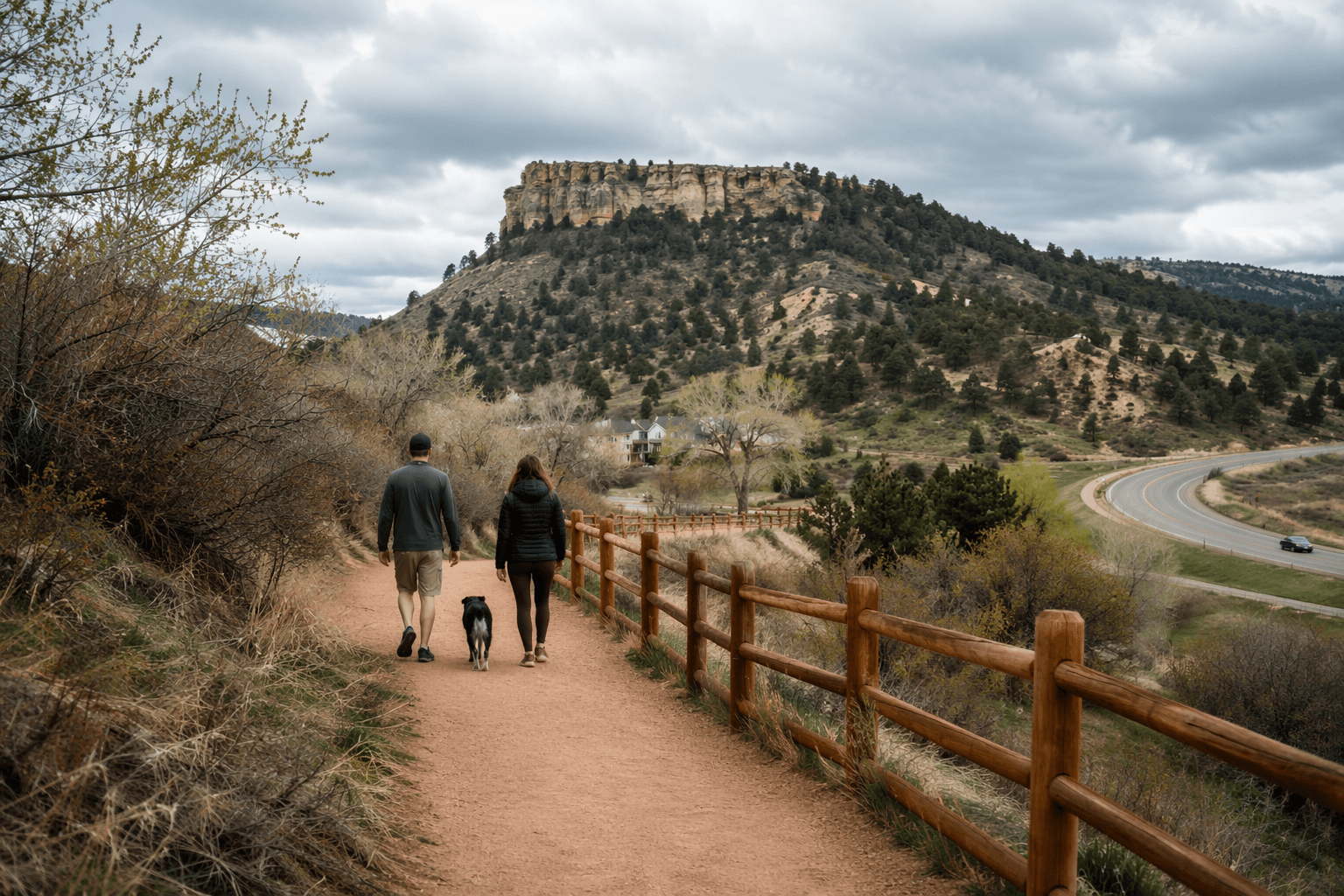
The Palmer Divide is not just scenery between the South Platte and Arkansas river basins. The Colorado Geological Survey describes it as a transitional ridge about 80 miles long, with higher points reaching roughly 7,000 feet and in some sources higher still, creating cooler, wetter conditions than the surrounding plains. That environment helped shape who came here, how they lived and what they could do with the land.
McMahon’s interpretation follows that long arc. The exhibit traces people who used the Palmer Divide thousands of years ago, beginning with Indigenous communities who relied on local resources, then moving through ranching, timbering, mining and settlement. In other words, the county’s past is not a straight line from wilderness to suburbia. It is a long sequence of adaptation, with each era forced to answer the same regional question in a different way: how do you live on a high ridge with limited resources and a landscape that rewards planning but punishes waste?
That question lands differently now than it did for the first inhabitants. Today, the pressures are less about survival in the old frontier sense and more about infrastructure, land use and who gets to benefit from continued growth. The exhibit’s value is that it makes those tensions visible rather than abstract.
What the artifacts say about adaptation
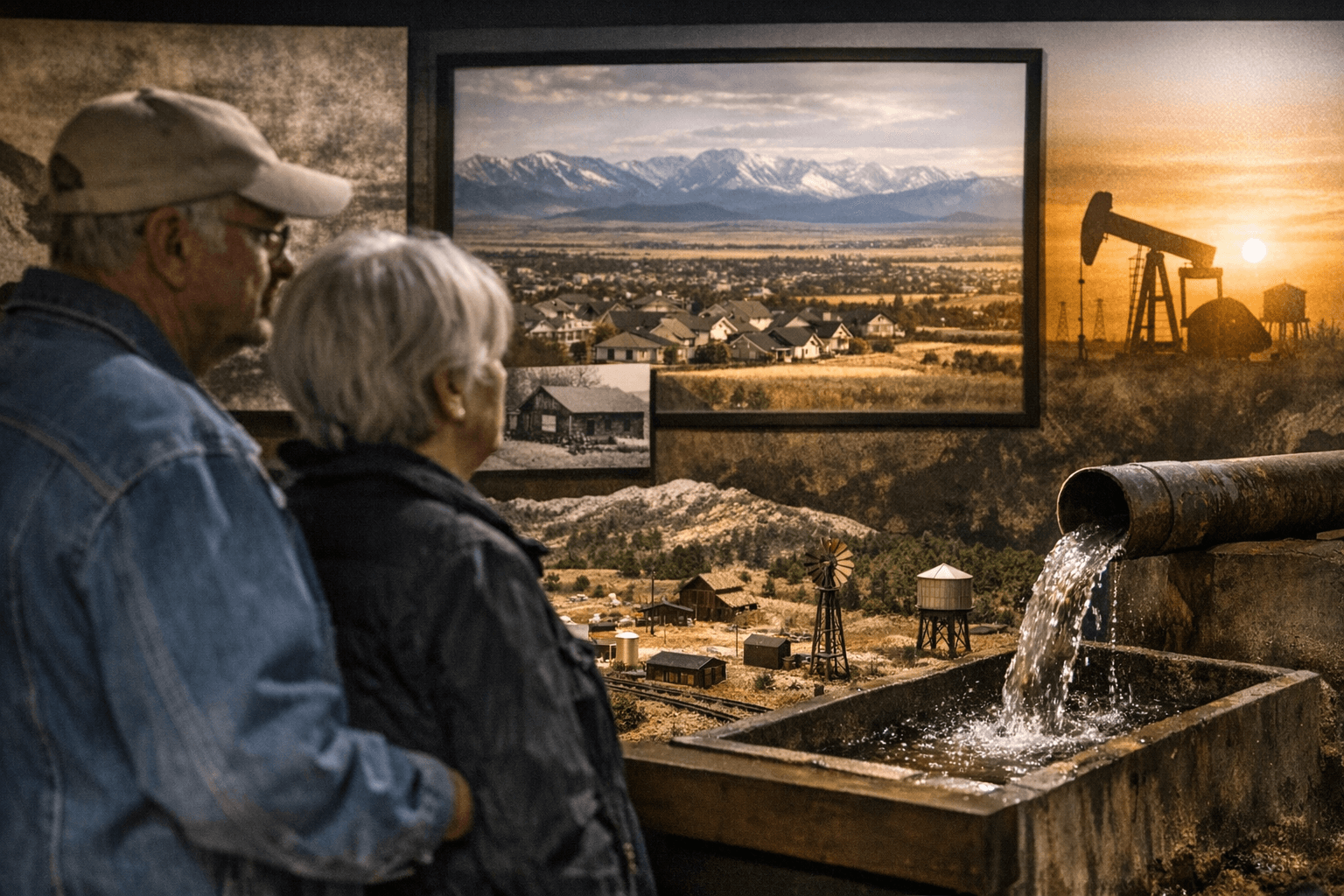
The exhibit uses objects to show how people in Douglas County changed with the times. Among the featured pieces are a converted oil or fuel wagon, projectile points and a gold pan tied to the Russellville area. The county says the showcase also includes mammoth hunters, early Indigenous communities, gold rush pioneers and modern-day water innovators, a lineup that makes the central argument plain: the same terrain that once required hunting tools and hand-dug work now demands reservoirs, pipelines and long-term planning.
McMahon also consulted with Native tribes when interpreting the hunting tools, a detail that matters because these artifacts are not just old objects behind glass. They are evidence of living histories and of the need to interpret local history with care, accuracy and respect. That approach gives the exhibit a different weight than a standard county display. It is not only about what was found in Douglas County. It is about whose knowledge is used to explain it.
The presence of the Russellville gold pan and the wagon also underscores something important for modern residents: the county has repeatedly reinvented itself around the demands of the time. What once supported miners, ranchers and settlers now supports commuters, subdivisions and water customers. The tools changed, but the dependency on the land never did.
Water is the throughline from past to present
The exhibit is mounted at Parker Water headquarters for a reason. Ron Redd, the district manager, uses it to connect Douglas County’s history to present-day water planning, especially the challenge of serving a growing population while preparing for drought and wildfire risk. That is not just a utility issue. It is a public health and community resilience issue, because reliable water systems shape everything from household safety to fire protection to whether fast-growing areas can keep pace with demand.
Rueter-Hess Reservoir stands as the clearest modern example in the exhibit’s story. Completed in 2012, the reservoir sits on Newlin Gulch in northeastern Douglas County, covers about 1,170 acres and has a dam that rises 185 feet above bedrock. Those numbers matter because they show the scale of the county’s response to growth. Water is no longer just a resource pulled from the ground or delivered through old systems. It is increasingly something that has to be stored, managed and moved with expensive infrastructure built for a hotter, drier and more crowded future.
Parker Water says the Plum Creek to Rueter-Hess Reservoir Pipeline will serve more than 200,000 residents. Douglas County says the related project is intended to help Castle Rock move away from non-renewable groundwater toward a more sustainable supply. Together, those facts reveal the stakes in practical terms: the county is not simply adding homes. It is reshaping the water system that those homes depend on. For residents, that means the debate over growth is also a debate over whether future development can be supported without exhausting the resources underneath it.
A partnership built to tell a bigger county story
The exhibit exists because several institutions chose to work together rather than tell the story in fragments. Douglas County describes it as a partnership among the Douglas County History Repository, Parker Water & Sanitation District, Douglas County Libraries and tribal and community stakeholders. That matters because the county’s history cannot be reduced to one agency, one museum case or one town boundary.
The Douglas County History Repository says its mission is to preserve the community’s history from the earliest human inhabitants to the present for public benefit. In practice, that means the county is trying to hold two truths at once: Douglas County has deep roots, and it is changing faster than ever. The exhibit’s scale and timing make that balance visible. It is not just a celebration of what came before. It is a warning that the choices being made now about roads, water, land use and development will become the next layer of history.
What visitors leave understanding
For people in Parker, Castle Rock and the surrounding corridor, the exhibit offers more than a look backward. It shows that the Palmer Divide has always been a place where climate, elevation and limited resources forced adaptation, and that those forces are still shaping the county today. The landscape that once guided Indigenous use, ranching, mining and settlement now frames debates over growth, wildfire risk, transportation and water security.
That is why the exhibit feels less like a museum piece and more like a forecast. Douglas County’s future will be decided by the same fundamentals that defined its past: land, water and the ability to adapt without breaking what makes the place livable.
This article was produced by Prism’s automated news system from verified source data, official records, and press releases, then run through automated quality and moderation checks before publishing. The system is built and supervised by the people who set the standards it runs under. Read our full AI policy.
Did this article answer your question?