Douglas County Open Space Program Protects Thousands of Acres for Recreation, Wildlife
More than 65,000 acres across Douglas County are permanently protected open space, all funded by a fraction-of-a-cent sales tax voters approved in 1994.
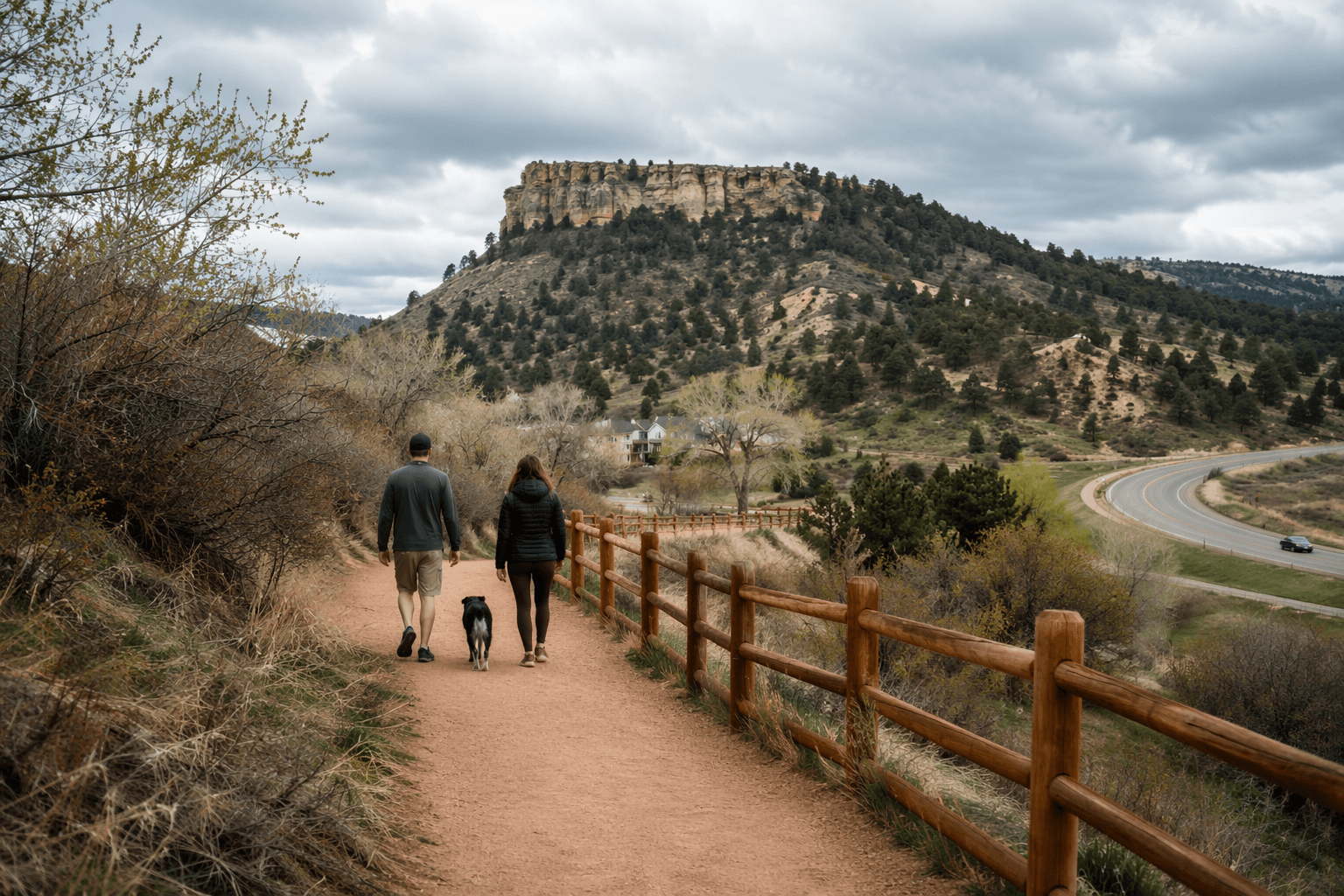
Stretching from the ridgelines above Castle Rock to the working ranch corridors flanking I-25 near Larkspur, more than 65,000 acres of protected open space enhances the quality of life in Douglas County, forming one of the most ambitious land conservation programs on Colorado's entire Front Range. It is a landscape shaped not by accident but by a deliberate, decades-long civic commitment — one that began with a single question on a 1994 ballot and continues to define what separates Douglas County from the sprawl pressing in on all sides.
A Citizen Initiative That Changed the Landscape
In November 1994, Douglas County voters approved a sales tax-driven program that would build funds to preserve the landscape between Colorado's two biggest cities. The Douglas County Open Space Program was created in 1994 with the passage of a sixth-of-a-cent sales and use tax that continues today. The road to that vote was anything but smooth. County commissioners had previously asked for a full-cent sales tax to benefit not only open space, but also roads, senior programs and a jail. The question was denied. The multi-part question had "muddied up" and "buried" open space, according to advocates.
Citizen organizers pushed back the following year with a laser-focused question: protect open space and nothing else. Advocates had to convince people that the sales tax "wasn't much — 17 cents on $100." The gamble paid off. Approved by voters in 1994, the 0.17% tax has gone toward the maintenance and acquisition of parks, open spaces, and historic sites. After Douglas County, the city of Colorado Springs in 1997 would establish its own Trails, Open Space and Parks fund, a testament to how influential the county's model became across the region.
The Financial Engine Behind 65,000 Acres
The program's financial trajectory tells its own story. The fund started at about $2.1 million in its first year and grew to nearly $16 million annually, a reflection of the county's rapid population growth and the compounding effect of a dedicated revenue stream. Crucially, the tax does not stand alone. For every dollar brought in through the tax, the county estimates another $2.92 comes in through partner contributions and private donations, meaning conservation dollars stretch dramatically further than the raw tax revenue would suggest.
Voters extended the open space program overwhelmingly in 2022, approving a 15-year extension. Advocates like longtime open space champion Weston, however, worry about the future. "To have missed the opportunity to extend it for 20 or 30 years or even perpetually was too bad," he said. "Who knows? Who knows in another eight years, when it's time to go back to the citizenry, if they'll be energized and where the political support for the program will be."
What the Program Actually Protects
The Douglas County Division of Open Space and Natural Resources seeks to enhance the quality of life for residents by protecting wildlife habitat and natural resources in public and private access properties, trails, historic sites and scenic views. The county has protected almost 65,000 acres, and directly owns almost 17,000 acres of open space with trails open to the public.
Through partnerships with Douglas County Open Space, the Town of Castle Rock, and the Town of Parker, the Douglas Land Conservancy has accepted conservation easements on over 14,000 acres of public open space. One of the program's crown jewels is the I-25 corridor. Great Outdoors Colorado marks the Greenland acquisition as one of its "most iconic investments to date," a 17,000-acre deal involving Douglas County, The Conservation Fund and private landowners. The ranch makes up a significant portion of the "big green open space" that relieves commuters on their drive along I-25 between Denver and Colorado Springs, and is the oldest operating cattle ranch on the Front Range.
The Open Spaces Worth Knowing by Name
The county's portfolio spans terrain types that few programs anywhere can match, from forested mesas to working prairie ranch land to riparian corridors along Cherry Creek.
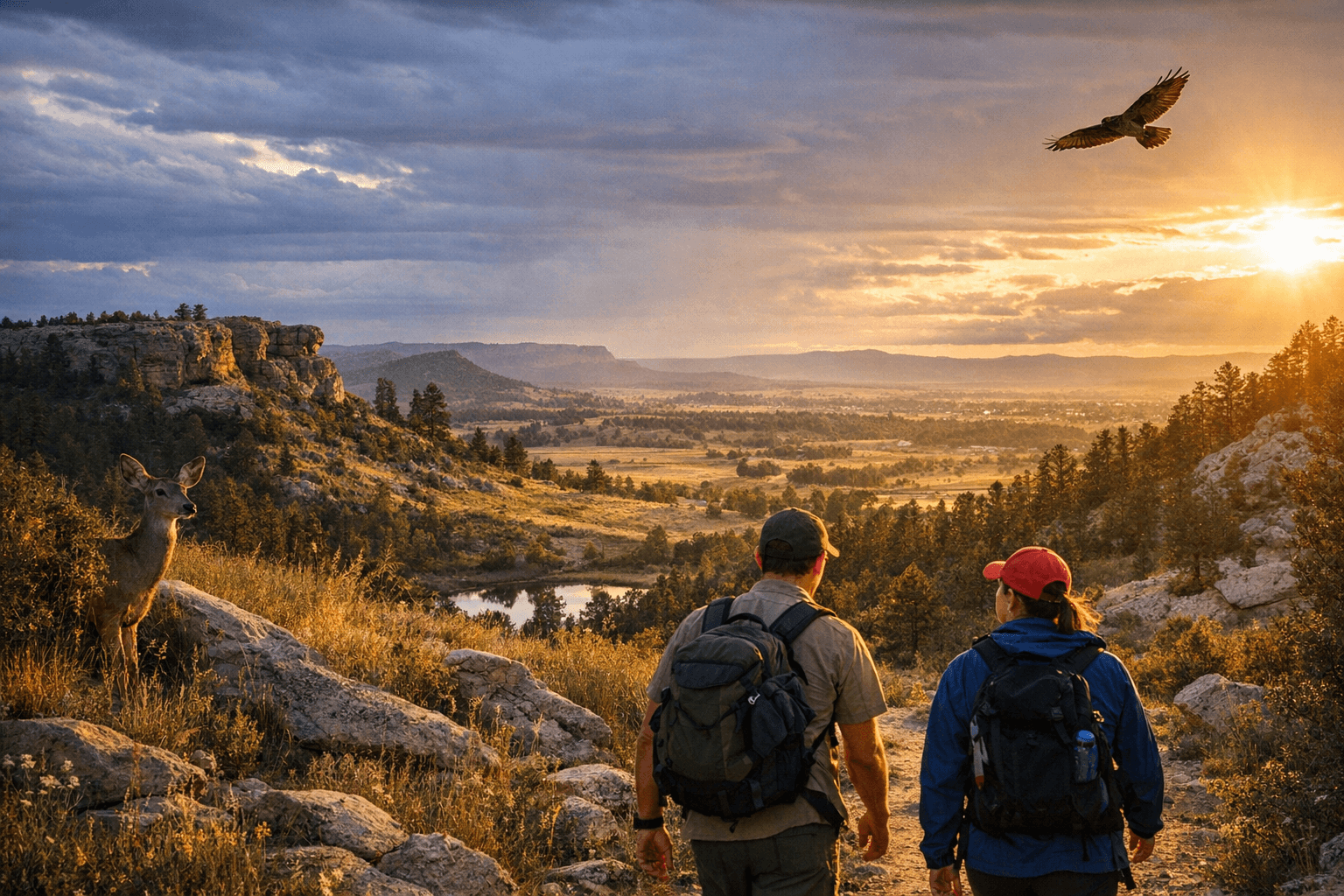
Sandstone Ranch is a 2,038-acre property that borders Pike National Forest and features an extraordinarily diverse landscape including red rock formations and sloping meadows, vast wildlife habitat and corridors, expansive and diverse vegetation, and historic ranch buildings dating back to the 1870s. Due to its proximity to the national forest and diverse ecosystems, the ranch is home to a variety of wildlife including deer, elk, bears, and mountain lions.
Spruce Mountain serves as a wildlife corridor allowing travel between Pike National Forest, Greenland Open Space and Greenland Ranch, and its wooded 8.5-mile trail ascends to a loop on a rock-rimmed flat top. Greenland Ranch West, a 3,600-acre property south of Larkspur and adjacent to I-25, features roughly ten miles of trail with stunning views of open prairie and surrounding buttes. Hidden Mesa, 1,224 acres east of Castle Rock, features a 4.7-mile trail looping from the Cherry Creek trail up onto the mesa overlooking the Franktown and Parker region.
Pike Hill Open Space is a forested, 308-acre property that rises from the western side of Nelson Ranch Open Space and borders Pike National Forest. Lincoln Mountain Open Space, a 876-acre property acquired by Douglas County in 2009, features two trail loops with views of the Cherry Creek basin and Pikes Peak. Dawson Butte Ranch offers a five-mile trail through mostly forested areas with open meadows, views of the Front Range Mountains, and optional bridle paths with over 60 horse jumps.
Recreation for Every User
The trail network across these properties accommodates a wide range of activities:
- Some areas allow bicycles and horseback riding, and natural surface trails wind through Gambel oaks onto grassland plains with views of Pikes Peak and the Colorado Front Range.
- The 8.5-mile Spruce Meadows Trail, open to hikers, mountain bikers and horses, links Spruce Mountain and Greenland Ranch open spaces with beautiful prairie scenery and views of surrounding buttes.
- Columbine Open Space features a former farm property along East Plum Creek with picnic amenities and old farm buildings; its two wide trail loops allow visitors to hike side-by-side and connect to the Colorado Front Range Trail.
- Hungry Horse Open Space is a 166-acre grassland four miles south of Parker along Cherry Creek and the Cherry Creek Regional Trail, accessible from the North Pinery Trailhead.
Volunteer opportunities are available for trail maintenance and habitat restoration, offering a way for community members to support upkeep and improve access where funding and staff resources are limited.
Rules That Keep It Wild
Rules and safety practices are in place to protect both visitors and habitat. Users must not leave trash or damage natural areas, and multi-use trails require adherence to posted rules about horses, bikes and dogs. Following these rules reduces injury and preserves green space that contributes to physical and mental health for the whole community.
Public health and social equity considerations are central to how these lands are managed. Easy access to safe trails supports active living and prevents isolation, especially for people with limited transportation or childcare options. Fees and reservation requirements can create barriers for some residents, so local partners and the county continue to balance revenue needs with programs and volunteer efforts that expand access.
Getting Kids Into the Field
To encourage residents to get outdoors, the Douglas Land Conservancy in partnership with Douglas County Open Space and Natural Resources created a digital scavenger hunt using an app called Agents of Discovery. "It's sort of like Pokémon Go for the outdoors," said Amy Graziano of the Douglas Land Conservancy. Through the free app, tour guides such as Agent Douglas, a black bear, help teach users about wildlife conservation efforts and the history of Douglas County's open spaces. Missions are available at properties including Sandstone Ranch, Spruce Meadows, Columbine, Dawson Butte, and Greenland Ranch, making the county's trail system as educational as it is recreational.
Thirty years after a determined group of citizen advocates talked Douglas County into a 17-cent-per-$100 tax, the open space program has protected a landscape vast enough to keep the sprawl of two major metros from merging — and wild enough that black bears still roam the ridgelines above Castle Rock.
This article was produced by Prism’s automated news system from verified source data, official records, and press releases, then run through automated quality and moderation checks before publishing. The system is built and supervised by the people who set the standards it runs under. Read our full AI policy.
Did this article answer your question?