Douglas County School Board weighs bargaining, security and budget pressures
A 335-minute board meeting tied bargaining talks to security costs and a district facing a $300 million backlog and a $490 million bond.

A 335-minute Douglas County School Board meeting on April 21 pushed collective bargaining, campus security and budget pressure into the same conversation, signaling that any labor deal could affect staffing, safety spending and family costs at the same time.
Douglas County School District RE-1, Colorado’s third-largest district, says it serves more than 62,000 students in preschool through 12th grade and operates 112 buildings across the county. Its 2025-2026 licensed general compensation schedule, effective July 1, 2025, sets starting pay at $51,914 for a bachelor’s degree, with higher tiers for advanced education and hard-to-hire roles. That pay structure now sits next to a broader debate over whether Douglas County should move toward a collective bargaining agreement after years without one.
The board’s discussion also reached into safety planning. The district’s safety and security department says its mission is to protect the educational environment through prevention, hardening and response, and it staffs high schools and middle schools with Campus Security Specialists while operating a 24-hour dispatch center. Those commitments matter because the district is still absorbing the cost of a long capital backlog. Before voters approved a 2024 bond, Douglas County School District said its capital needs backlog stood at $300 million. The $490 million bond approved in November 2024 set aside $10 million for security upgrades, and the district’s 2023-2024 master capital plan estimated $800 million to $920 million in capital needs over the next five years.
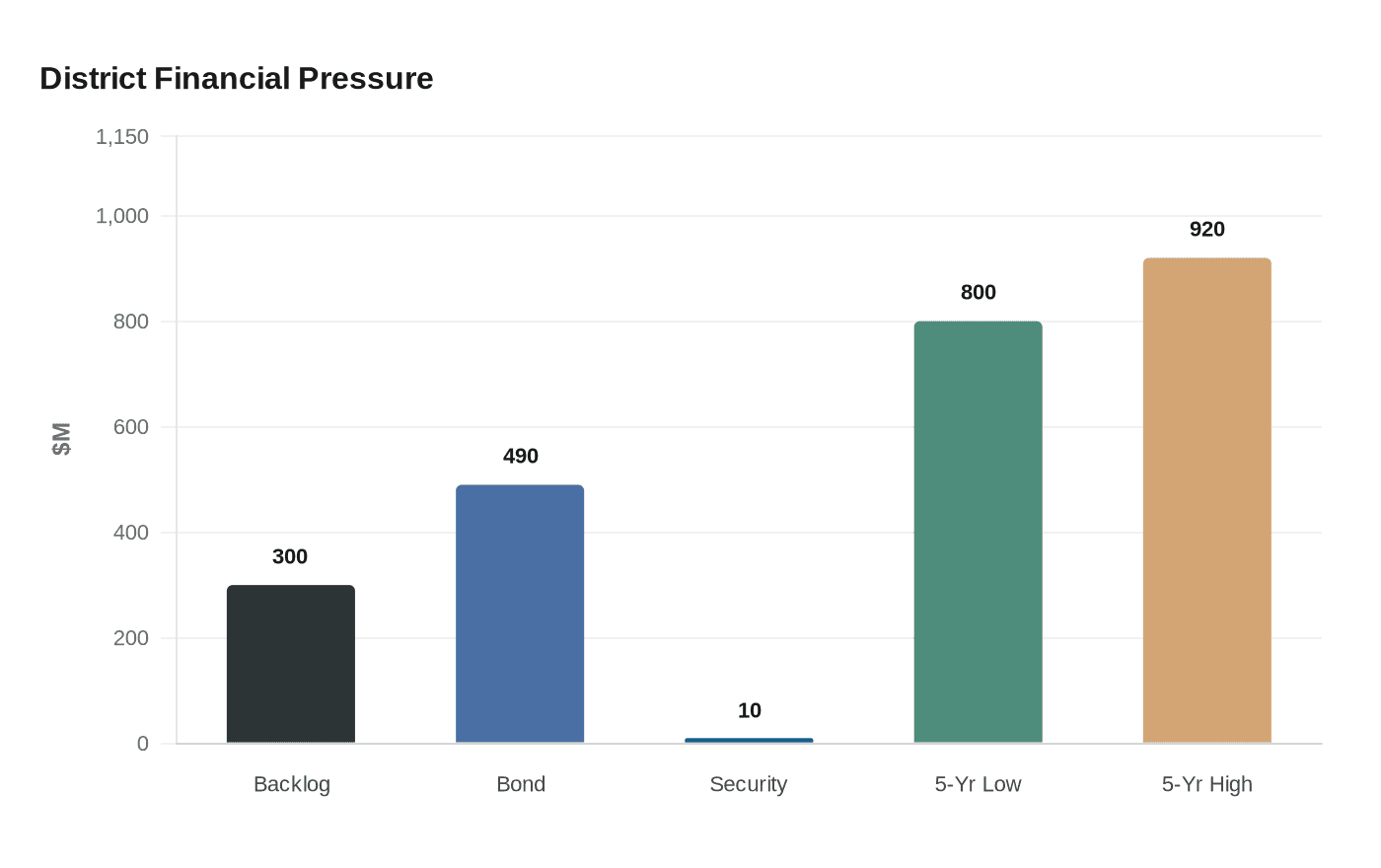
The financial pressure gives the bargaining debate real stakes. Any contract structure would have to fit alongside school security, staffing, enrollment shifts and long-range capital planning in a district that is trying to keep classrooms staffed while maintaining services across a large and growing county. Douglas County Federation says every school district surrounding Douglas County already operates under a collective bargaining agreement, and it says Douglas County has not negotiated with the administration in 12 years.
Douglas County School District’s financial transparency page also points to a mill levy override revenue-sharing plan signed June 5, 2018, underscoring how long the district has been balancing governance questions against money questions. After a 335-minute meeting, the message was clear: bargaining is no longer an abstract policy fight. In Douglas County, it is now part of the same budget, security and labor equation that will shape what families pay for and what schools can afford to provide.
This article was produced by Prism’s automated news system from verified source data, official records, and press releases, then run through automated quality and moderation checks before publishing. The system is built and supervised by the people who set the standards it runs under. Read our full AI policy.
Did this article answer your question?