Teachers union seeks collective bargaining agreement from Douglas County schools
Douglas County teachers pressed for a contract Tuesday, arguing the district’s pay gap and bargaining gap are hurting classrooms.
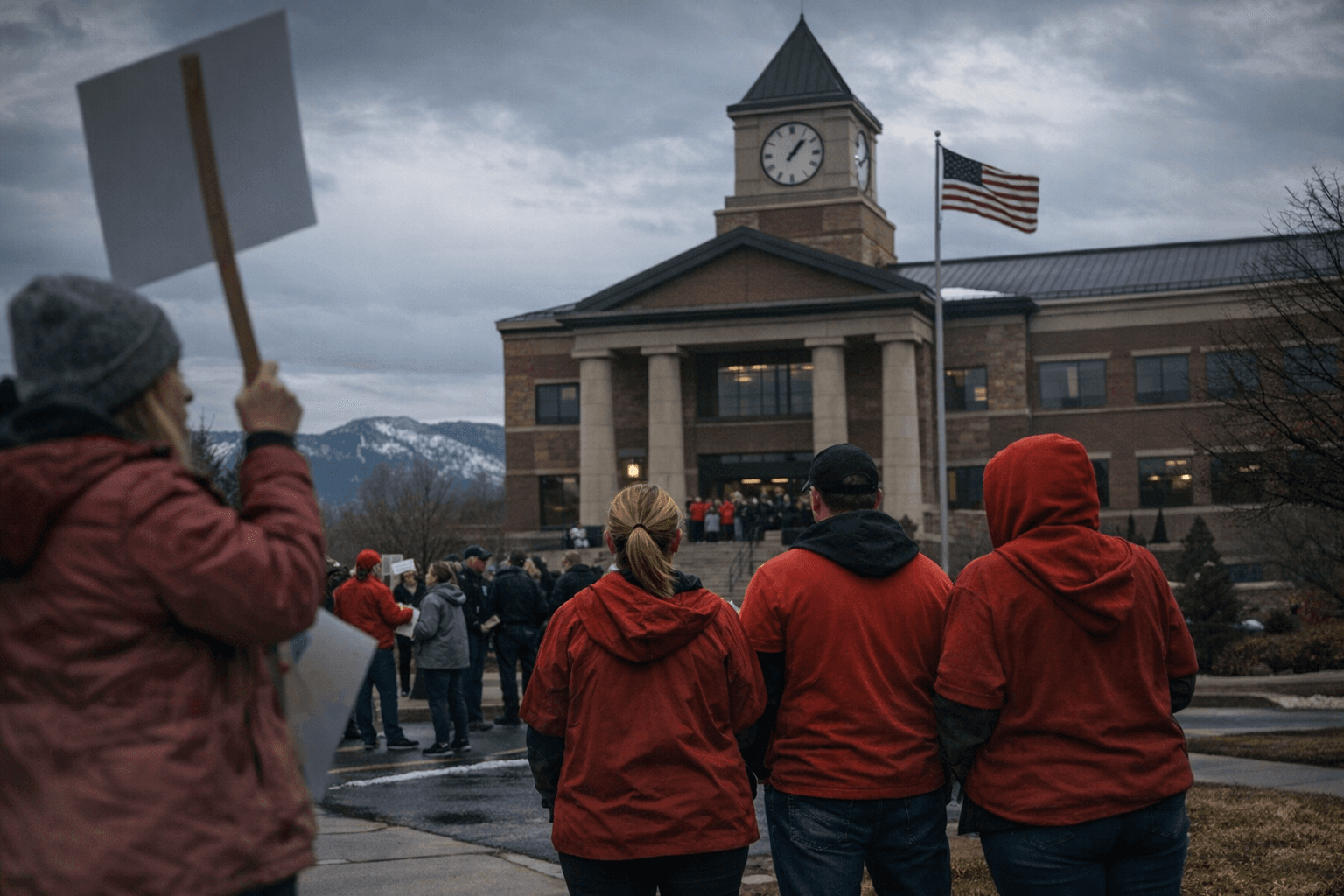
Douglas County teachers asked the school board Tuesday for a collective bargaining agreement, a formal contract that would set pay and working conditions and give the Douglas County Federation a seat at the table. The union says DCSD is the only district in the Denver metro area without one, and the district previously had a contract until the board let it expire in 2012. Colorado law leaves it up to local school boards whether to recognize that bargaining right at all.
Lucy Squire, a third-grade teacher and president of the Douglas County Federation, said the push reflects a growing union presence inside the district. “We keep growing. We have really grown a lot since the school board election,” Squire said. She added that teachers are not only seeking higher pay: “Unions, especially teachers’ unions, it seems, are villainized and misunderstood. So again, we are not just after more money. There’s a lot that collective bargaining would bring to us and opening conversations.”
The debate also exposed a sharp divide over who should control district decisions. Public commenter and former DCSD parent Liz Wagner said a collective bargaining agreement would “voluntarily give away significant authority and flexibility to an outside labor union.” Teacher Matthew Solak took the opposite view, saying, “When the professionals in the classrooms have a say in their working conditions, students’ learning conditions also improve.” The issue has gained momentum as recently elected board members said during the campaign that they were committed to a collective bargaining agreement and wanted to listen to teachers.

For parents and taxpayers, the practical stakes are immediate: wages, retention and budget. CBS Colorado reported that Douglas County has the lowest starting salary for teachers of any district in the Denver metro area, and earlier district reporting said teacher pay was about $20,000 lower than neighboring districts before a voter-approved funding increase narrowed the gap. Any bargaining deal would shape salaries, benefits and classroom conditions in writing, while also limiting how much the board can change those terms on its own.
This article was produced by Prism’s automated news system from verified source data, official records, and press releases, then run through automated quality and moderation checks before publishing. The system is built and supervised by the people who set the standards it runs under. Read our full AI policy.
Did this article answer your question?